
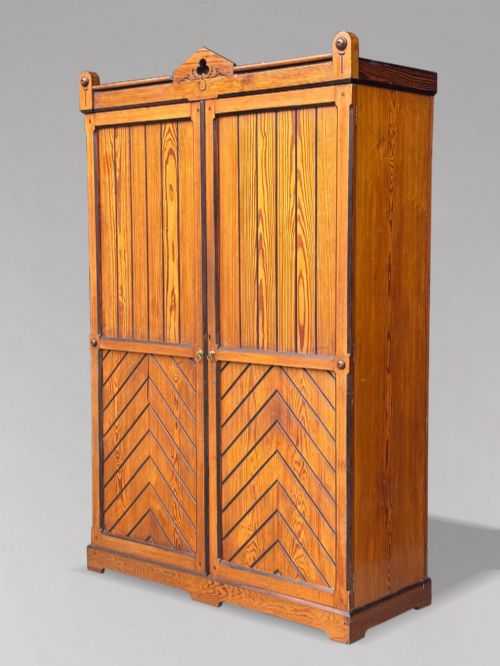
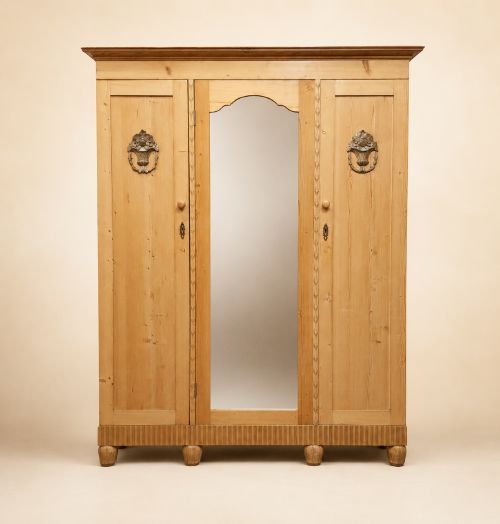
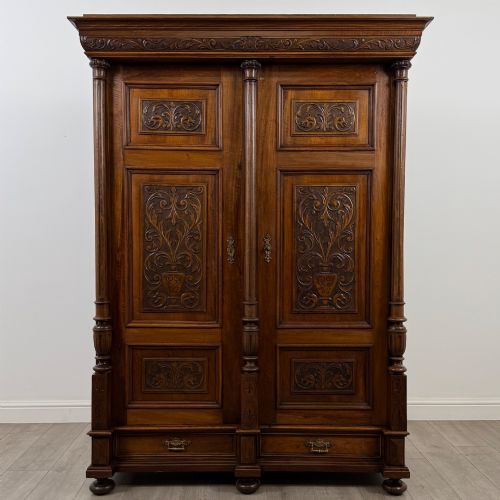
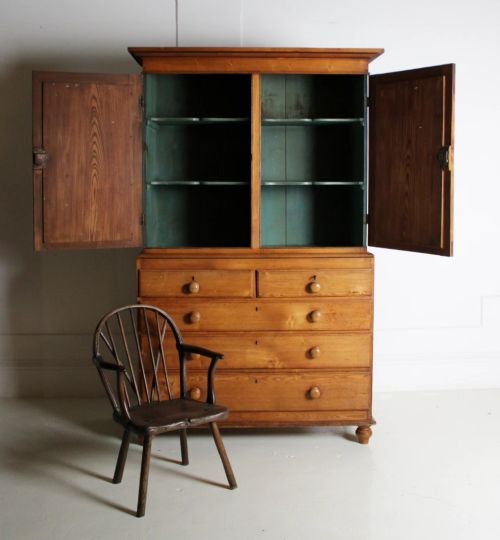
Victorian Wooden Armoire
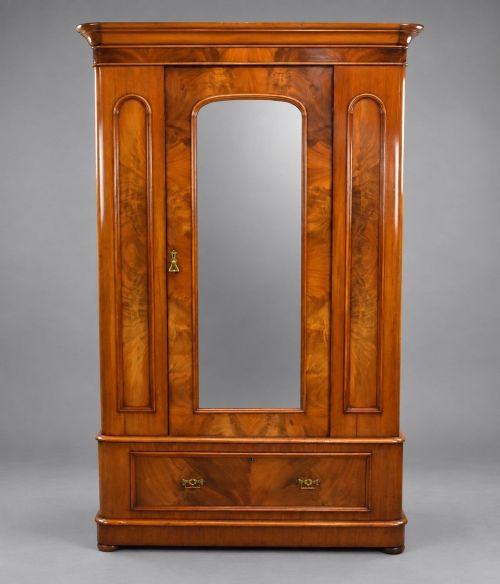
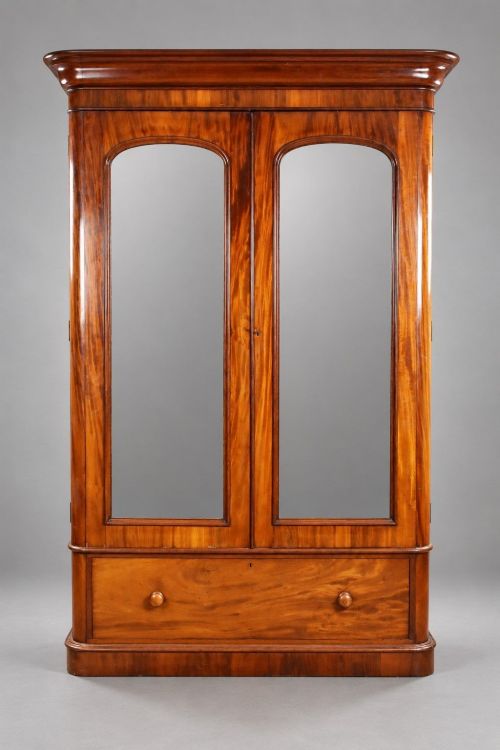
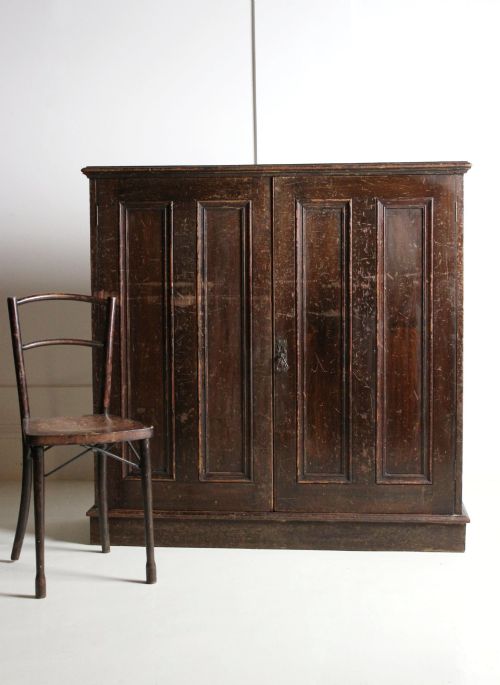
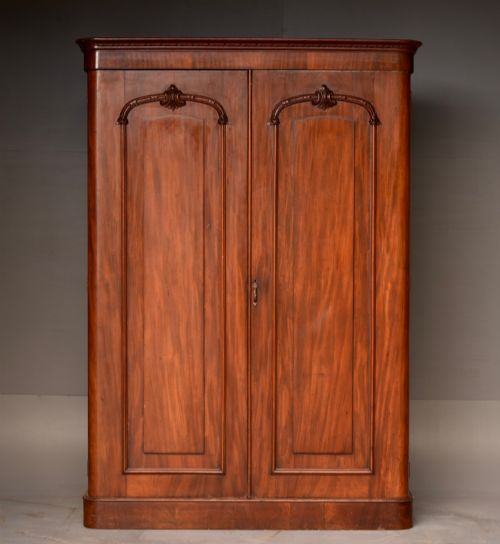
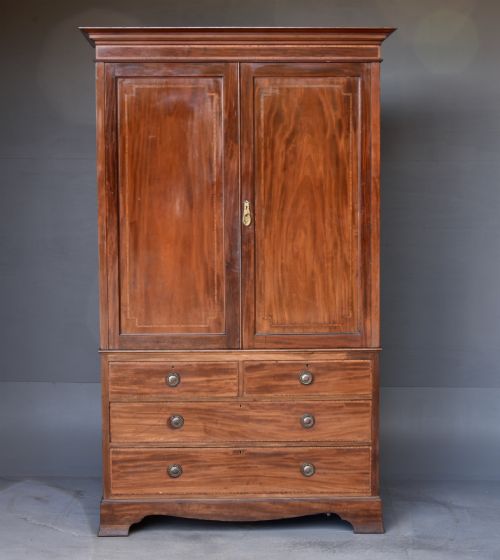
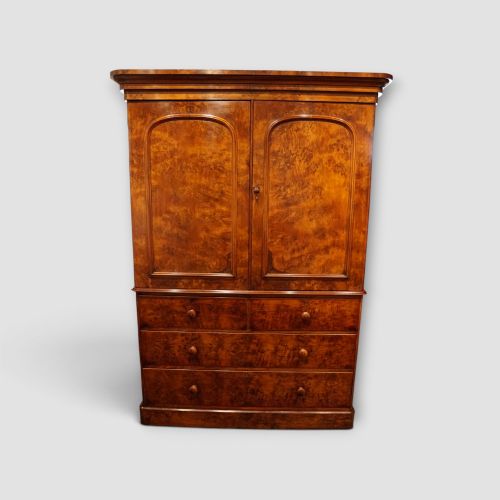
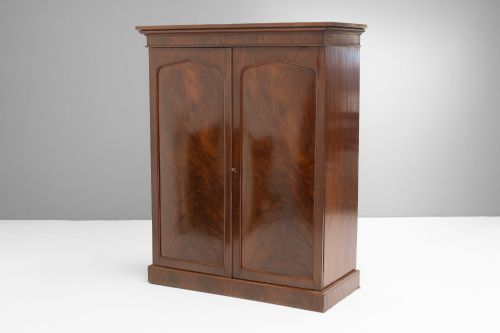
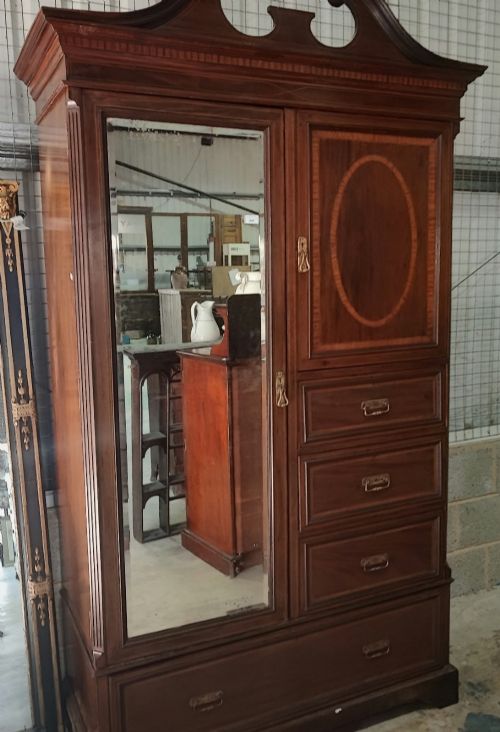
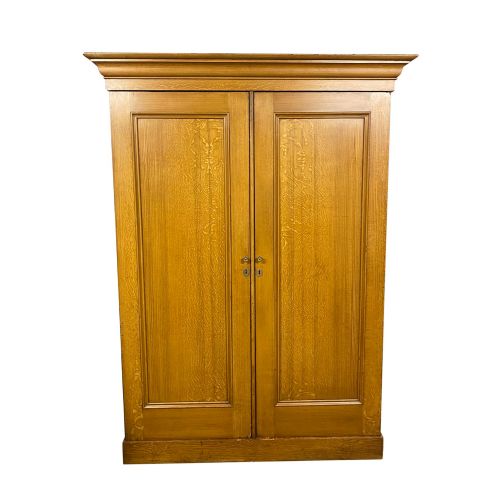
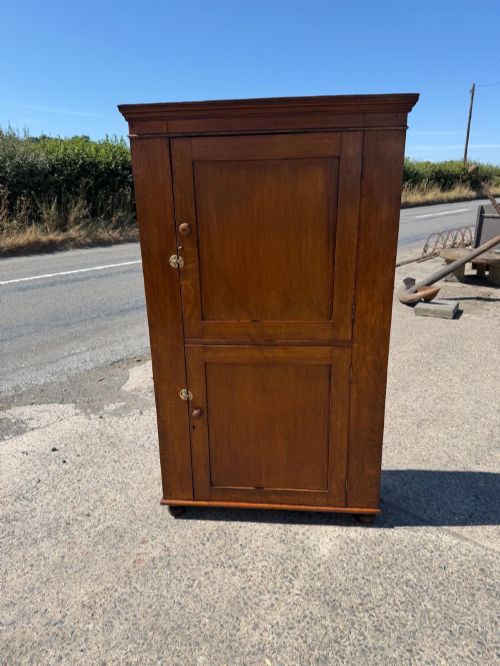
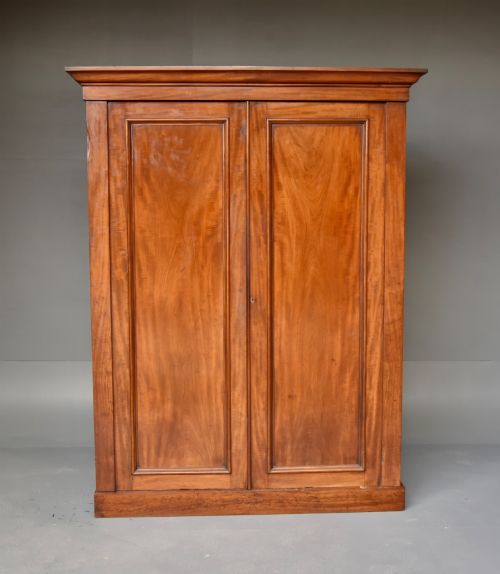
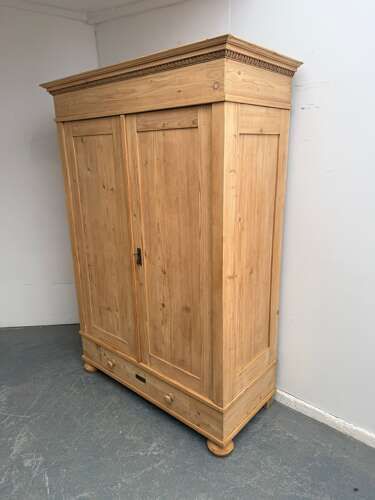
A victorian wooden armoire offers substantial bedroom storage, and you will find these heavy timber wardrobes finished in mahogany, pine, and burr walnut across the period.
Victorian Wooden Armoire
A victorian wooden armoire encompasses large freestanding wardrobes, compactum presses, and linen cupboards designed for bedroom storage during the nineteenth century. These pieces emerge in formats ranging from simple two-door pine cupboards to elaborate triple wardrobes fitted with internal drawers and hanging space.
What varies in quality
The tier of a victorian wooden armoire is judged by the selection of timber veneers, the precision of internal cabinetry, and the integration of secondary storage compartments like compactum trays. Pieces by recorded cabinet makers display superior timber matching across large panel surfaces and more refined brass or iron hardware.
Construction depth dictates utility, as fully fitted interior spaces with original linen slides, sliding trays, and hanging hooks represent higher levels of domestic utility than basic empty carcasses. The survival of original glass, escutcheons, and uncompromised surface patination elevates the standing of an individual wardrobe.
Storage forms on this page include compactums, linen presses, corner units, and traditional double or triple wardrobes.
maples & co·Edwards and Roberts·Holland and Sons·S & H Jewell·Heals
The Victorian Wooden Armoire Glossary
- Compactum
- A wardrobe combining hanging space with internal drawers, sliding shelves, and smaller compartments. This multi-purpose design maximises bedroom storage within a single carcass.
- Linen Press
- A tall storage piece featuring upper cabinet doors enclosing sliding trays, placed above a base chest of drawers. They were traditionally used to store folded household linens.
- Scumble
- A translucent paint glaze applied over a base colour and manipulated with combs or brushes to imitate the grain of more expensive hardwoods like oak or walnut. It provides a decorative finish on pine furniture.
- Knockdown
- A piece of furniture constructed to dismantle entirely into separate panels, cornices, and bases using internal bolts or pegs. This engineering allowed large wardrobes to pass through narrow nineteenth-century doorways.
- Pitch Pine
- A resinous North American pine variety utilised heavily in late nineteenth-century cabinetmaking for its durability and distinct striped grain pattern. It takes a clear wax finish particularly well.
Victorian Wooden Armoire: Frequently Asked Questions
How do I assemble a knockdown wardrobe?
These wardrobes use internal bolts, wooden pegs, or sliding brackets to connect the crown, base, sides, and back panels together securely without permanent glue joints.
Working with an assistant ensures each heavy timber panel remains supported while you align the original joining hardware inside the carcass.
Were these wardrobes built for modern hangers?
Nineteenth-century wardrobes typically feature shallow internal depths and side-to-side wooden hanging pegs rather than modern front-facing clothes rails.
You may need to install a slim metal hanging rail or utilise traditional coat hangers to store standard garments inside older timber cabinets.
How should I care for antique pine furniture?
Maintain the timber by applying a traditional beeswax polish sparingly with a soft cloth, buffing gently to nourish the dry wood grain.
Keep these large wooden pieces away from direct heat sources and sudden humidity shifts to prevent the pine panels from splitting.
What is the difference between an armoire and a wardrobe?
Armoire traditionally describes a tall movable cupboard of European origin featuring doors, whereas wardrobe specifically denotes British clothes-hanging furniture.
On this page, the terms frequently describe similar large timber storage cabinets equipped with hanging space or interior shelving.