



Victorian Wood Coal Box
These Victorian wood coal boxes combine domestic utility with fine cabinetmaking, offering a practical fireside accessory built to last.
Victorian Wood Coal Box
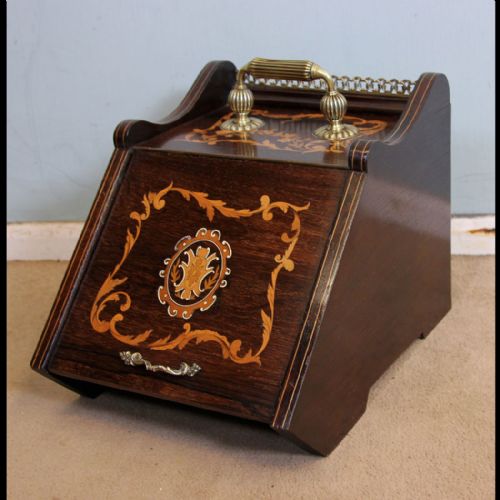
A Victorian wood coal box serves as a fireside container designed to store solid fuel near the hearth while keeping living spaces tidy. The pieces on this page appear primarily from the Victorian and Edwardian periods, stretching from the late 19th century into 1900.
Mahogany, oak, and rosewood form the main wooden bodies, frequently embellished with brass mounts, handles, and intricate wood inlay. These items bridge the gap between heavy industrial heating requirements and domestic parlour refinement.
How they were made
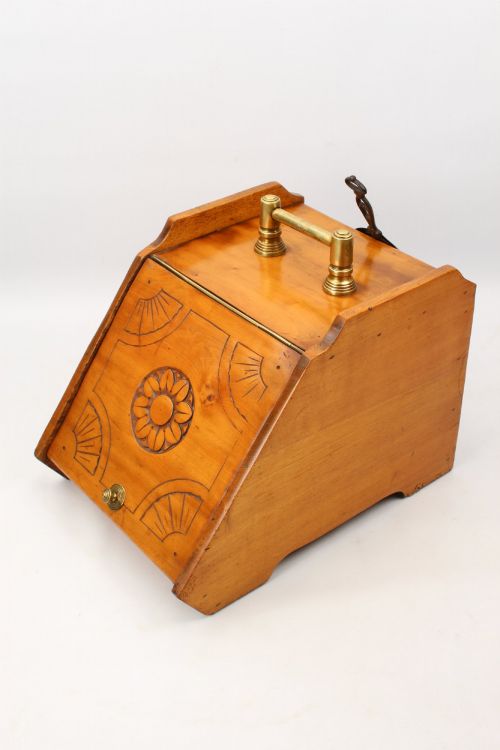
Cabinetmakers constructed these hearth containers using solid hardwoods such as mahogany, oak, and rosewood, often applying decorative marquetry and wood inlay to the exterior surfaces. Carved details adorn the fronts of select models, reflecting the craftsmanship of the period.
Functional metal elements including brass handles, mounts, and interior liners were integrated to handle the weight and abrasive nature of coal. Shovels and scoops accompanied many purdoniums, fashioned from matching metals to withstand daily fireside use.
Victorian Wood Coal Box Retail Price Guide 2026
Typical asking prices for victorian wood coal box among the pieces listed under this phrase on Sellingantiques today, from the lower quarter to the upper quarter. They describe what is for sale here now, not the wider market.
Listings feature woods such as mahogany, oak, and rosewood, alongside brass and iron hardware across Victorian and Edwardian periods.
What varies in quality
The refinement of the cabinetmaking separates standard utilitarian boxes from superior parlour pieces, visible in the depth of carved decoration and precision of wood inlay. Rosewood and mahogany models with marquetry detail sit at the higher end of the range.
The presence of original hardware, including matching brass mounts, functional metal liners, and designated scoops, elevates a piece. Structural integrity in the drop-front mechanisms and hinges determines how well the construction has survived regular hearthside service.
The Victorian Wood Coal Box Glossary
- Purdonium
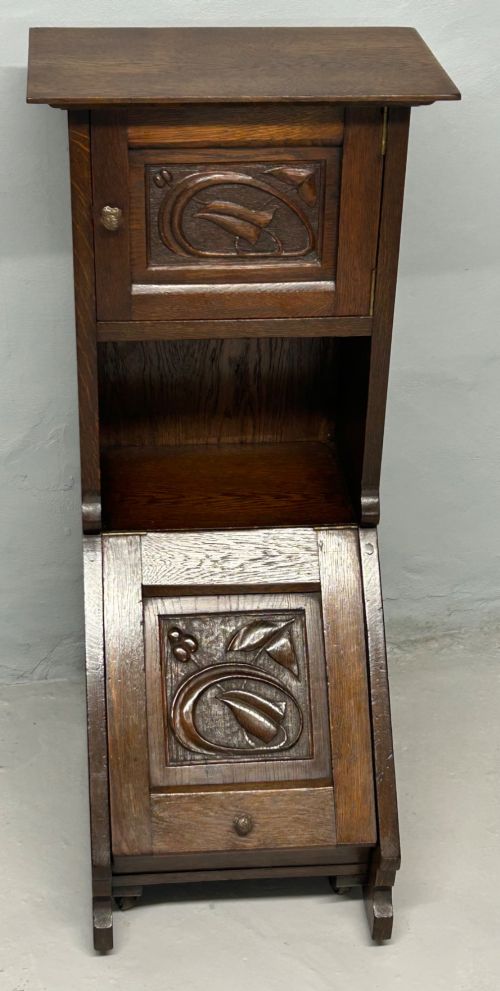
- A specialised coal cabinet featuring a sloping front drop-door designed to dispense fuel cleanly onto the fire. This form gained popularity during the Victorian era for keeping dust contained.
- Marquetry
- Decorative patterns formed by the insertion of small pieces of veneer into a wood structure. It appears on finer rosewood and mahogany boxes.
- Coal Scuttle
- A traditional open bucket or container with a hinged handle used for carrying coal. Many examples include matching shovels.
- Inlay
- The technique of inserting contrasting materials into depressions within a wooden base. This method defines the decorative surface of several pieces.
- Arts and Crafts
- A design movement emphasising honest construction and simple materials. Oak purdoniums often reflect these aesthetic principles.
Victorian Wood Coal Box: Frequently Asked Questions
What is a purdonium?
A purdonium is a specialised coal cabinet featuring a hinged or drop-down front door designed to store fuel neatly beside the hearth.
These pieces typically house a removable metal liner to contain coal dust and often include a dedicated slot for a shovel.
How do I use a coal box today?
These wooden boxes serve well as decorative fireside storage for logs, kindling, or magazines in contemporary living rooms.
Their enclosed design keeps modern hearth accessories organised while maintaining period character.
Are metal liners original?
Metal liners were standard factory additions designed to protect the wood from moisture and debris associated with solid fuel.
Finding an intact metal liner inside a mahogany or oak box indicates complete period utility.
How do I date these pieces?
Dating relies on identifying stylistic markers, timber choices, and construction methods spanning the Victorian and Edwardian eras.
Heavily carved rosewood and mahogany often point to the mid-to-late 19th century, while plain oak Arts and Crafts variants lean toward 1900.