


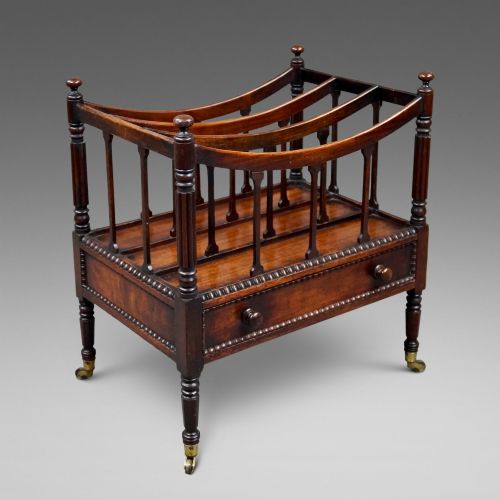


Victorian Wood Canterbury
A victorian wood canterbury organises sheet music and periodicals with slatted divisions and compartments, bringing nineteenth-century utility directly into a modern sitting room.
Victorian Wood Canterbury
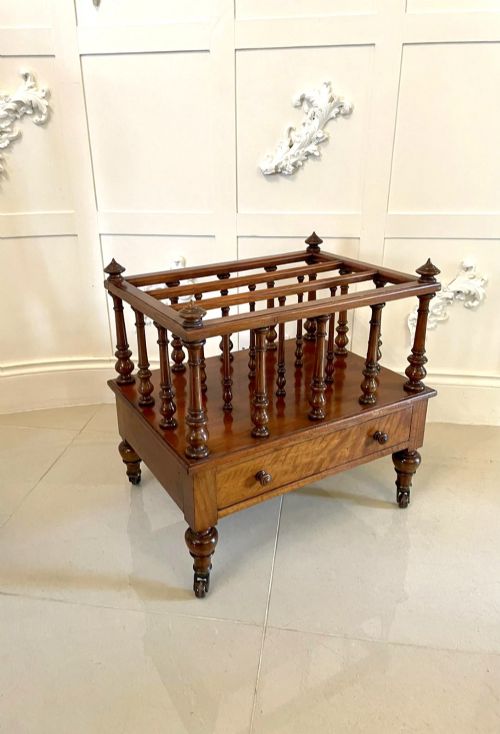
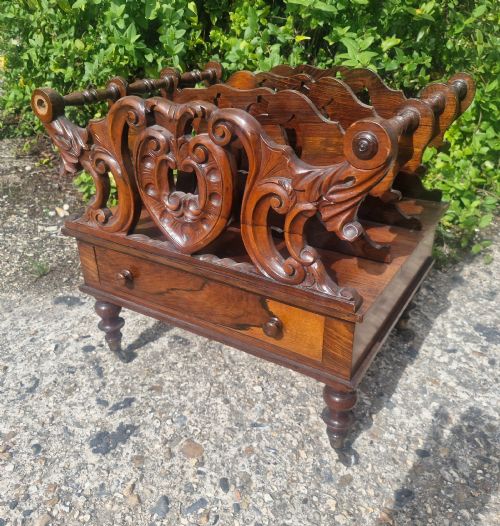
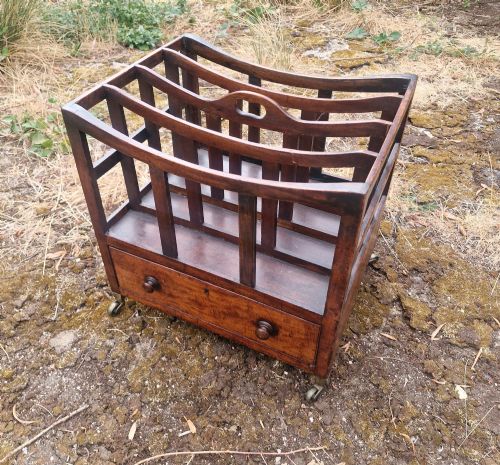
A victorian wood canterbury typically appears as a low, partitioned stand designed specifically for holding sheet music, newspapers, and magazines. These pieces often feature tiered vertical dividers, frequently combined with a single drawer at the base for smaller accessories.
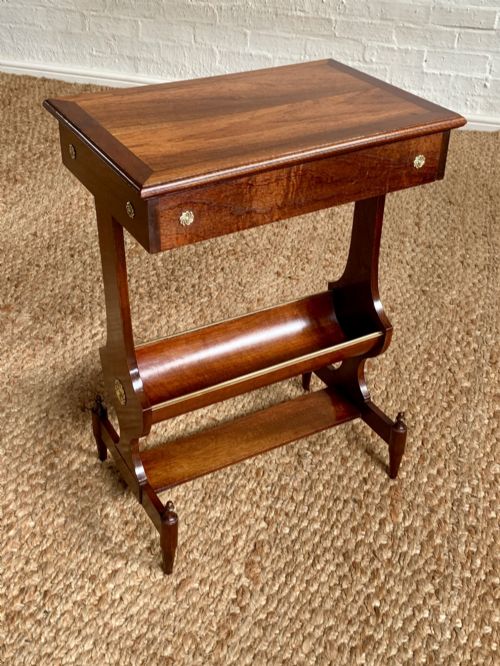
The selections on this page span the nineteenth century, encompassing Regency, William IV, and Victorian iterations alongside later revivals. Buyers encounter forms ranging from simple four-section magazine racks to complex multi-functional side cabinets and combination side tables.
Distinctions in Execution
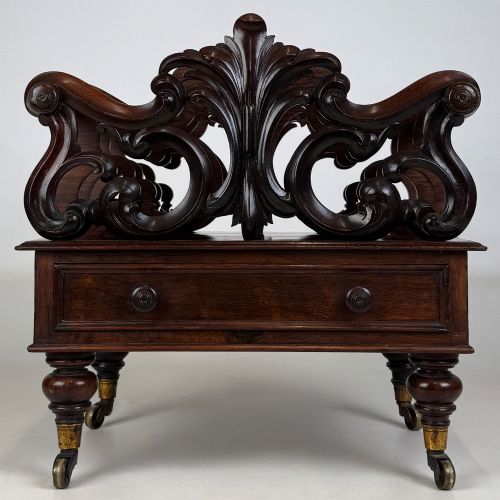
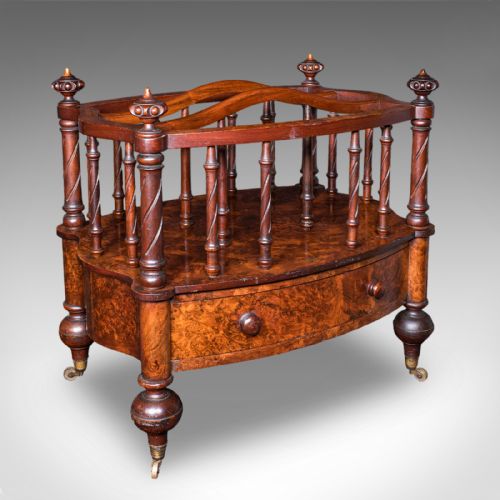
The refinement of the timber selection largely dictates the standing of a piece, with finely figured burr walnut and rich rosewood marking out superior examples. Plain mahogany versions offer robust utility, whereas highly figured veneers and ornate carving denote ambitious workshop production.
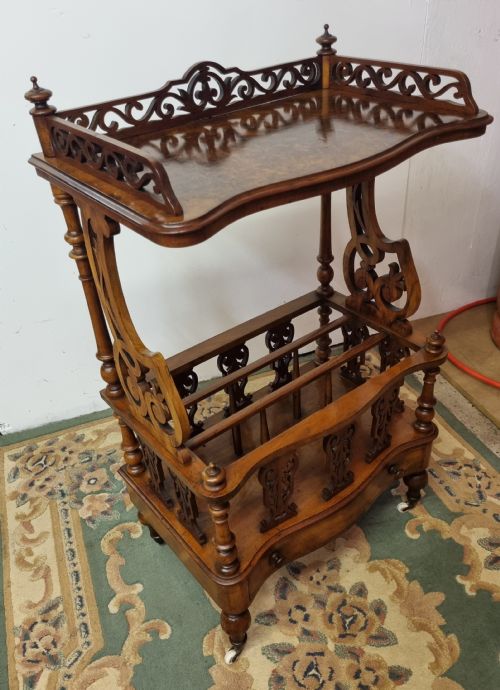
Structural complexity further separates standard models from exceptional ones. Inclusion of integrated drawers, intricate pierced scrollwork divisions, or multi-functional work tops transforms a simple rack into a sophisticated piece of furniture.
Victorian Wood Canterbury Retail Price Guide 2026
Typical asking prices for victorian wood canterbury among the pieces listed under this phrase on Sellingantiques today, from the lower quarter to the upper quarter. They describe what is for sale here now, not the wider market.
Some versions include work tops, letting music enthusiasts tidy their scores while keeping embroidery close at hand.
Shoolbred
The Victorian Wood Canterbury Glossary
- Canterbury
- A low stand with vertical partitions used originally for holding music sheets and later for newspapers and magazines. It often includes a low drawer beneath the divisions.
- Whatnot
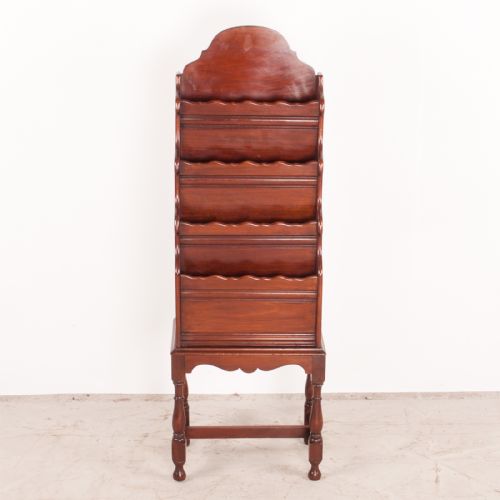
- A piece of furniture consisting of a set of open shelves for displaying small objects or books. Examples frequently combine this open shelving with a lower canterbury section.
- Pierced scroll
- Woodwork cut through in ornamental scroll patterns to form decorative partitions. This technique lightens the visual weight of the dividers.
- Serpentine
- A furniture shape characterised by a line that curves inward and outward in a continuous flowing movement. This outline appears on the shelves and edges of refined walnut pieces.
Victorian Wood Canterbury: Frequently Asked Questions
What was a canterbury originally used for?
These stands were conceived in the eighteenth and nineteenth centuries to hold folios of sheet music near a piano or music stand. As domestic habits shifted toward reading periodicals, their purpose adapted to encompass newspapers and magazines.
Today, they serve the exact same organisational function in a living room or study. They keep current reading material tidy while displaying the warmth of nineteenth-century timber.
How do I tell a Regency canterbury from a Victorian one?
Regency pieces often display classical restraint, utilising straight lines, rosewood or mahogany veneers, and brass inlay or reeded supports. Their design frequently follows classical proportions influenced by contemporary pattern books.
Victorian iterations tend toward bolder grain patterns, such as burr walnut, alongside more exuberant carving, serpentine shaping, and complex multi-functional forms like combined side tables or cabinets.
Can I use a canterbury as a side table?
Certain variations on this page are explicitly built as side tables or occasional tables incorporating magazine racks and drawers. These hybrid forms provide a sturdy surface top alongside the traditional vertical partitions.
Standard open-topped versions function well beside a sofa or armchair for holding current publications, though their slatted tops generally preclude placing heavy items upon them.
Are these pieces sturdy enough for daily use?
Nineteenth-century cabinetmakers built these stands from solid hardwoods and stable veneers designed to withstand regular domestic handling of heavy folios and books. Their construction relies on robust joinery to support the upright divisions.
Treating the wood with appropriate care and avoiding excessive moisture ensures these practical items continue to function reliably in a contemporary home.