



Victorian Wood Barometer
A victorian wood barometer brings domestic barometric science into the hall or library with robust oak, walnut, and mahogany cases.
Victorian Wood Barometer
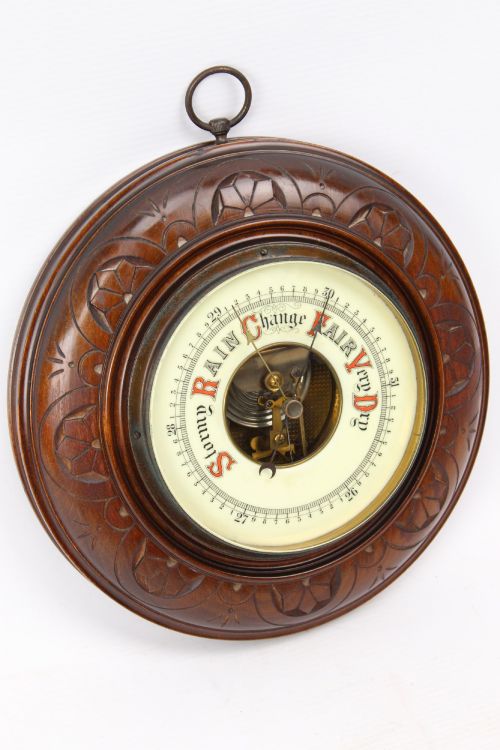
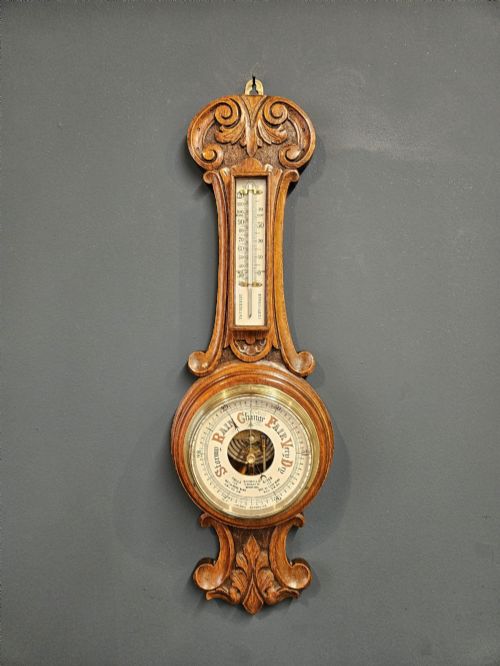
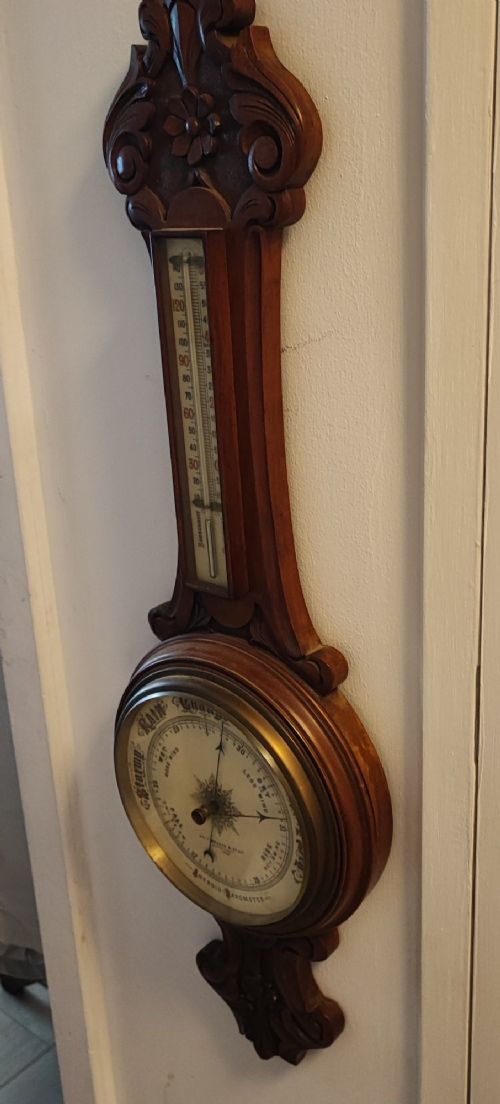
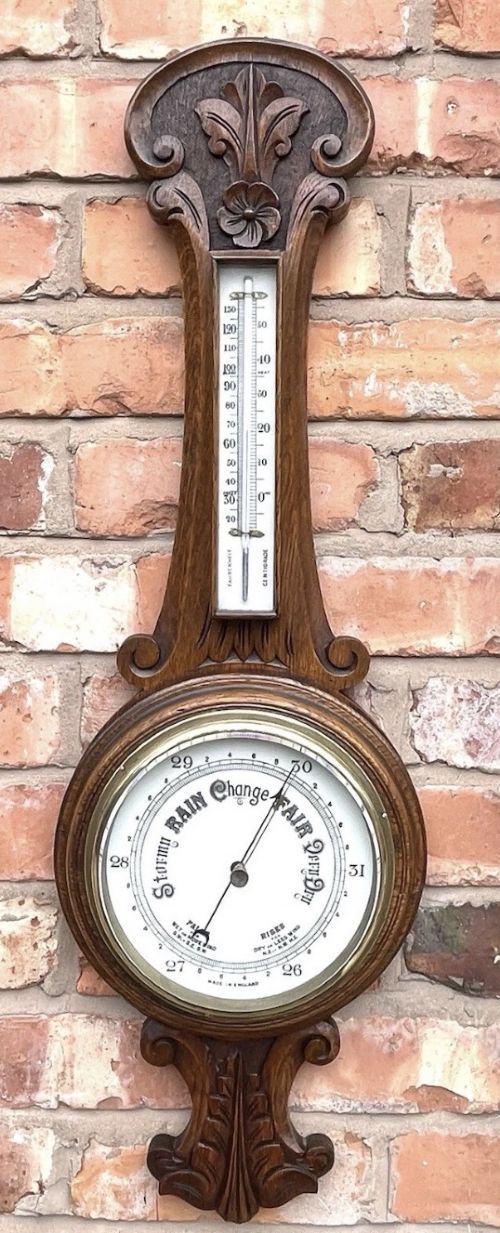
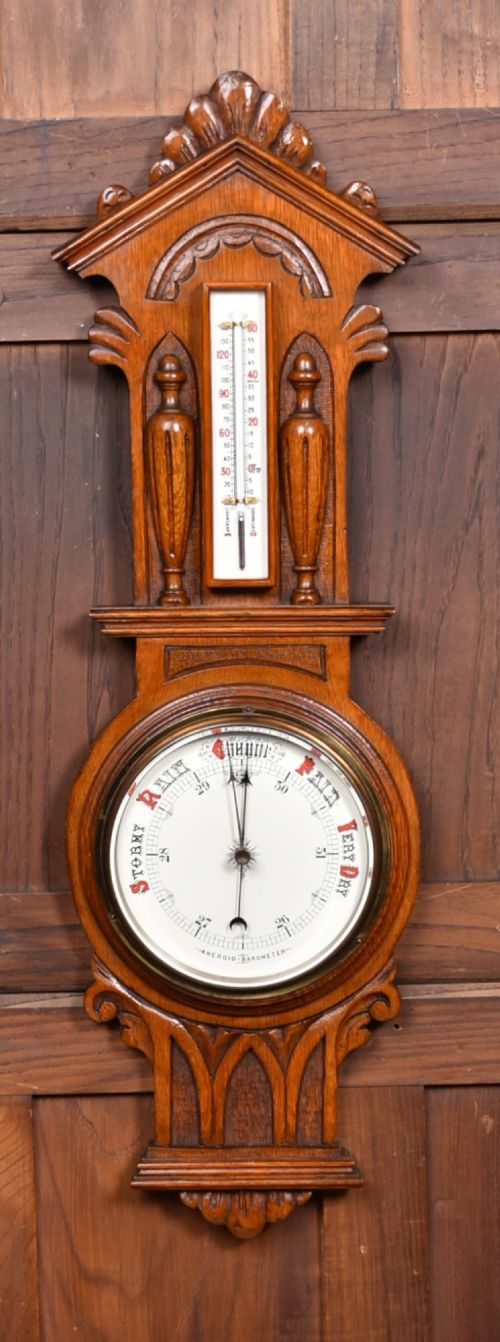
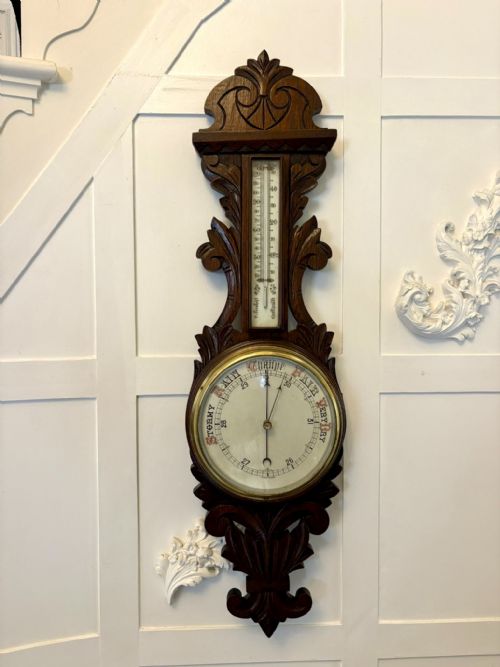
A victorian wood barometer serves as both a scientific instrument and a domestic wall fixture, recording atmospheric pressure changes across the nineteenth century and into the Edwardian era. You will most frequently encounter aneroid banjo barometers housed in carved oak, rosewood, or walnut, often incorporating a thermometer alongside the main dial.
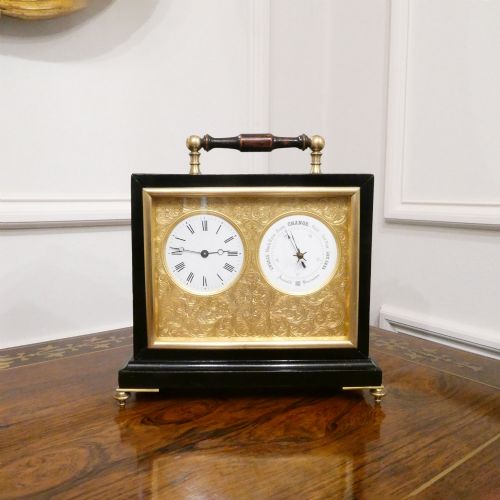
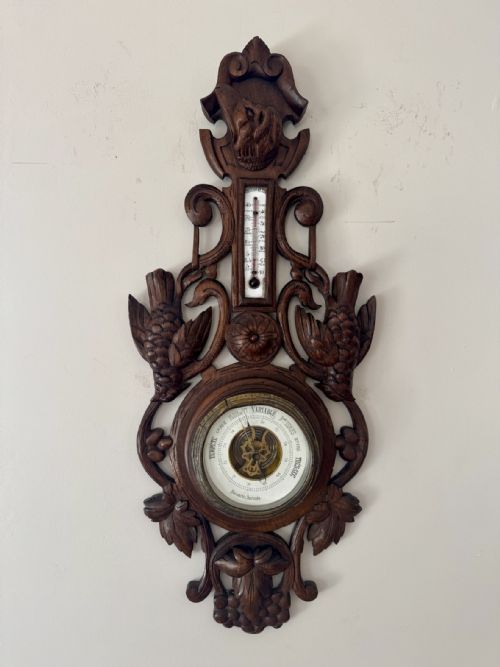
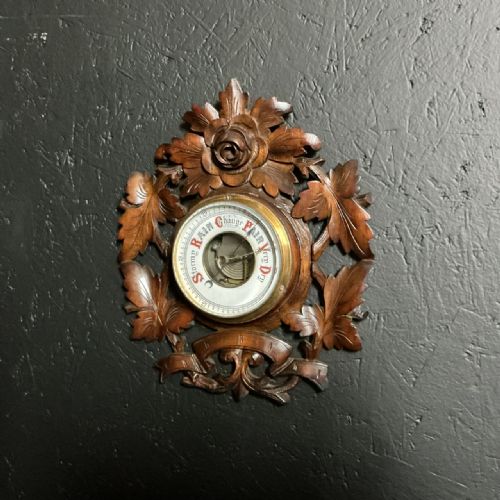
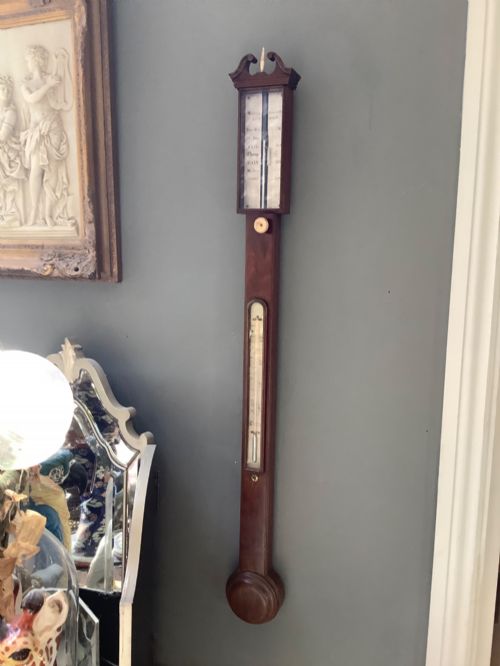
The selection ranges from simple wheel barometers framed in mahogany to elaborate Black Forest carved wood designs depicting foliage and animal life. Wall barometers dominate the listings, though stick barometers and scientific recording instruments also appear.
Makers and retailers such as Negretti and Zambra, Short and Mason, and Maple and Co produced these instruments alongside local watchmakers and opticians. Pieces span from the mid nineteenth century through to the early decades of the twentieth century, reflecting varied regional British and continental European workmanship.
Materials and construction
Cases rely upon dense timbers such as oak, mahogany, walnut, rosewood, and beech, shaped through turning, carving, and sometimes marquetry inlay. Timber selection dictated the weight and durability of the wall hanging housing.
Movements utilise brass components, glass face plates, and porcelain or ceramic dials, paired with mercury or aneroid mechanisms to register atmospheric pressure. Intricate Black Forest examples demonstrate deep hand carving directly into the wooden frame surrounding the dial.
Victorian Wood Barometer Retail Price Guide 2026
Typical asking prices for victorian wood barometer among the pieces listed under this phrase on Sellingantiques today, from the lower quarter to the upper quarter. They describe what is for sale here now, not the wider market.
Some Black Forest barometer frames incorporate carved squirrels and oak leaves, bringing woodland creatures directly into Victorian hallways.
Judging execution and finish
Quality rests upon the crispness of the timber carving and the precision of the dial engraving rather than mere size. Finer examples display harmonious grain patterns in rosewood or walnut, combined with detailed cast brass bezels and legible porcelain or ceramic scales.
The integrity of the timber case and the preservation of the original mechanism determine the overall standard of the piece. Master makers integrated thermometers and hygrometers with balanced proportions, while lesser examples rely on standard commercial cases with plain turnings.
Negretti and Zambra·Short and Mason·Maple and Co·W Watson and Sons·Alexander Wright
The Victorian Wood Barometer Glossary
- Aneroid barometer
- An instrument that measures air pressure using a flexible metal capsule rather than liquid mercury. It became the dominant domestic barometer type during the Victorian period.
- Banjo barometer
- A wall barometer featuring a rounded top dial above a slender wooden trunk that often contains a thermometer. This shape allowed space for multiple weather indicators.
- Stick barometer
- A tall, slender instrument containing an exposed glass tube filled with mercury. It provides a direct reading of barometric height against a scale.
- Barograph
- A self-recording meteorological instrument that draws a continuous graph of atmospheric pressure on a rotating drum of chart paper. These are typically housed in mahogany cases with glass covers.
- Bezel
- The metal ring that holds the glass face plate in position over the dial. It is commonly cast from brass and sometimes hinged for access.
Victorian Wood Barometer: Frequently Asked Questions
How do I hang a heavy wood barometer securely?
These instruments require a substantial wall anchor or screw fixed directly into a stud or masonry wall, rather than a simple picture hook. The weight of the dense timber case and internal brass mechanism demands a secure mounting.
Ensure the hanging bracket on the reverse of the wood case is firmly attached with original screws before mounting. Hang the barometer away from direct heat sources and exterior doors to protect the timber and the movement.
Do antique wood barometers still show accurate weather?
Many aneroid and mercury barometers remain fully operational and respond accurately to local atmospheric pressure changes. The movement can often be calibrated using a reference point from a modern local forecast.
Minor seasonal changes in humidity can cause the wooden case to expand slightly, but this rarely affects the internal mechanism. Regular servicing by a specialist ensures the pivot points and linkages function smoothly.
What is the difference between an aneroid and a mercury barometer?
An aneroid barometer uses a sealed metal vacuum box that expands and contracts with air pressure changes, moving the dial pointer via mechanical linkages. They are entirely self contained and safe to transport around the home.
A mercury barometer relies on a column of liquid metal balancing against atmospheric pressure in a glass tube. These traditional stick and wheel barometers require careful handling during transport to prevent air entering the glass column.
How should I clean the wooden case and glass dial?
Dust the carved timber case gently with a dry, soft cloth to remove surface particles without disturbing the polish. Avoid using liquid polishes or silicone sprays, which can build up in the intricate carvings over time.
Clean the glass face plate with a small amount of glass cleaner applied to a cloth rather than sprayed directly onto the dial. This prevents moisture from seeping behind the bezel and damaging the paper or ceramic scale.