



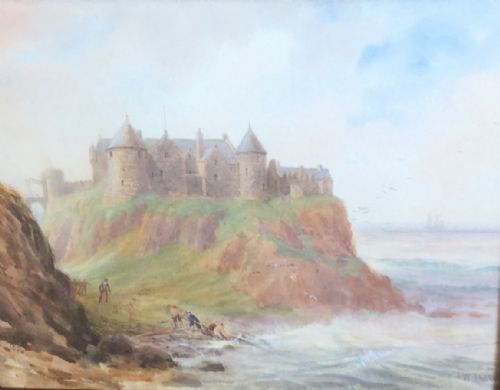


Victorian Watercolour Views
Victorian watercolour views capture topographical scenes and distant cities through delicate washes on paper, offering collectors a direct window into nineteenth-century landscape and travel.
Victorian Watercolour Views
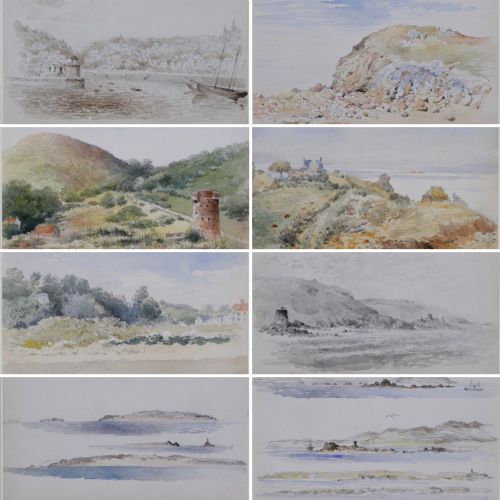
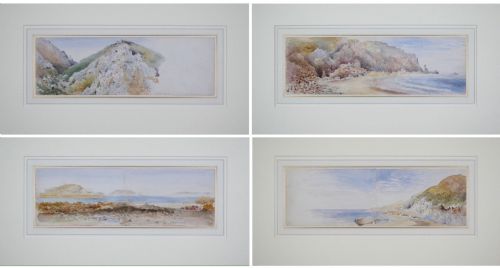
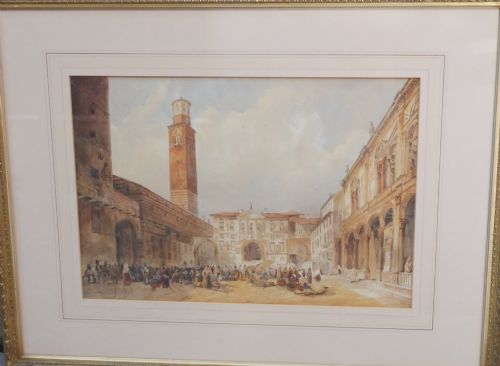
When you search for victorian watercolour views, you encounter works executed on paper that record landscapes, riversides, and architectural studies from the nineteenth century. These paintings range from quiet English country churches to grand continental vistas gathered on travels abroad.
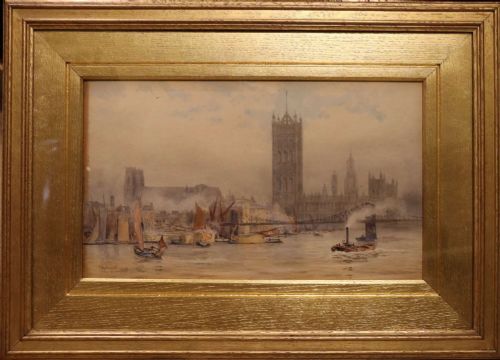
The most common examples on this page date from the decades around the late nineteenth century, reflecting both domestic scenery and the broader reach of the Grand Tour. They frequently arrive framed in wood or gilt wood under glass to protect the pigment.
Makers and regional artists recorded specific locations with careful draughtsmanship, balancing atmospheric washes of watercolour pigment with precise pen or pencil underdrawing. Many pieces bear inscriptions or signatures pointing to distinct British and European locales.
Materials and construction
These works rely primarily on watercolour pigment applied to paper sheets, sometimes supported by secondary card or board mounts. Artists utilised transparent washes to build up light and shadow, occasionally adding opaque bodycolour for highlights.
Protection from the elements came from period framing involving timber mouldings, frequently finished in gilt wood and glazed with glass. The backboards and papers of this era display the distinct textures of nineteenth-century mill production.
Victorian Watercolour Views Retail Price Guide 2026
Typical asking prices for victorian watercolour views among the pieces listed under this phrase on Sellingantiques today, from the lower quarter to the upper quarter. They describe what is for sale here now, not the wider market.
The selection includes architectural studies, coastal bays, and river scenes from British and continental locations housed in gilt wood frames.
Distinctions in quality
The distinction between standard works and exceptional examples lies in the confidence of the brushwork and the precision of the topographical perspective. Superior paintings capture light and atmosphere with economy, whereas lesser sheets rely on laboured, heavy washes that obscure the paper.
The handling of the original frame also influences the overall standard, as period gilt wood settings matched to the painting retain greater integrity than later replacements. Conservation state matters immensely; strong, unfaded pigments separate well-preserved sheets from those damaged by harsh light.
H. Medlycott·Thomas Cooper Moore·Henry John Kinnaird·Stephen John Batchelder·Hercules Brabazon Brabazon·David Small·Walter Duncan·Peter Ghent·Robert Anderson·William A. Macdonald·David Bates·Arthur Severn·Joseph William Carey·Margaret Thompson·John Joseph Cotman·Thomas Brabazon Aylmer
The Victorian Watercolour Views Glossary
- Watercolour pigment
- Finely ground colour particles mixed with a water-soluble binder, applied in translucent layers onto paper.
- Gilt wood
- Timber framing coated with a thin layer of gold leaf or metallic powder, standard for framing fine art from this era.
- Grand Tour
- The nineteenth-century practice of travelling through Europe for education and pleasure, which inspired many continental landscape views.
Victorian Watercolour Views: Frequently Asked Questions
How do I care for victorian watercolour views?
Keep these paintings away from direct sunlight to prevent the watercolour pigments from fading over time. Maintain stable indoor humidity to protect both the historic paper and the wooden frames.
Ensure that the glass remains intact and that the backboards are sealed properly against dust and moisture. Professional framing using acid-free materials helps preserve the sheet for decades.
Were these painted outdoors or in studios?
Artists often produced initial pencil sketches and colour studies on location during travels or walks. They typically finished the final watercolour paintings back in their studios.
Portable watercolour boxes made outdoor sketching popular during the nineteenth century, allowing painters to capture changing light quickly before returning indoors to complete the composition.
How do I identify the date of a painting?
Look for artist signatures, dates inscribed directly onto the paper, or period labels affixed to the reverse of the frame. Stylistic clues within the clothing and architecture also offer clear chronological markers.
The type of paper, framing techniques, and historical records of exhibited works provide further evidence to narrow down the decade of creation.
Why do some views show foreign scenes?
Travel across Europe became increasingly accessible during the nineteenth century through improved rail and steamship networks. Artists and wealthy travellers eagerly recorded cities like Venice, Rome, and various alpine passes.
These foreign sketches served as cherished souvenirs of journeys abroad, bringing continental sunlight and historic architecture back into British homes.