


Victorian Watercolour Scene
A victorian watercolour scene captures nineteenth-century life on paper through transparent pigment, offering a direct view into past landscapes and maritime harbours.
Victorian Watercolour Scene
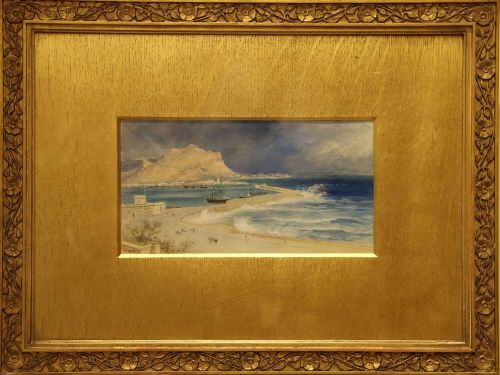
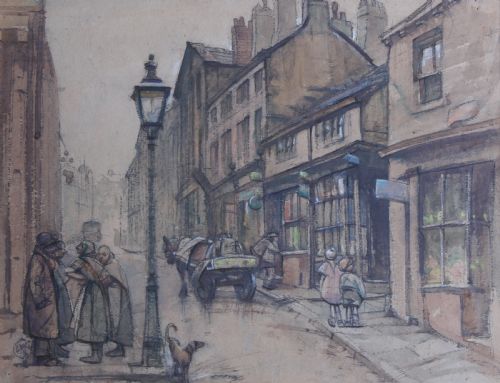
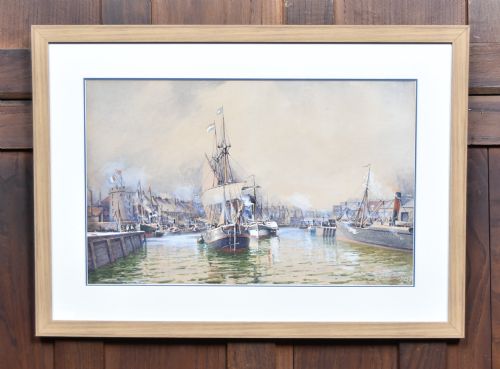
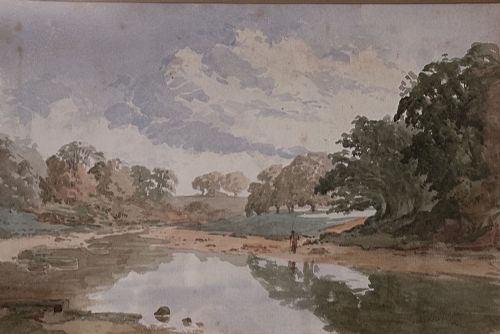
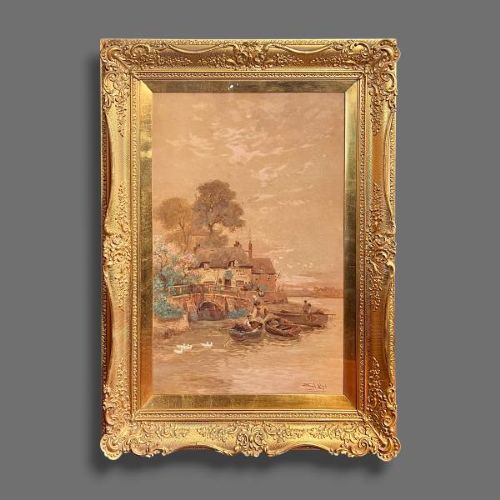
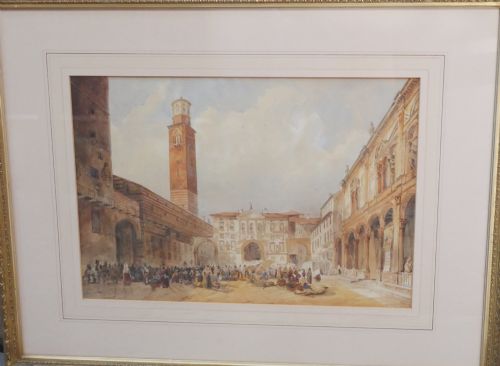
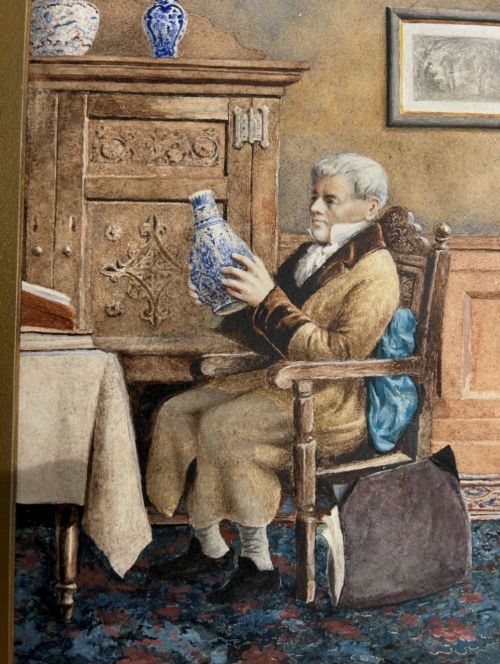
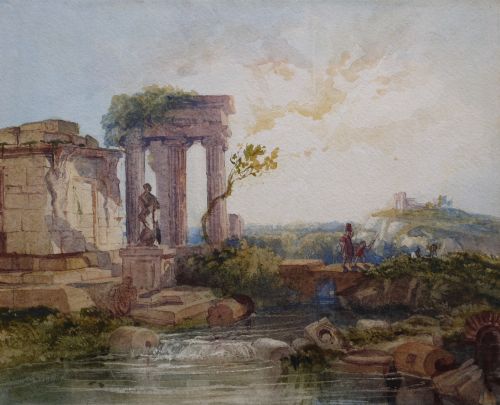
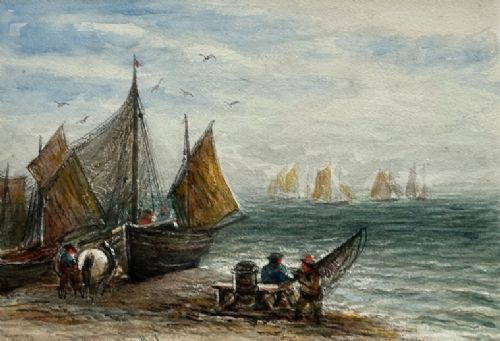
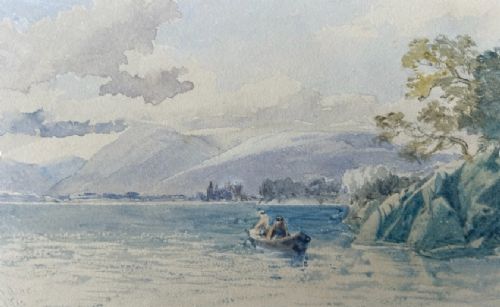
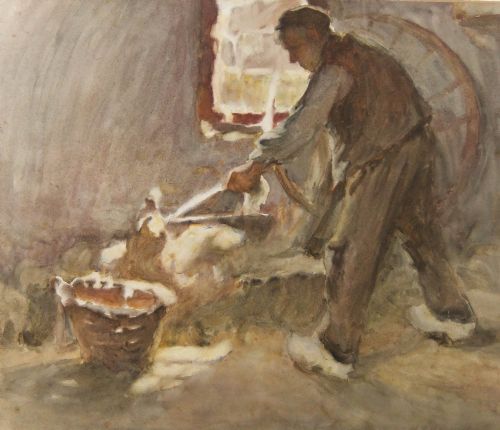
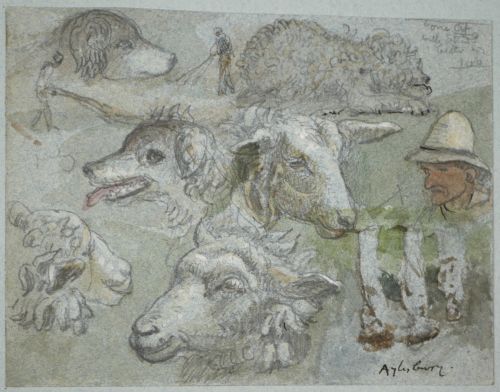
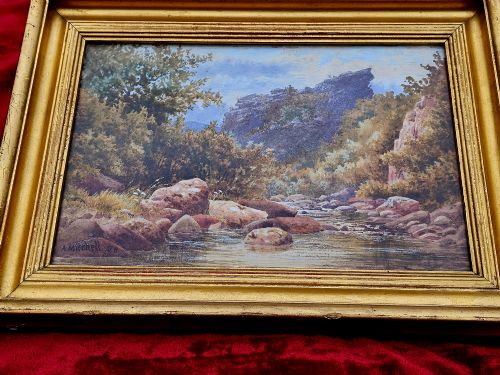
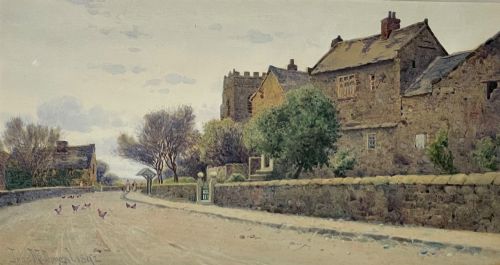
When you search for a victorian watercolour scene, you encounter framed paper works depicting British and continental landscapes, coastal harbours, and genre scenes of daily life. The pieces on this page span the nineteenth century into the early twentieth century, taking forms from small sketches to large-scale gallery paintings.
Most examples present traditional British and European subject matter, including Scottish lochs, Thames river views, Italian coastal vistas, and rural farming or fishing communities. Artists recorded these subjects with careful observation, producing finished works intended for domestic display behind glass.
Materials and Technique
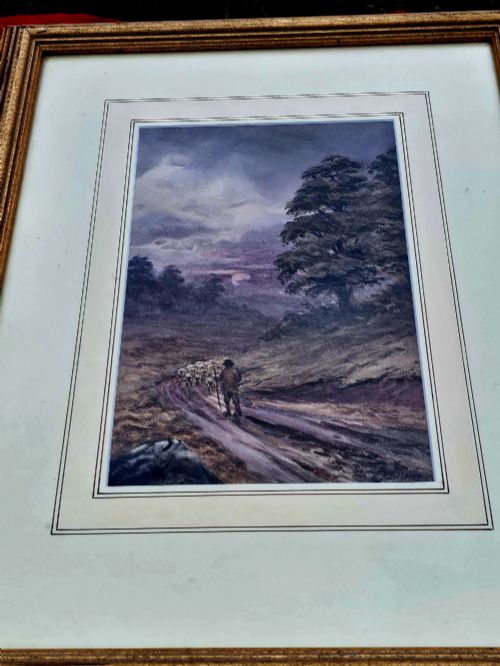
These works rely on watercolour pigment applied to paper support, frequently mounted inside protective wooden frames beneath glass. Many pieces incorporate gold leaf or giltwood within the framing to complement the warm tones of the composition.
Makers built up images through washes of transparent colour, sometimes adding bodycolour or gouache highlights to define light and texture on water, stone, and foliage.
Victorian Watercolour Scene Retail Price Guide 2026
Typical asking prices for victorian watercolour scene among the pieces listed under this phrase on Sellingantiques today, from the lower quarter to the upper quarter. They describe what is for sale here now, not the wider market.
Listings feature paper, glass, wood, and gold leaf, with dates spanning from the mid-nineteenth century through the Edwardian period.
Distinctions in Execution
Quality rests upon the confidence of the brushwork and the precision with which the artist handles perspective, light, and atmosphere across the paper surface. Stronger examples display deft control of transparent washes that retain luminosity, whereas lesser works appear heavy or overworked.
The reputation of the painter and exhibition records at institutions such as the Royal Academy also distinguish exceptional compositions from standard studio output.
Thomas Miles Richardson Jnr·James Orrock·Richard Principal Leitch·Alfred Young Nutt·Robert Thorne Waite·Hector Caffieri·Thomas Bush Hardy·David Cox Jnr
The Victorian Watercolour Scene Glossary
- Watercolour
- A painting method where paint is made of pigments suspended in a water-based solution. It utilises transparent washes on paper to create luminous effects.
- Giltwood
- Wood that has been treated with gold leaf or a gold-coloured finish. This material frequently appears on the antique frames enclosing these paper works.
- Genre painting
- Artwork depicting scenes from ordinary life, such as street markets or domestic interiors. These compositions record the social habits of the period.
- Wash
- A thin, fluid layer of transparent watercolour pigment spread across the paper. It establishes skies, water, and broad background tones.
Victorian Watercolour Scene: Frequently Asked Questions
How should I hang a watercolour painting?
Keep these paper works away from direct sunlight to prevent the pigments from fading over time. Maintaining a stable indoor environment protects both the paper support and the giltwood frame.
Ensure the hanging wall remains dry and free from excessive humidity, which can damage nineteenth-century paper and encourage mould growth.
Are all these paintings signed by the artist?
Many examples bear signatures, monograms, or studio attributions, though unsigned works also appear. Signatures help connect specific pieces to documented nineteenth-century practitioners.
Exhibition labels on the reverse sometimes provide additional evidence regarding the artist and the original venue where the painting was shown.
What framing is typical for these works?
Original pieces usually feature period wooden frames, often enhanced with gold leaf or giltwood moulding. These surrounds complement the Victorian aesthetic and protect the edges of the paper.
Glazing protects the fragile watercolour surface from dust, atmospheric pollutants, and accidental contact.
How do I identify the period of a watercolour?
Dating relies on stylistic clues, clothing styles in genre scenes, and framing materials characteristic of the nineteenth century. Inscriptions on the reverse or artist records offer definitive chronological placement.
Paper types and watercolour pigment preparation also provide physical evidence pointing to the Victorian era.