



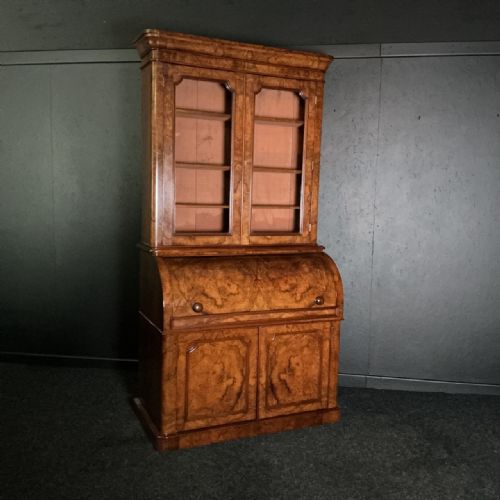
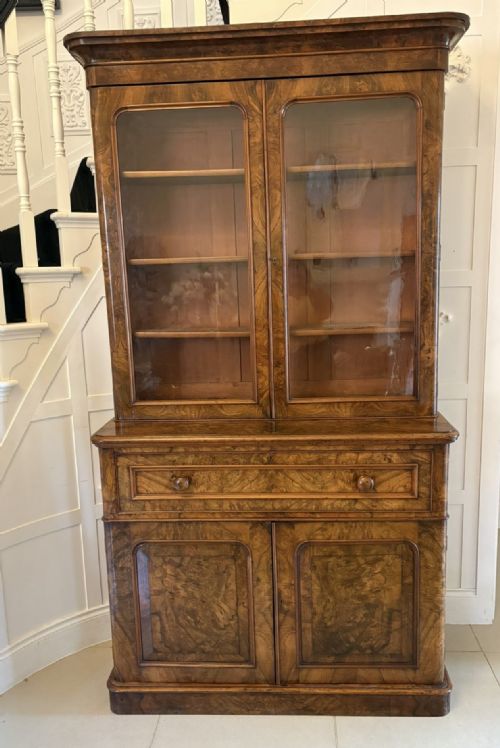
Victorian Walnut Writing Cabinet
These nineteenth-century pieces combine cabinetwork and fitted writing spaces, offering a structured surface for correspondence.
Victorian Walnut Writing Cabinet
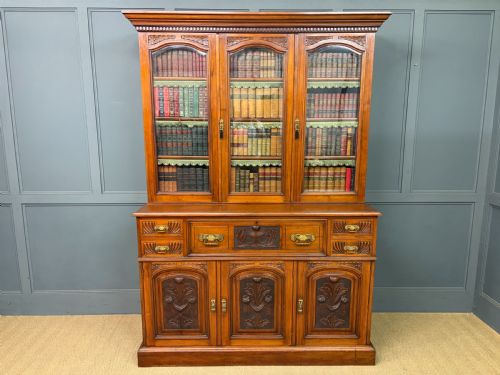
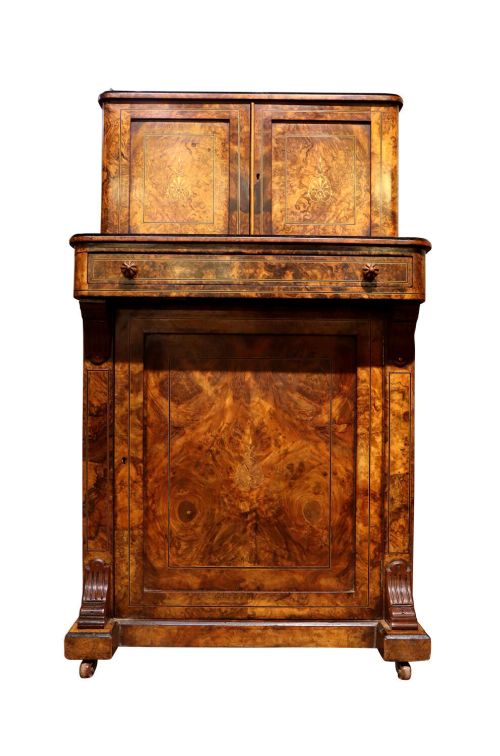
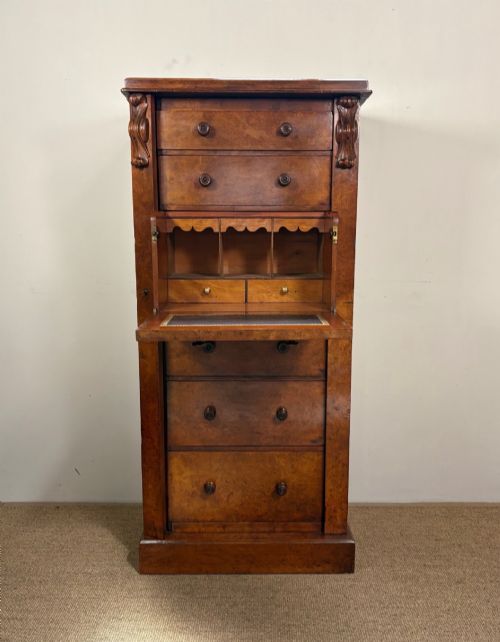
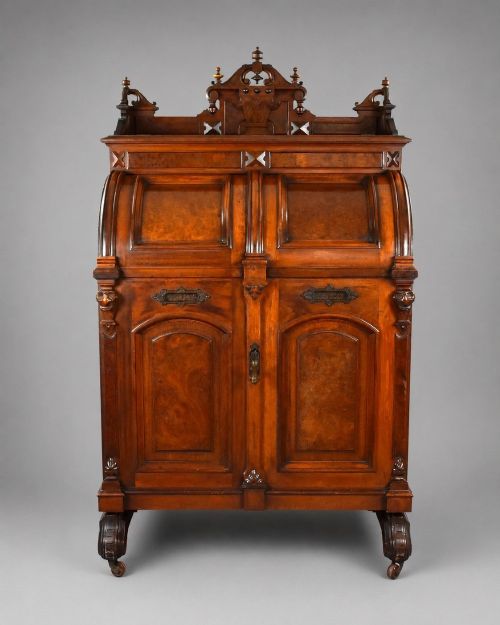
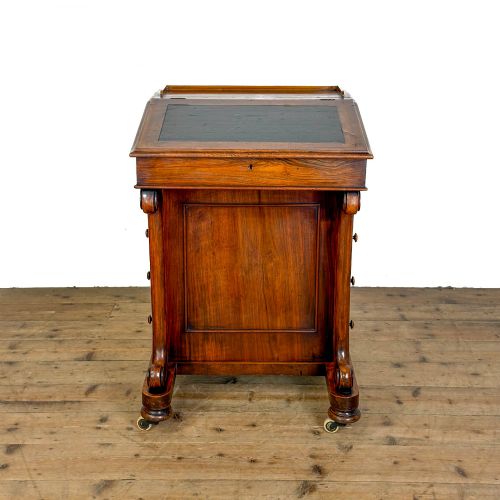
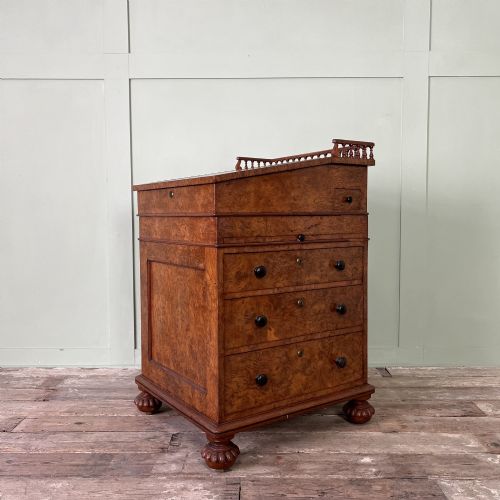
A Victorian walnut writing cabinet brings together storage and a dedicated writing surface, often taking the form of a Davenport, a bureau de dame, or a secretaire bookcase spanning the nineteenth century. These items range from compact desks with stationery compartments to larger combinations of bookcases and writing cabinets.
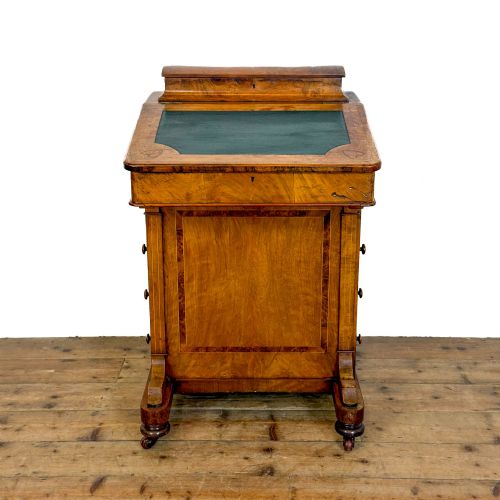
The versions most commonly met on this page are burr walnut Davenports and secretaire bookcases dated between eighteen fifty and eighteen ninety. They reflect the Victorian demand for compact, multi-functional furniture designed for domestic studies and drawing rooms.
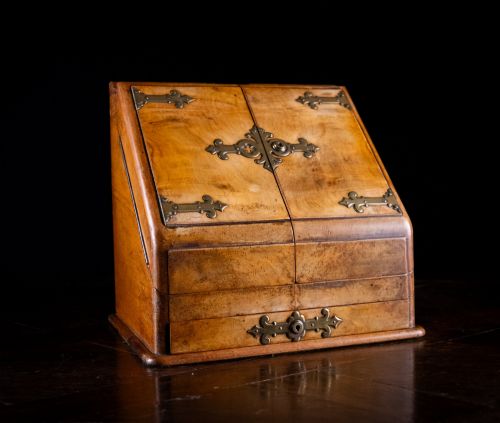
Beyond standard desks, the selection includes pop-up mechanisms, cylinder desks, and stationery boxes, drawing on periods from the Georgian era through to late Victorian revival styles.
Materials and Construction
Makers utilised solid walnut and decorative burr walnut veneers, laid over secondary timbers to create patterned surfaces on the main body of the cabinet. These timber surfaces were frequently enhanced with boxwood inlay, brass mounts, and ebonised wood details.
Interiors often integrate fitted letter compartments, secret drawers, and leather writing slopes. Ormolu mounts and glass doors appear on specific variants like music cabinets and display pieces.
One glazed walnut cabinet carries hand-sign-written advertising for Fry's Chocolate, recording its later life in commerce.
Distinctions in Quality
The tier of a piece depends on the complexity of its internal mechanics, such as pop-up stationery compartments and concealed drawers, alongside the richness of the burr walnut grain. Finer examples display precise boxwood inlay and substantial brass hardware.
Structural harmony between the cabinet top and the writing desk section distinguishes standard production from exceptional workshop output, particularly in pieces bearing maker attributions.
Gillow & Co·Shoolbred
The Victorian Walnut Writing Cabinet Glossary
- Burr walnut
- A figured wood veneer taken from the warted growth of a walnut tree, prized for its swirling grain patterns.
- Davenport
- A small compact desk featuring a sloping writing surface above a pedestal of drawers.
- Secretaire
- A piece of furniture containing a concealed writing drawer or fold-down writing flap.
- Ormolu
- Gilded bronze applied as a decorative mount to furniture surfaces.
- Ebonised
- Wood treated with a dark finish to imitate ebony.
Victorian Walnut Writing Cabinet: Frequently Asked Questions
What is a Davenport desk?
A Davenport is a small pedestal desk with a sloping writing surface, typically featuring drawers opening to the side.
These pieces were designed for domestic correspondence and first appeared in the Georgian period before becoming popular throughout the Victorian era.
How do pop-up mechanisms work?
Pop-up mechanisms raise internal stationery compartments automatically when the main writing flap or lid is opened.
This concealed compartment provides partitioned space for letters and inkwells without taking up extra surface room.
What is burr walnut?
Burr walnut is a wood veneer obtained from the irregular growths on walnut trees, creating complex and decorative patterns.
Cabinetmakers used this timber on the exterior surfaces of high-status Victorian desks and writing cabinets to highlight the grain.
Where were these cabinets used?
These cabinets were placed in drawing rooms, private studies, and bedrooms for household correspondence and record keeping.
Their compact size allowed them to function in domestic spaces where a full-sized library desk was impractical.
How do I date a Victorian writing cabinet?
Dating relies on stylistic clues, timber choices, hardware, and mechanical fittings recorded across the nineteenth century.
Earlier pieces from eighteen fifty often feature simpler pedestal forms, while pieces from eighteen eighty incorporate elaborate inlays and complex pop-up mechanisms.