


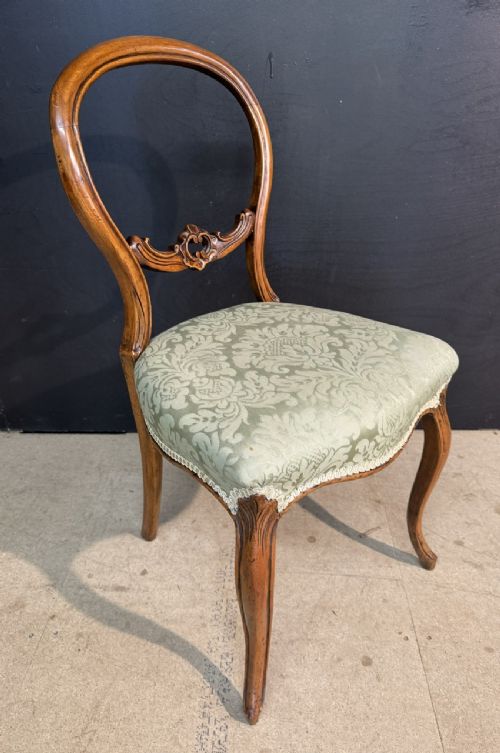
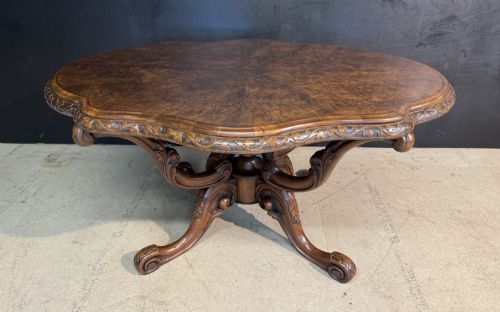
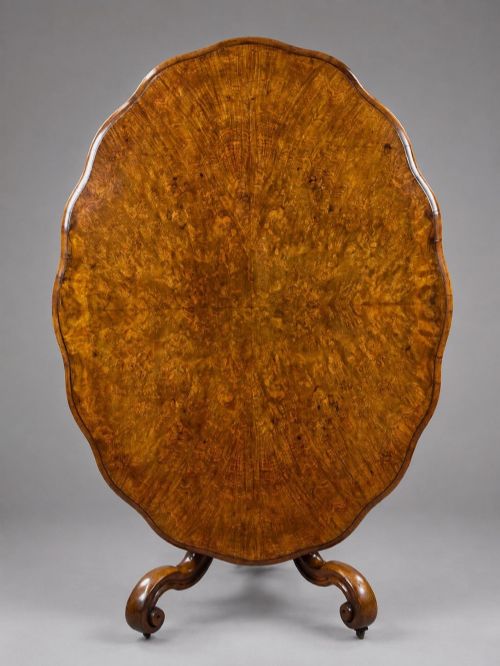
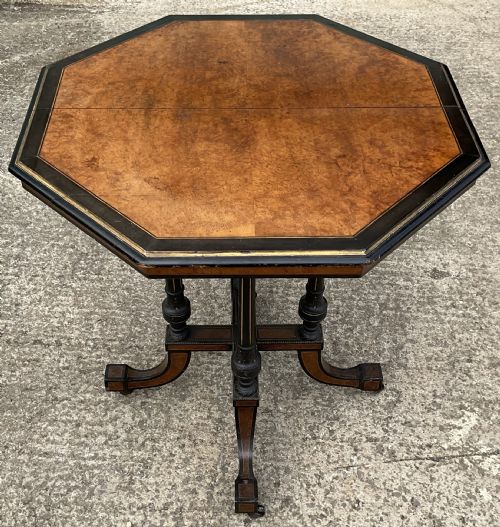
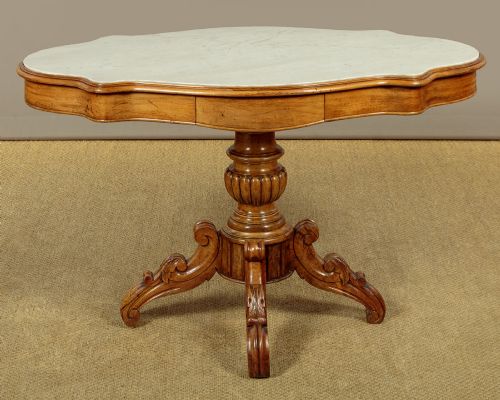


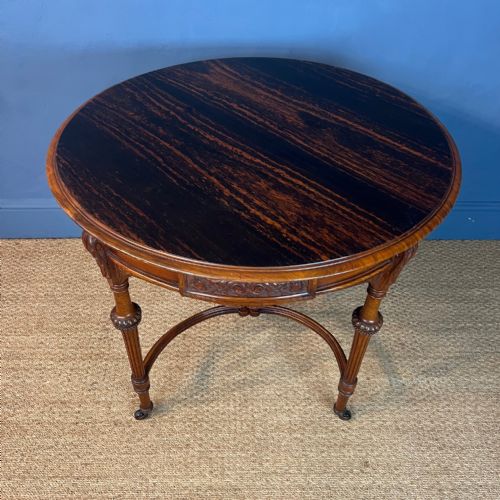

Victorian Walnut Parlour Table
A victorian walnut parlour table brings nineteenth-century warmth into a modern room through rich grain and practical surface area.
Victorian Walnut Parlour Table
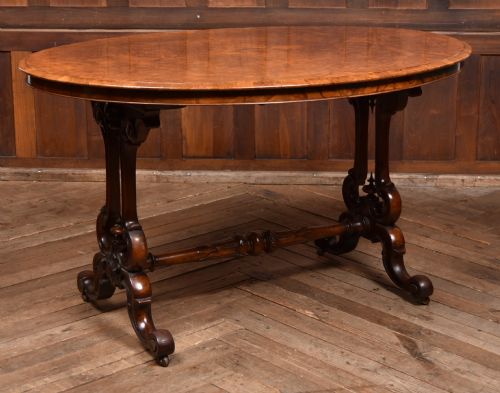
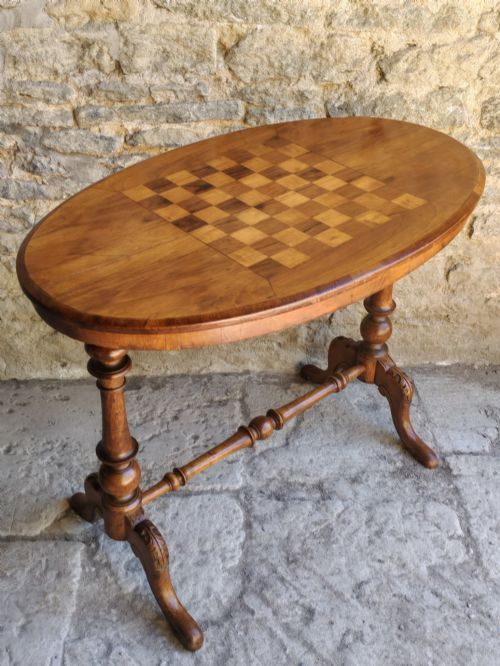
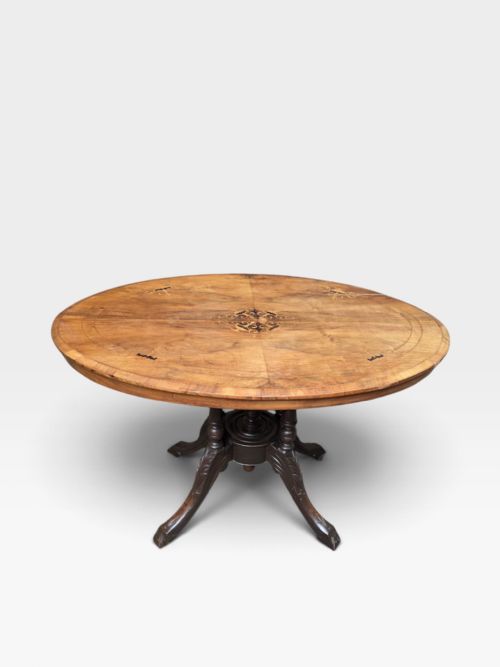
A victorian walnut parlour table stands as a versatile nineteenth-century staple designed for central placement in domestic reception rooms. These pieces appear most frequently as oval or circular centre tables, alongside occasional and tilt-top formats.
Makers shaped these surfaces for social display, utilising sturdy pedestal bases, freestanding basket supports, or multi-legged frames. The proportions suit middle-sized rooms where a domestic surface needs both presence and utility.
Dating primarily from the middle to late nineteenth century, these examples reflect the stylistic shifts from mid-century revivalism towards later aesthetic movement designs. Walnut and burr walnut dominate the surviving selection across various decades.
How they were made
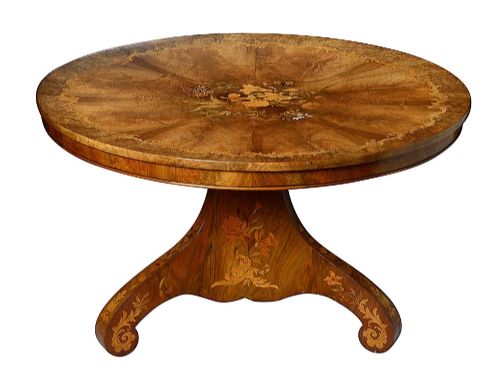
Cabinet makers selected solid walnut and applied burr walnut veneers to achieve complex, figured grain patterns on table tops. Artisans enhanced these surfaces using boxwood, marquetry, and brass inlays.
Structural elements relied on robust timber framing, while specialised forms incorporated tilting mechanisms, pedestal columns, and ebonised details. Marble inserts also appear on select mid-century surfaces.
Joinery techniques combined traditional framing with sophisticated veneering to prevent warping across large circular and oval expanses. Workshops balanced decorative inlay with stable underlying wooden construction.
Victorian Walnut Parlour Table Retail Price Guide 2026
Typical asking prices for victorian walnut parlour table among the pieces listed under this phrase on Sellingantiques today, from the lower quarter to the upper quarter. They describe what is for sale here now, not the wider market.
Some tilt-top tables were engineered so the family could quickly hide the surface when unexpected callers knocked.
What varies in quality
The choice of timber creates the primary distinction, where highly figured burr walnut veneer elevates an ordinary top into a striking visual centrepiece. Finely executed boxwood and marquetry inlays demand superior craftsmanship compared to plain surfaces.
Structural stability and the complexity of the pedestal base dictate the integrity of the piece. Tables featuring well-carved cabriole legs, ebonised detailing, or robust tilt-top actions demonstrate higher workshop standards.
James Winter·Gillows of Lancaster·Thonet
The Victorian Walnut Parlour Table Glossary
- Burr walnut
- A prized timber harvested from walnut tree growths, producing swirling, highly decorative grain patterns. Cabinet makers frequently utilised this veneer on prominent table tops.
- Marquetry inlay
- Decorative patterns formed by fitting contrasting wood veneers into a prepared background. Artisans used this technique to create elaborate floral or geometric top designs.
- Tilt-top table
- A form featuring a hinged mechanism allowing the surface to fold vertical when not in use. This design saved space in crowded nineteenth-century rooms.
- Loo table
- A large round or oval centre table intended for card games and social gatherings. These pieces often feature heavy pedestal or tripod bases.
- Pedestal base
- A central column support rising from feet or a platform base. This construction allows unrestricted legroom around the table perimeter.
Victorian Walnut Parlour Table: Frequently Asked Questions
Where should I place a parlour table?
These pieces work well as freestanding centre tables in living spaces or large hallways. Their finished undersides and decorated tops allow 360-degree viewing.
Ensure adequate clearance around the perimeter for movement, as many examples feature prominent pedestal or four-leg bases.
How do I care for walnut wood?
Protect the polished surface from direct sunlight and excessive moisture to prevent veneer cracking or fading. Dust regularly with a soft, dry cloth.
Aplying appropriate furniture wax occasionally helps maintain the lustre of nineteenth-century timber without building up heavy residues.
Can I use these for dining?
Most parlour tables sit lower or offer lighter construction than dedicated dining furniture. They suit casual drinks, lamps, or decorative displays.
Tilt-top variants specifically serve to clear floor space rather than support heavy family meals.
How do I identify the period?
Examine the timber choices, construction methods, and decorative motifs like marquetry or ebonising. Mid-century examples often display heavy burr walnut veneers.
Later pieces from the 1880s frequently incorporate aesthetic movement styling or simpler geometric lines.