




Victorian Walnut Display Table
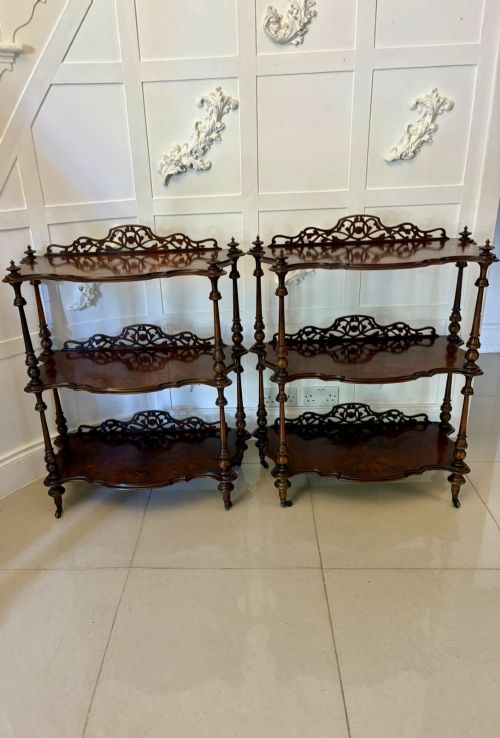
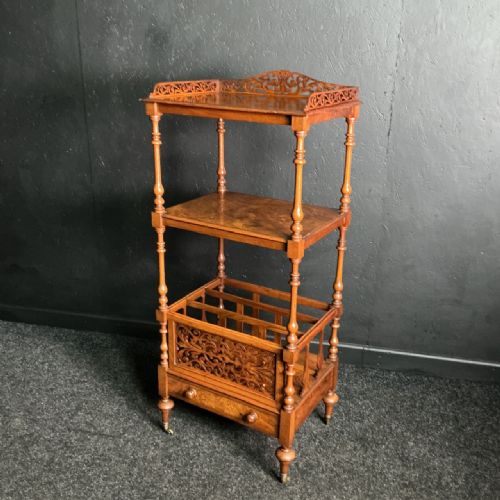
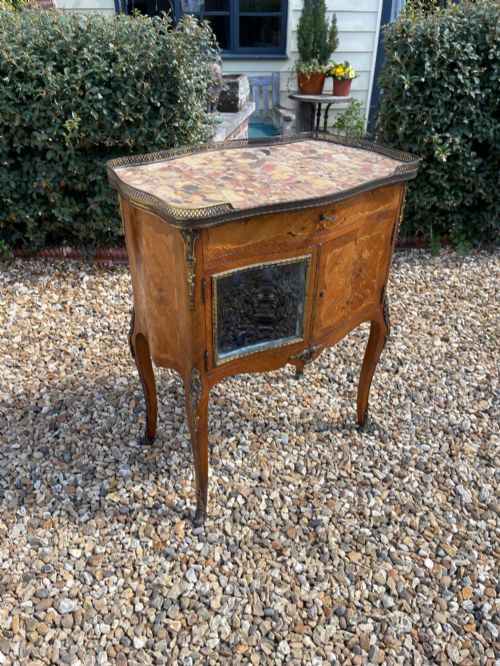
These pieces are a victorian walnut display table, crafted to exhibit treasures while anchoring a room with rich grain and polished brass.
Victorian Walnut Display Table
A victorian walnut display table brings together multitiered étagères, glazed bijouterie cabinets and carved whatnots that span the mid nineteenth century into the early twentieth century. Pieces emerge from English workshops alongside continental interpretations in the French Rococo and Italian manners, maintaining a distinct domestic purpose.
Buyers encounter freestanding oval consoles, demilune display tables and multitiered shelves designed specifically to showcase ornaments, jewellery and precious books. The walnut timber provides a dark, figured foundation across these diverse forms, uniting cabinets and open stands under a single aesthetic era.
Materials and construction
Cabinetmakers select burr walnut for its complex, swirling grain patterns, laying decorative veneers over sturdy secondary timbers to catch the light on tabletops and cabinet fronts. Fine marquetry inlay, contrasting stringing in satinwood and polished brass mounts punctuate the dark timber surfaces.
Glazed panels, bevelled glass doors and cast ormolu details integrate structural rigidity with transparent display compartments. Ebonised wood accents and turned supports further define the period joinery seen across these stands and tables.
Tea fancies stands wait patiently to hold afternoon cakes long after the Victorian drawing room party has departed.
Craftsmanship and distinction
Distinctions in quality rest upon the selection of the burr walnut veneer and the precision of the marquetry work, where finer pieces display seamless matching across complex curves. The crispness of hand-carved details on supports and the substantial weight of brass and ormolu mounts separate standard production from exhibition pieces.
Structural integrity reveals itself in the alignment of glazed drop fronts, the smooth operation of adjustable shelving and the stability of multitiered étagères. Maker attribution and unusual proportions elevate specific examples within the historical record.
Shoolbred·Gillows·Holland and Sons·Donald Ross
The Victorian Walnut Display Table Glossary
- Bijouterie table
- A glass-topped display table specifically designed for housing small valuables, medals and jewellery.
- Étagère
- A piece of furniture consisting of a set of open shelves for displaying small objects or ornaments.
- Whatnot
- An open multitiered piece of furniture used for storing or exhibiting ornaments, books and curiosities.
- Ormolu
- Gilded bronze mountings applied to furniture for decorative enrichment.
- Marquetry
- Decorative veneer patterns formed by fitting together thin pieces of wood and other materials.
Victorian Walnut Display Table: Frequently Asked Questions
How do you style an étagère?
An étagère accommodates collections of ceramics, small bronzes and bound books distributed across its open graduated shelves.
Balance heavier items on the lower tiers while placing lighter, more delicate curiosities on the upper shelves to maintain visual harmony.
What is burr walnut?
Burr walnut is a highly prized wood harvested from the wart-like growth on a walnut tree, yielding complex and swirling grain patterns.
Cabinetmakers slice this timber into thin veneers to adorn the prominent surfaces of high-status Victorian display furniture.
How do you date a Victorian display table?
Dating relies on examining the secondary timbers, the style of the brass mounts, and the complexity of the inlaid marquetry.
Mid nineteenth-century examples often favour robust proportions and rich ormolu, whereas later pieces incorporate refined ebonised details and lighter framing.