






Victorian Upholstery Stool
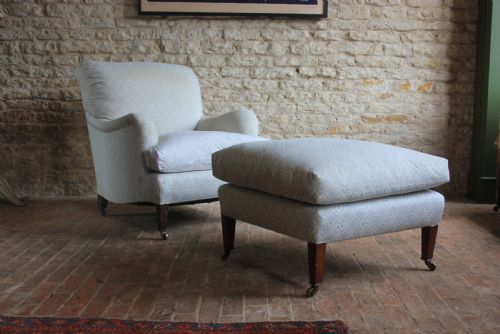
These Victorian upholstery stool pieces are solid timber frames carrying period textiles, prized for adding low, practical seating to a room.

Victorian Upholstery Stool
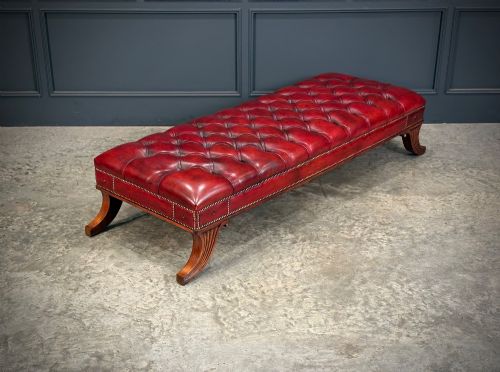
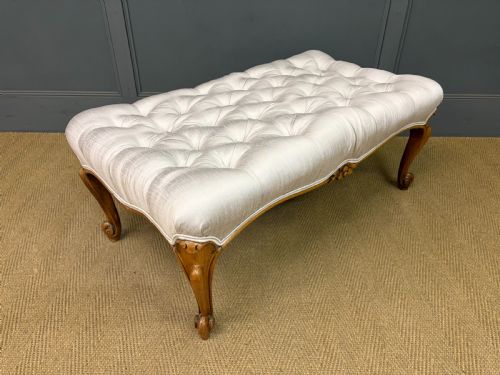
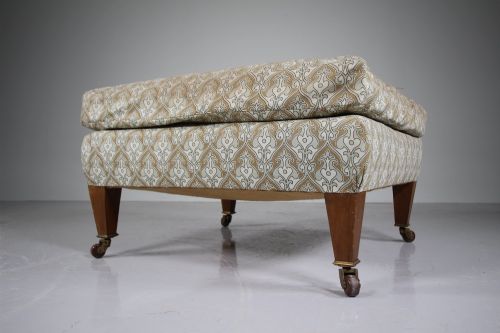
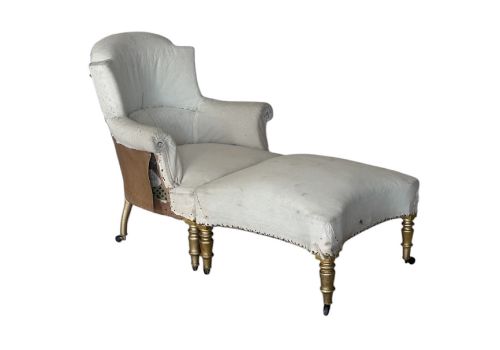
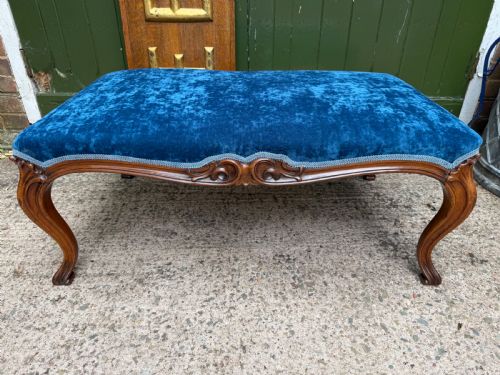
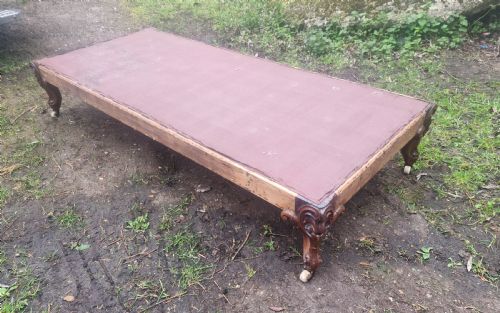
When you search for a victorian upholstery stool, you encounter low seating designed to support the feet or provide extra places to sit near a hearth. The examples here span footstools, long ottomans, and centre stools, originating primarily from the nineteenth century with occasional Edwardian items.
Rosewood, walnut, and mahogany dominate the timber frames, frequently paired with brass castors and dense wool or velvet textiles. Many pieces reflect revival aesthetics, incorporating Chippendale, William and Mary, or French nineteenth century design elements into sturdy domestic frames.
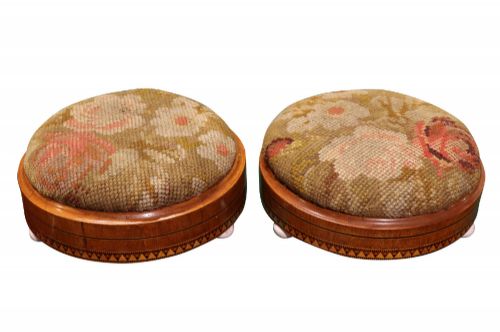
The assortment ranges from compact circular footstools to large country house storage ottomans and adjustable gout stools. Buyers most frequently meet walnut or mahogany frames supporting needlepoint, tapestry, or gros-point needlework tops.
Materials and construction methods
Makers built these frames using durable hardwoods including walnut, rosewood, and mahogany, shaped with carved details or spiral turnings. Beechwood also appears on specialised adjustable forms, while brass castors and studs provide functional hardware details.
Upholstery forms the core of each piece, utilising fabrics such as velvet, wool, hide, and woven tapestry over traditional stuffing. Needlework surfaces, including gros-point and floral patterns, complete the top sections of many footstools and ottomans.
Victorian Upholstery Stool Retail Price Guide 2026
Typical asking prices for victorian upholstery stool among the pieces listed under this phrase on Sellingantiques today, from the lower quarter to the upper quarter. They describe what is for sale here now, not the wider market.
Carriage foot warmers allowed Victorian travellers to slide heated bricks inside a timber and fabric box during cold coach journeys.
Distinctions in craftsmanship and materials
The hierarchy of these pieces rests on the choice of timber and the complexity of the frame carving, with dense rosewood and walnut sitting above simpler beech or mahogany structures. Elaborate details like spiral carving and inlaid woodwork signal higher ambition in the workshop.
The integrity and originality of the textile top heavily influence the standing of a piece, whether it retains period needlework or requires new upholstery. Substantial proportions, such as large country house dimensions, and fitted hardware like original brass castors further set individual items apart.
Howard & sons·Hallett & Sons
The Victorian Upholstery Stool Glossary
- Ottoman
- A low, upholstered seat or footstool without a back or arms, often built with internal storage.
- Gros-point
- A heavy, counted-thread needlework technique using wool yarn on a canvas grid, frequently seen on period stool tops.
- Cabriole leg
- A furniture leg that curves out and then in, resembling an animal's leg.
- Prie-Dieu
- A low devotional chair featuring a padded top rail for kneeling or leaning.
- Castor
- A small wheel fitted to the base of a furniture leg to ease movement across floors.
Victorian Upholstery Stool: Frequently Asked Questions
How do I clean the fabric?
Historic textiles require gentle surface brushing or specialised vacuuming with a low suction attachment to remove dust without damaging fragile fibres.
Avoid using water or chemical cleaners directly on nineteenth-century wool, tapestry, or velvet surfaces to prevent permanent staining.
Are these stools sturdy enough for daily seating?
Most hardwood frames built from walnut or mahogany remain structurally sound and capable of supporting regular weight in a modern living space.
Heavily carved or antique frames benefit from occasional checks of the joints to ensure the timber stays secure.
Can I reupholster a period stool?
Many buyers choose to update the fabric using traditional materials that match the original weight and style of the piece.
Retaining the underlying frame and webbing preserves the integrity of the nineteenth-century structure while offering a fresh surface.