
Victorian Upholstered Dining Seats
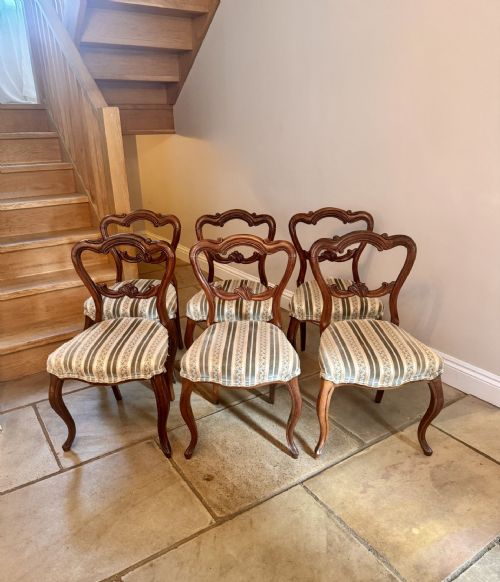
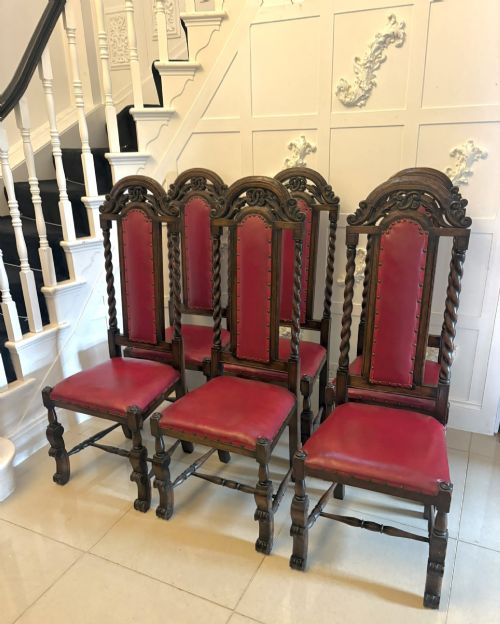
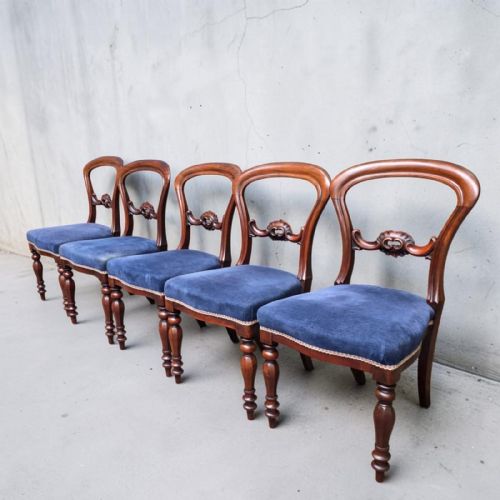
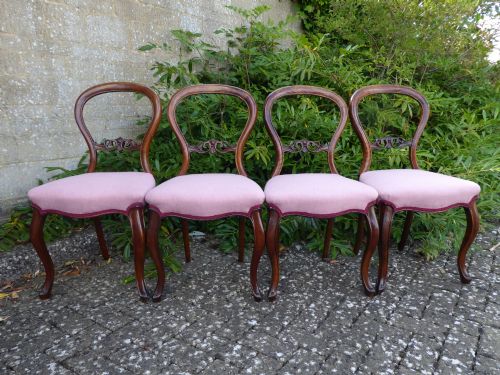
These victorian upholstered dining seats bring solid nineteenth-century timber frames and traditional padding straight to the dining table.
Victorian Upholstered Dining Seats
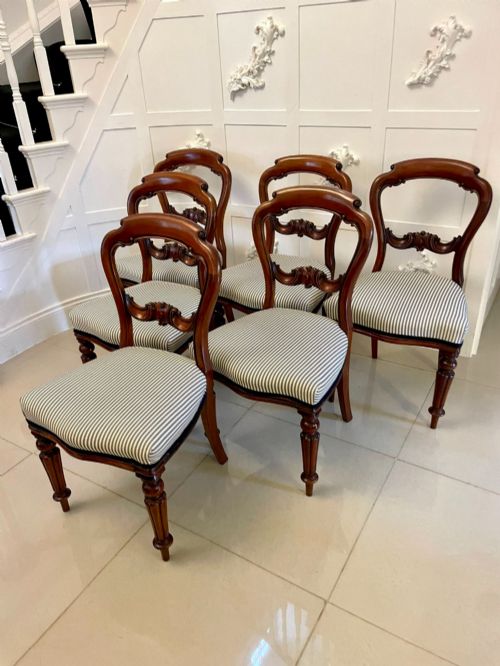
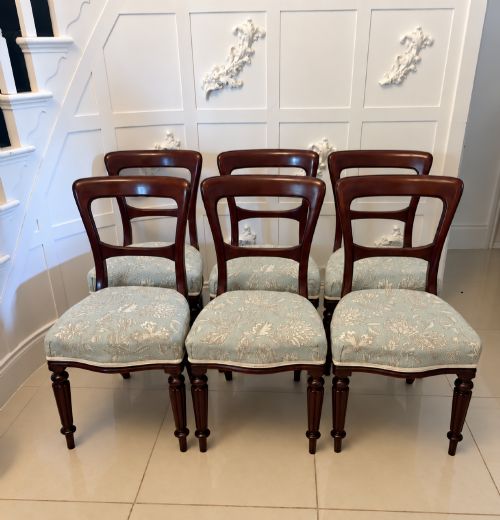
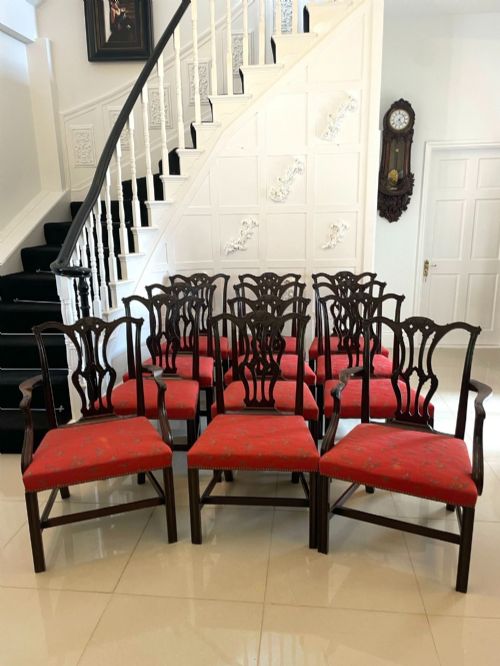
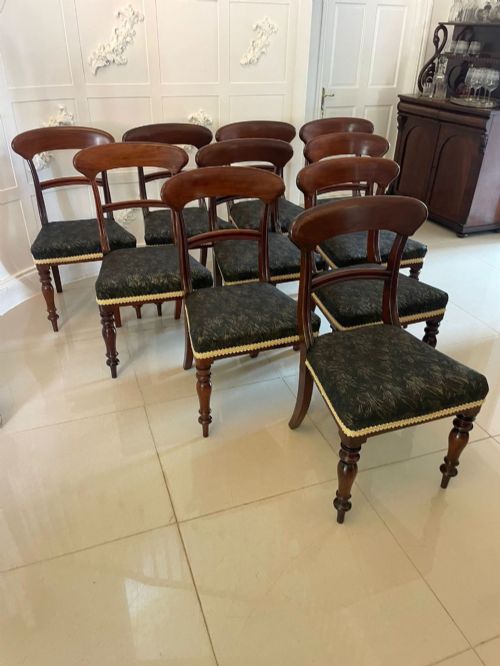
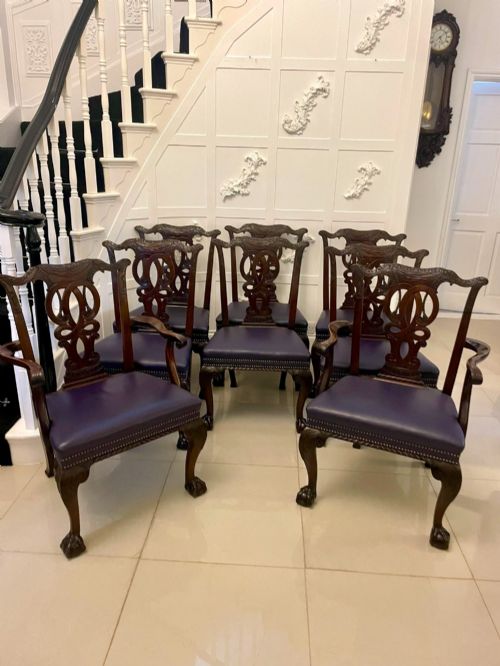
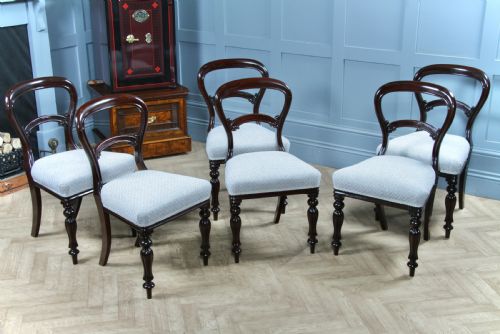
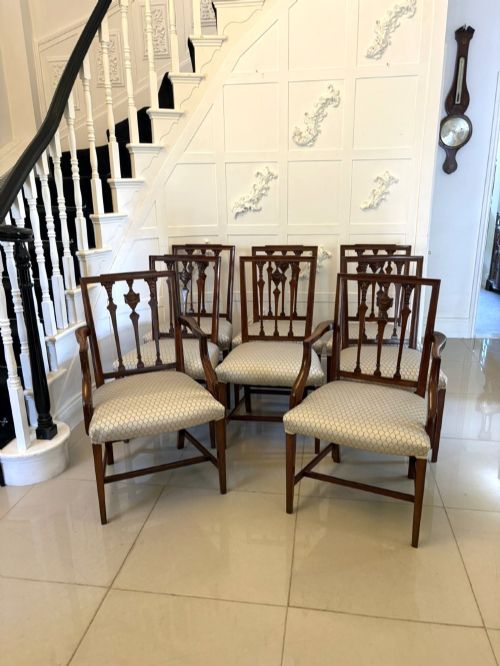
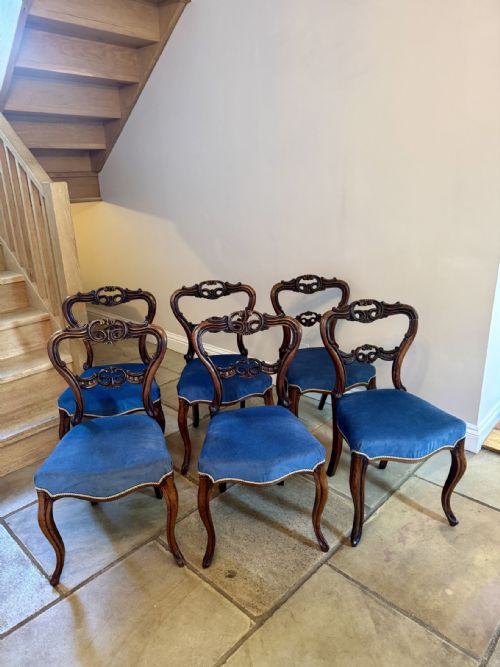
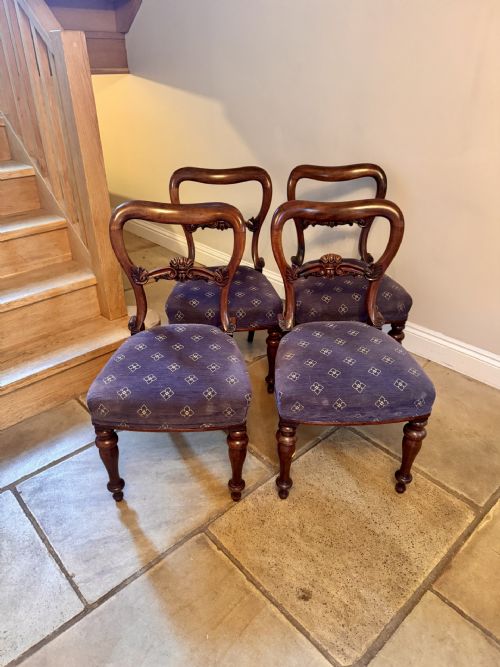
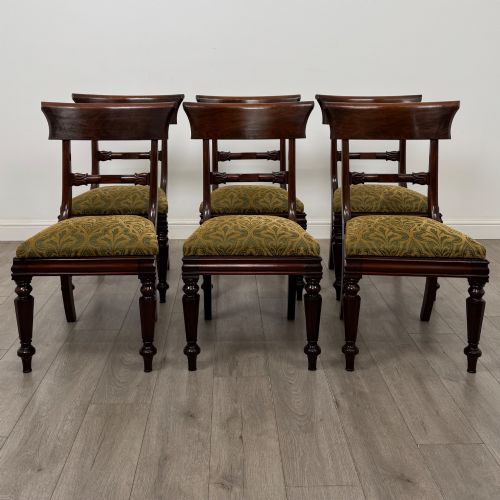
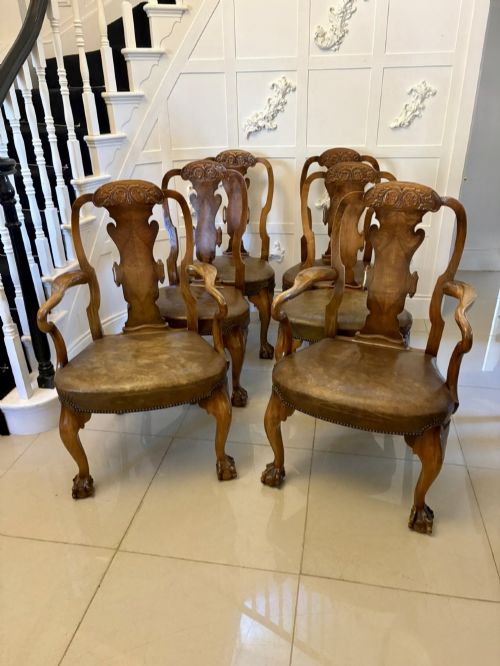
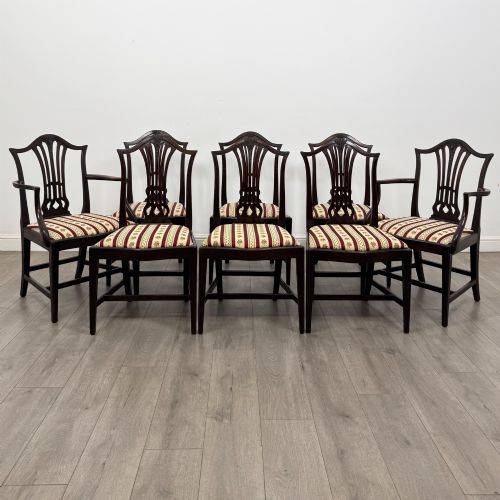
When buyers search for victorian upholstered dining seats, they encounter a range of nineteenth-century timber frames spanning dining chairs, side chairs, armchairs, and hall chairs. Sets of four, six, eight, and ten pieces appear frequently alongside pairs and individual examples.
The materials and styles cross multiple decades of the nineteenth century, including specific years from the 1850s, 1860s, 1870s, 1880s, and 1890s, alongside Regency, William IV, Chippendale style, and Gothic Revival influences. Mahogany, walnut, and rosewood dominate the timber selection, frequently paired with fabric, velvet, and tapestry upholstery.
How They Were Made
Cabinetmakers constructed these frames using dense hardwoods like mahogany, walnut, oak, and rosewood, often shaping the timber into balloon backs, bar backs, or carved structural supports. Joinery relied on traditional methods to withstand daily dining room use.
Upholstered elements involved webbing, stuffing, and textile coverings secured to the seats and sometimes the backs, utilising fabrics, velvet, tapestry, and needlepoint. Additional detailing included brass elements, ebonised finishes, and gilt highlights.
Needlepoint seats in duck egg blue offer a colourful contrast to dark rosewood frames.
What Varies in Quality
The standard of carving and timber selection dictates much of the distinction between examples, with finely figured mahogany, richly grained walnut, and deep rosewood sitting above simpler utility frames. Crisp relief work on carved crest rails and back splats marks out superior craftsmanship.
Consistency across a set heavily influences desirability, particularly when matching timber patination, wood grain, and frame proportions across four, six, or ten chairs. The execution of the joinery and the structural stability of the legs and stretchers also define the upper tier.
Lamb of Manchester
The Victorian Upholstered Dining Seats Glossary
- Balloon back
- A rounded, curved chair back resembling the profile of a hot air balloon, popular in the mid-nineteenth century. This shape provided ergonomic support while allowing cabinetmakers to display polished timber grain.
- Bar back
- A horizontal wooden splat crossing the upper portion of the chair back. This form relates closely to Regency and early Victorian seating designs.
- Gothic Revival
- A nineteenth-century design movement drawing inspiration from medieval architecture. Pieces in this style often incorporate pointed arches, tracery, and heavy carved details.
- Rosewood
- A dense, heavily figured exotic timber with dark grain patterns used for high-status Victorian dining furniture. It takes a high polish and provides a rich reddish-brown surface.
- Carver
- An armchair designed to match a set of dining chairs, typically placed at the head of the table. These incorporate supportive armrests integrated into the upper frame.
Victorian Upholstered Dining Seats: Frequently Asked Questions
How do I clean the wood frames?
Dust the timber regularly with a dry, soft cloth to prevent particulate accumulation on the polished surfaces. Apply a quality beeswax periodically to nourish the mahogany, walnut, or rosewood.
Avoid using modern liquid polishes containing silicone, which can penetrate the grain and damage the historic finish over time. Gentle maintenance preserves the natural patination developed across the nineteenth century.
Can I mix these chairs with modern tables?
Victorian dining seating pairs effectively with contemporary or mid-century timber tables due to the warmth of the natural woods. The diversity in timber tones allows them to bridge different interior styles.
Consider the seat height and table clearance before combining periods, as nineteenth-century dimensions can occasionally run slightly lower than modern standards. Measuring both pieces ensures comfortable legroom.
How do I care for antique upholstery?
Vacuum the fabric or velvet surfaces gently using a low-suction brush attachment to remove dust and debris. Protect the textiles from direct sunlight to prevent fading of the original or period-replacement fabric.
If the padding requires attention, consult a professional restorer who understands traditional stuffing and webbing techniques. Maintaining the internal structure preserves the correct sit and posture of the chair.
Are larger sets harder to find?
Sets of six, eight, and ten matching chairs occur less frequently than pairs or single side chairs because many originals were dispersed or separated over generations. Finding an unbroken larger grouping requires careful matching of timber grain and frame design.
When larger sets do appear, they usually represent dining rooms from grander nineteenth-century households. This scarcity in matched quantities makes complete sets particularly valued by collectors.