

Victorian Two Over Three Chest
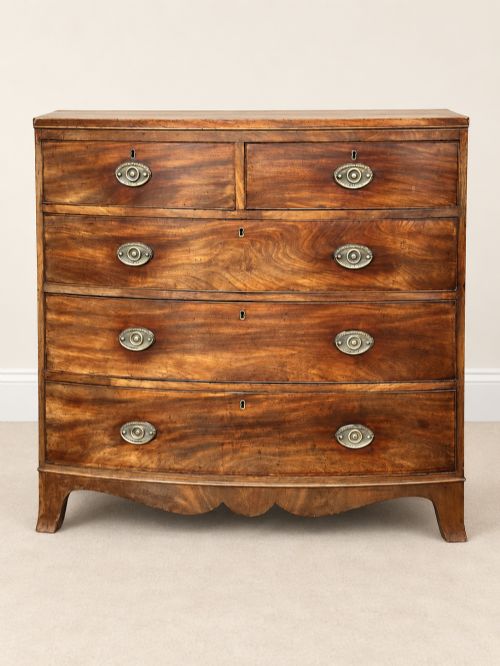
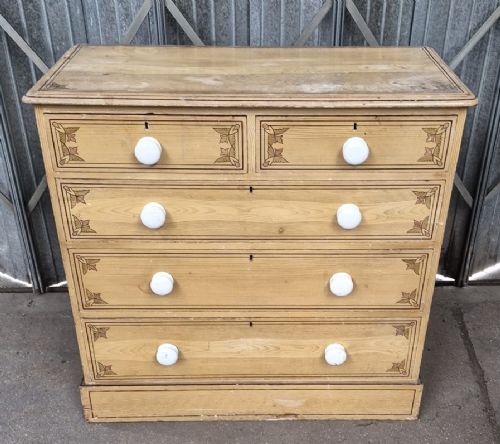
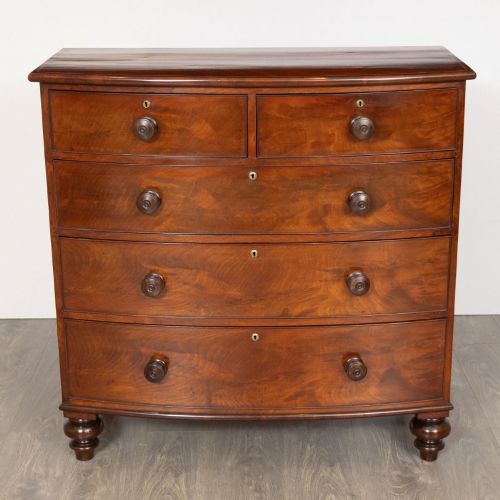
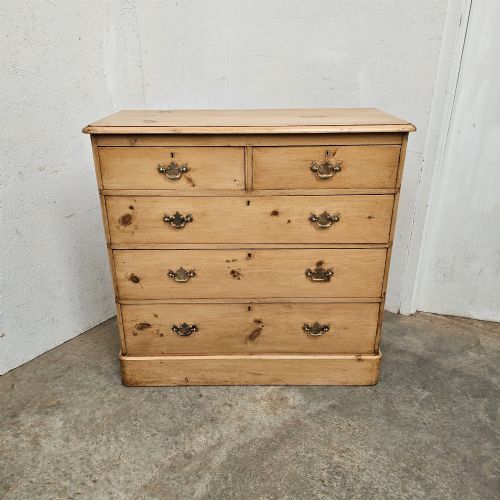
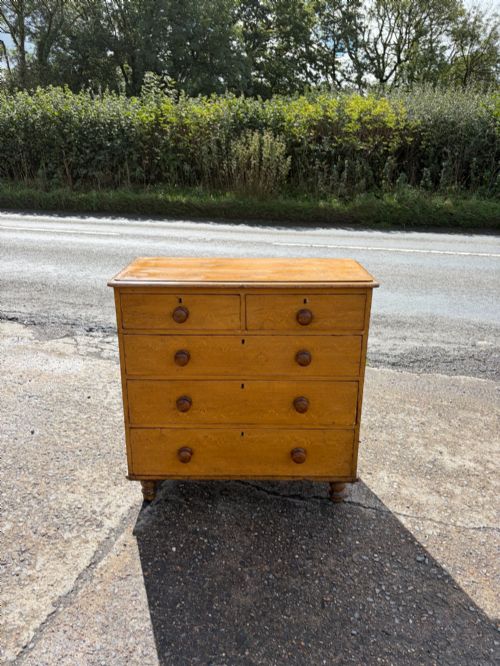
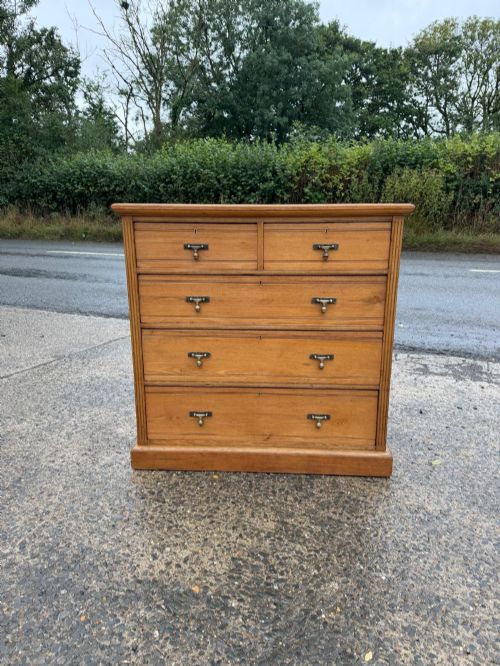
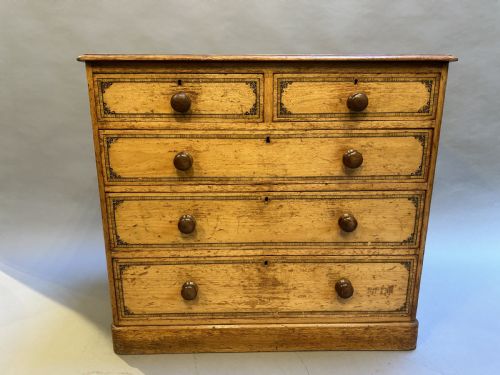
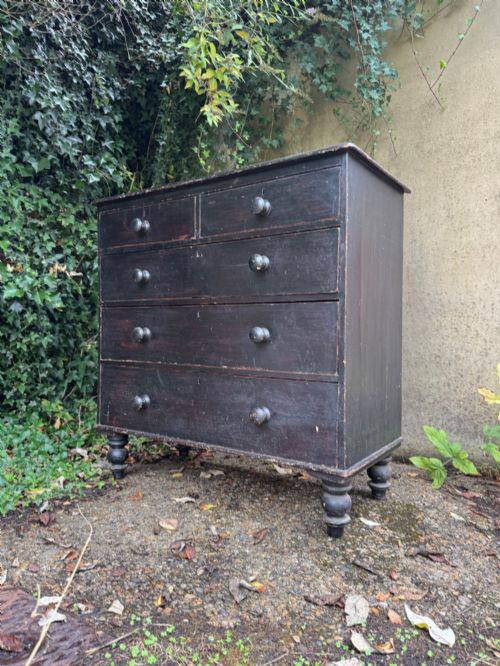
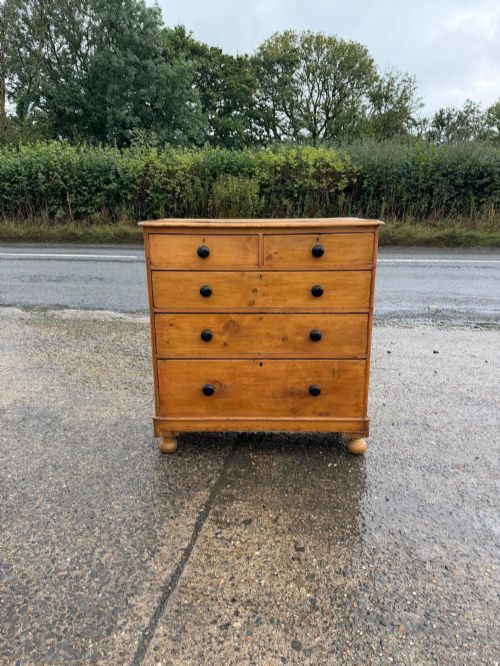
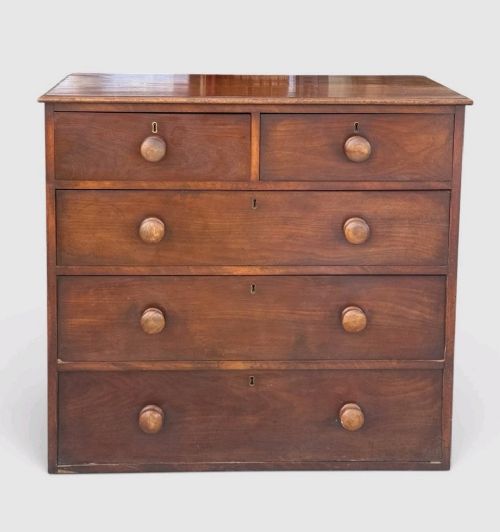
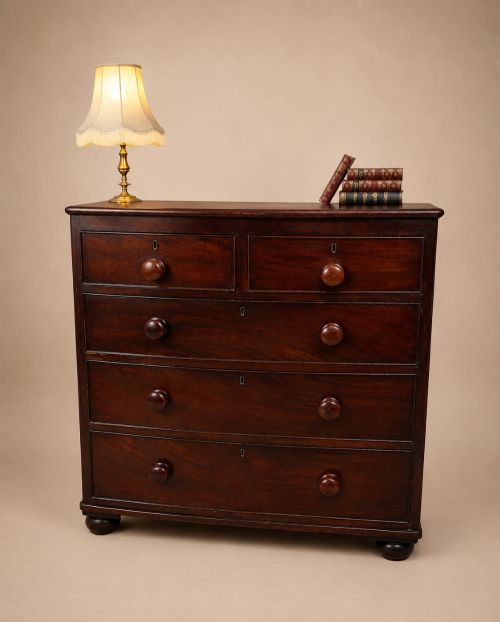
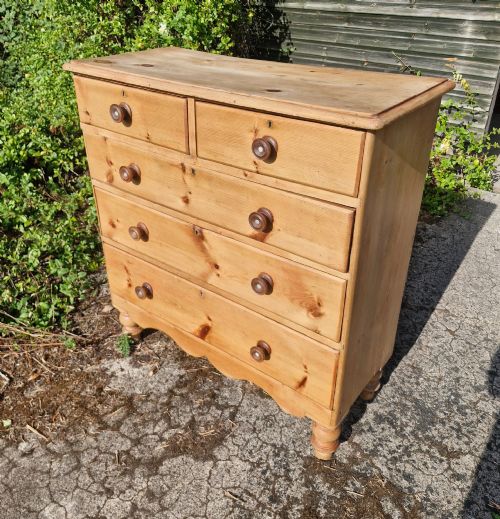
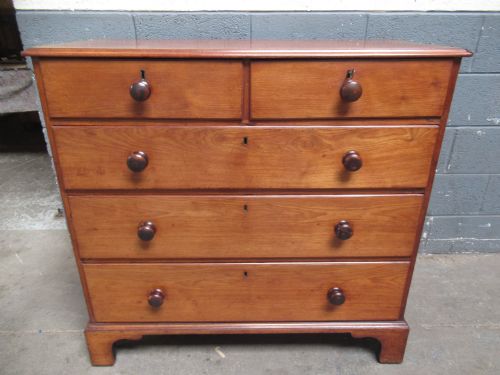
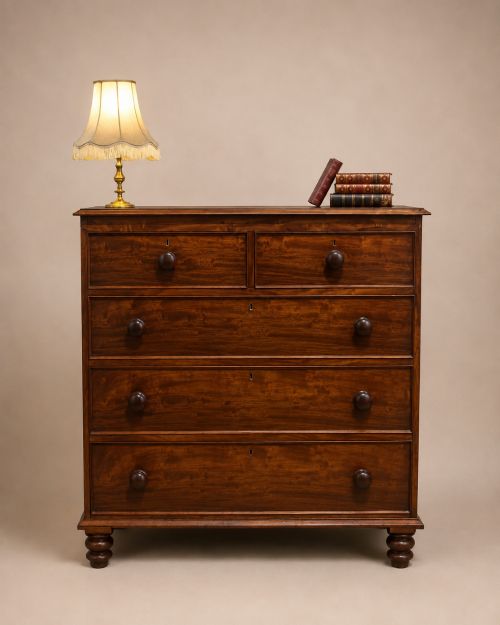
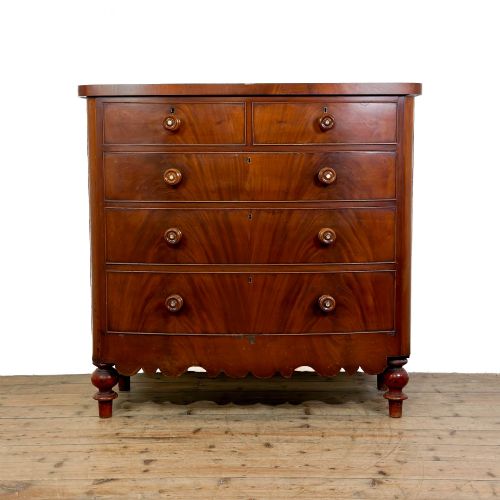
A victorian two over three chest offers practical bedroom storage arranged with two smaller upper drawers above three wider ones.
Victorian Two Over Three Chest
Most examples found on this page date from the Victorian period, though related pieces span from the nineteenth century into the Edwardian era. These pieces appear in various forms, including straightforward upright storage and decorative bow front configurations.
The aesthetic range spans from formal mahogany and flame mahogany designs to rustic pine, scumbled finishes, and painted surfaces. Buyers encounter regional country pieces alongside more polished urban examples from the same decades.
How They Were Made
Cabinet makers constructed these carcases using solid timbers such as pine and mahogany, often applying flame mahogany or satinwood veneers to the drawer fronts for decorative grain patterns. Brass handles and escutcheons provided functional hardware for daily operation.
Surfaces were frequently finished with traditional paint, scumble glazes, or polished wood finishes that highlighted the natural grain of the material. Structural integrity relied on robust timber joinery within the drawer frames and carcase.
Listings feature woods including pine, mahogany, satinwood, walnut, birch, and ash alongside applied veneers.
What Varies in Quality
Quality rests upon the selection of timbers and the handling of veneers, where beautifully figured flame mahogany or burr ash sets a higher standard than plain utilitarian pine. The crispness of the drawer construction and the retention of original brass hardware elevate the status of a piece.
Surface preservation marks another distinction, separating standard stripped items from pieces retaining original paint, scumbling, or patinated polish. The overall proportion and balance of the bow front or straight carcase determine the visual success of the design.
Howard and Sons
The Victorian Two Over Three Chest Glossary
- Bow front
- A convex curved cabinet front that projects outward in a smooth arc. This curved shape adds visual movement to the piece.
- Flame mahogany
- A veneer cut from the fork of the mahogany tree to create a distinctive flickering flame pattern. Cabinet makers used this on prominent drawer fronts.
- Scumble
- A decorative paint technique involving translucent layers brushed over a base coat to imitate wood grain or texture. It appears on country pine pieces.
- Escutcheon
- A protective plate surrounding a keyhole. These brass fittings prevent wear around the lock.
- Carcass
- The main structural body or frame of a chest of drawers. Drawers fit directly inside this outer shell.
Victorian Two Over Three Chest: Frequently Asked Questions
What is a two over three chest?
A two over three chest is a standard drawer configuration featuring two smaller drawers placed side by side at the top, above three wider drawers spanning the full width below.
This layout provides versatile storage for smaller items up top and larger garments in the deeper drawers underneath.
How do I date a Victorian chest?
Dating relies on observing timber choices, construction techniques, and stylistic markers recorded across the nineteenth century. Details like pine carcases or flame mahogany veneers help place the piece within specific decades.
Changes in hardware styles and decorative finishes also offer clues to the era of manufacture.
Are these chests suitable for modern bedrooms?
These chests offer generous storage capacity while occupying a compact footprint on the floor. Their traditional proportions make them practical for everyday use in contemporary settings.
Drawer depths comfortably accommodate modern clothing and daily bedroom essentials.
What woods were commonly used?
Pine and mahogany form the foundation of most pieces in this category, accompanied by walnut, birch, ash, and satinwood. Veneers like flame mahogany and burr ash were applied to enhance the visual appearance.
Secondary woods often appear inside drawer linings and backboards.