
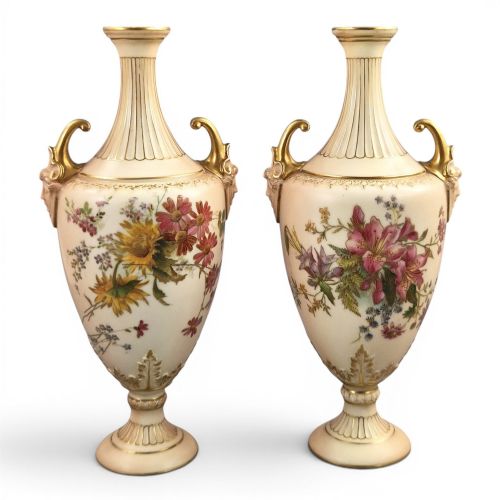


Victorian Twin Handled Vase
A victorian twin handled vase brings grand symmetry and classical form to a room, offering striking display presence through paired handles and decorative painted surfaces.
Victorian Twin Handled Vase
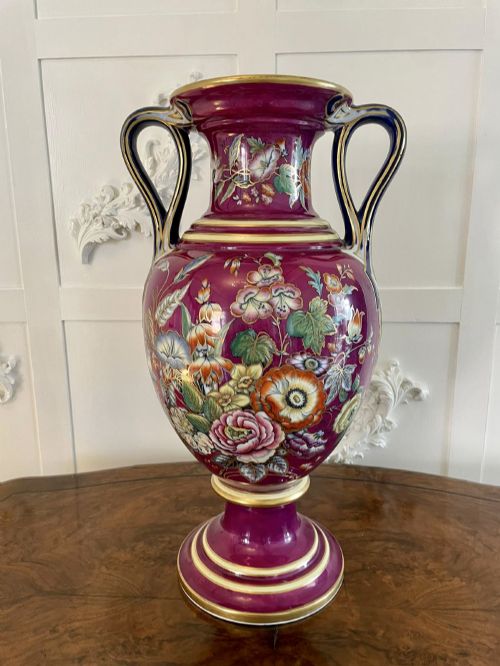
A victorian twin handled vase displays the balanced symmetry characteristic of nineteenth century decorative arts, designed primarily for ornamental display on mantelpieces or pedestals. These vessels range from intimate cabinet pieces to large floor-standing urns, incorporating side handles that echo classical Greek and Roman forms.
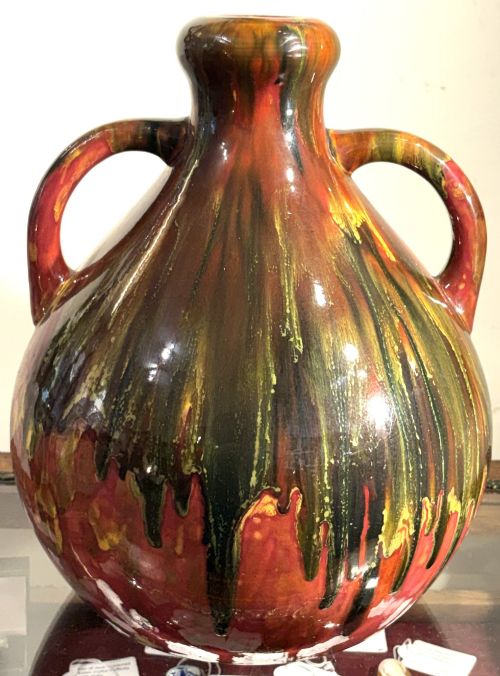
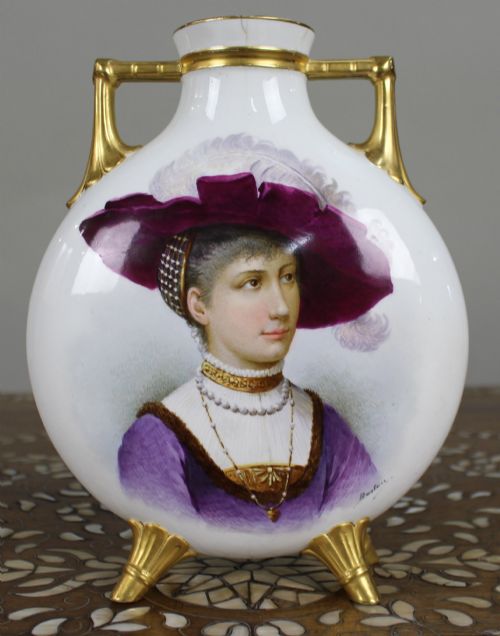
The specimens on this page encompass various utilitarian and decorative vessels, including amphorae, moon flasks, and traditional urn shapes. Earthenware, porcelain, and metal examples populate the selection, reflecting the diverse manufacturing capabilities of the period.
Most entries originate from the nineteenth century, spanning from the 1860s through the Edwardian transition in 1910. British factories such as Royal Worcester dominate the grouping, alongside continental porcelain and earthenware creations.
Materials and construction methods
Porcelain and earthenware form the core structural bodies of these vessels, shaped either by throwing on a potter's wheel or utilising industrial slip-casting moulds. Manufacturers applied ceramic glazes to seal the porous clay bodies before firing them in high-temperature kilns.
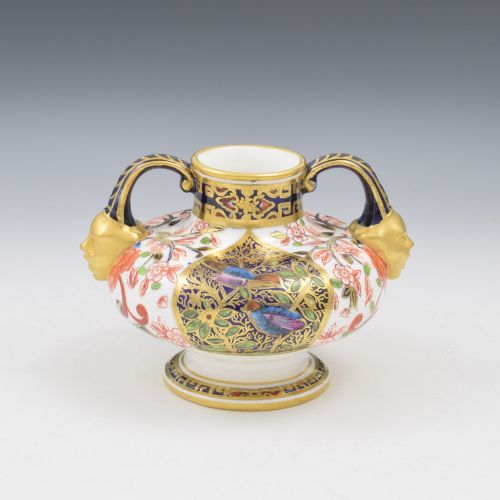
Surface decoration frequently combines hand-painted floral or figurerative motifs with applied gold leaf and heavy gilding. Enamel work and raised paste techniques add textural depth to the ceramic surfaces, particularly on pieces from major porcelain works.
Alternative materials include cast brass and bronze, utilised for grand tour trophy vases and classical replicas. These metal vessels rely on foundry casting and chased surface detailing rather than ceramic glazing.
Storks wading through painted reeds occasionally peer across nineteenth-century ceramic surfaces, bringing frozen wetland drama directly to the drawing room.
Factors determining quality
The refinement of the hand-painted decoration separates standard production pieces from exceptional works of art. Skilled artists working for major potteries executed intricate floral sprays and detailed avian subjects with notable precision, whilst lesser examples rely on printed transfers or simpler painted bands.
The application and preservation of gilding indicate the original manufacturing investment and subsequent care. Thick gold leaf and raised enamel detailing demonstrate superior craftsmanship compared to thin, wiped metallic paints that show extensive rubbing.
Structural integrity and the crispness of the moulded handles define the baseline quality of the vessel. Sharp detail in the handles and clean lines without firing deformations mark superior ceramic and metal casting.
Royal Worcester·Burmantofts·Minton·William Moorcroft·Brannam Art Pottery·Royal Crown Derby·Royal Vienna
The Victorian Twin Handled Vase Glossary
- Blush ivory
- A matte cream-coloured ceramic ground developed by Royal Worcester, typically decorated with pastel floral motifs and subtle gilding. This finish became extremely popular during the late nineteenth century.
- Moon flask
- A flattened circular ceramic vessel with a narrow neck and small side handles, standing on a distinct base. Originating from ancient pilgrim flasks, these decorative items provide a wide canvas for painted scenes.
- Porcelaneous
- A ceramic body that shares the hard, vitrified qualities of true porcelain while remaining distinct in its exact clay composition. Items described thus often possess a dense, durable structure.
- Amphora
- A classical two-handled vessel with a narrow neck, originally used in antiquity for storing oil or wine. Victorian potteries adopted this ancient form purely for decorative urns and vases.
- Gilding
- The application of gold leaf or powdered gold paint to ceramic or metal surfaces for decorative emphasis. High-quality pieces often feature burnished gold highlights.
Victorian Twin Handled Vase: Frequently Asked Questions
How were these vases displayed originally?
Victorian households positioned these vessels prominently on mantelpieces, console tables, and dedicated pedestals within the principal reception rooms. They served as focal points for interior decoration rather than functional flower holders.
Larger urns and amphorae frequently occupied hall spaces or window alcoves where their symmetrical handles and painted surfaces caught the natural light.
What is the difference between a vase and an urn?
An urn generally implies a closed or semi-closed vessel derived from classical funerary or storage forms, often featuring a cover and a more substantial pedestal base. Vases encompass a broader category of open-topped vessels intended primarily for holding cut stems or standing alone as decorative objects.
In nineteenth-century nomenclature, manufacturers often used the terms interchangeably for large decorative pieces equipped with twin handles.
How do I identify a Royal Worcester piece?
Royal Worcester items typically feature printed factory factory ciphers and date codes on the underside of the base, often utilising systems of dots or letters to indicate the exact year of production. The presence of blush ivory grounds and registered pattern numbers further aids identification.
Many high-end pieces also bear the signature or monogram of renowned factory artists such as Edward Raby or C Baldwyn.
Can I use these antique vases for fresh flowers?
While these vessels were historically constructed to hold water and floral displays, contemporary collectors generally avoid exposing antique ceramic interiors to prolonged moisture. Old glaze hairline fractures can absorb water, potentially staining the porous earthenware or clay bodies beneath.
Dry floral arrangements or utilising a discreet glass liner inside the vessel helps protect the internal structure while permitting display.
What defines the Aesthetic Movement style?
The Aesthetic Movement emphasised art for art's sake, drawing inspiration from Japanese and East Asian motifs, asymmetrical compositions, and stylized natural forms. Vases from this design philosophy often feature muted colour palettes, stylized birds or foliage, and simplified geometric framing.
Creators like Christopher Dresser pushed these boundaries by integrating industrial metalwork principles with traditional ceramic forms.