




Victorian Trumpet Work Box
A Victorian trumpet work box combines clever sewing storage with an elegant flared pedestal design that suits any nineteenth-century interior.
Victorian Trumpet Work Box
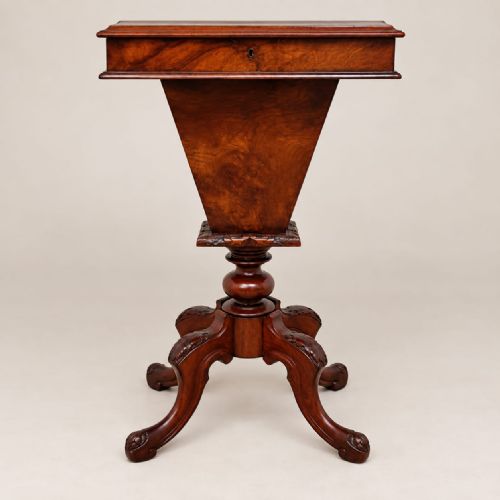
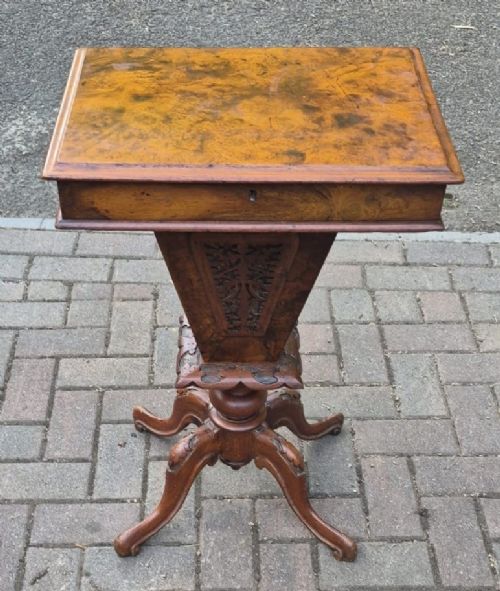
A victorian trumpet work box is a distinctive sewing and occasional table featuring an octagonal or hexagonal body that flares outward toward the top like a musical instrument. These pieces primarily date from the nineteenth century, with numerous examples recorded from the eighteen-fifties through the eighteen-nineties. The form sits upon a turned column supported by tripod legs.
Distinctions in craftsmanship
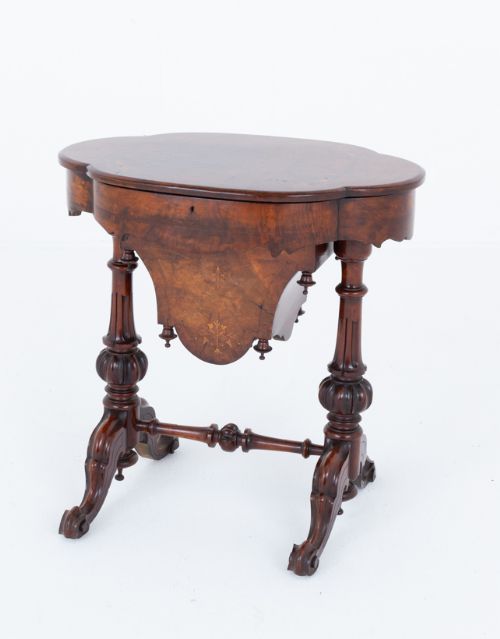
Quality rests heavily on the selection of timber veneers and the intricacy of the inlay work. Finer examples display symmetrical burr walnut figuring across the lid and precisely cut boxwood stringing. The execution of the carved tripod base and the joinery of the staves also separate standard production from superior cabinetwork.
Internal fittings dictate the utility and refinement of the piece. Superior boxes retain their original fitted wooden compartments and internal lids rather than replacement linings. The stability of the central column and the tightness of the stave joints determine structural integrity.
Some trumpet boxes secretly double as gaming boards, proving that nineteenth-century needlework required occasional diversion by chess.
The Victorian Trumpet Work Box Glossary
- Burr walnut
- A figured timber obtained from the gnarled growths of walnut trees. It provides intricate swirling grain patterns highly prized on nineteenth-century veneered surfaces.
- Marquetry
- The art of applying pieces of veneer to a structure to form decorative patterns. Craftsmen use various tinted woods to depict flowers or geometric designs.
- Stave
- One of the narrow tapered wooden strips joined together to form the characteristic flared body of the box. Precise angles ensure the conical shape holds firm.
- Tripod base
- A three-legged support system common on nineteenth-century occasional tables. These legs often feature carved scroll or cabriole shaping.
- Stringing
- Thin inlay lines of contrasting timber used to outline panels and lids. This technique frames the primary veneer.
Victorian Trumpet Work Box: Frequently Asked Questions
What is a trumpet work box used for?
These pieces served as specialised tables for sewing, needlework, and small crafts during the nineteenth century. The upper section opens to reveal compartments for threads, needles, and tools, while the deep body below held wools and fabrics.
Today they function effectively as occasional tables beside seating, providing discreet storage for small household items while maintaining a decorative presence in a room.
How do I date a Victorian work box?
Dating relies on observing timber choices, decorative styles, and construction markers recorded across the nineteenth century. Pieces from the eighteen-fifties often display simpler rosewood or mahogany forms, whereas burr walnut and elaborate marquetry become dominant by eighteen-seventy.
Inlay patterns and the profile of the tripod base provide further clues to the exact decade of manufacture. Comparing the hardware and internal paper linings helps narrow the production window.
Are these tables sturdy enough for daily use?
The tripod base and central column provide a stable footprint for everyday placement as side tables. The flared body distributes weight evenly, though the internal fitted tray can add weight to the upper section.
Care should be taken not to overload the sliding bag or lean heavily on the hinged lid. Normal placement for drinks or decorative objects poses no structural concern.
How do I clean the wooden surfaces?
Maintenance requires gentle dusting with a soft, dry cloth to prevent accumulation in the carved details and inlay grooves. Avoid modern silicone sprays or harsh chemical polishes that can degrade nineteenth-century finishes.
Applying a traditional beeswax feed periodically helps nourish the walnut or rosewood grain and maintain a natural lustre. Keep the timber away from direct heat sources and strong sunlight to prevent veneer cracking.