

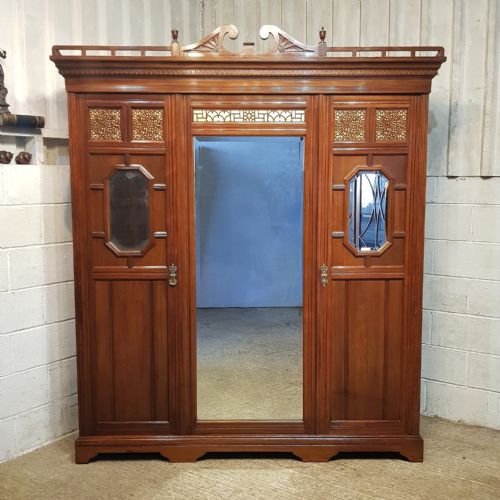
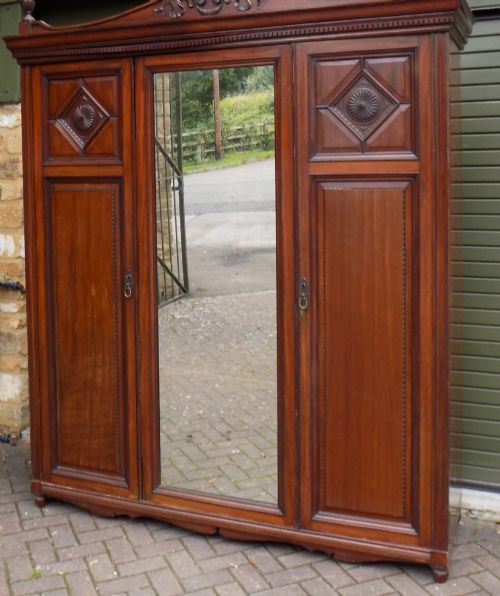


Victorian Triple Mirror Armoire
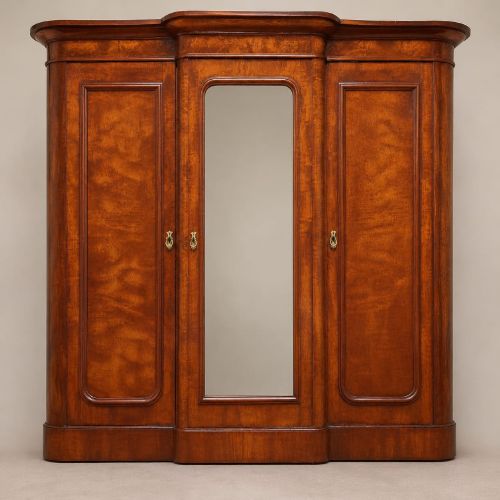
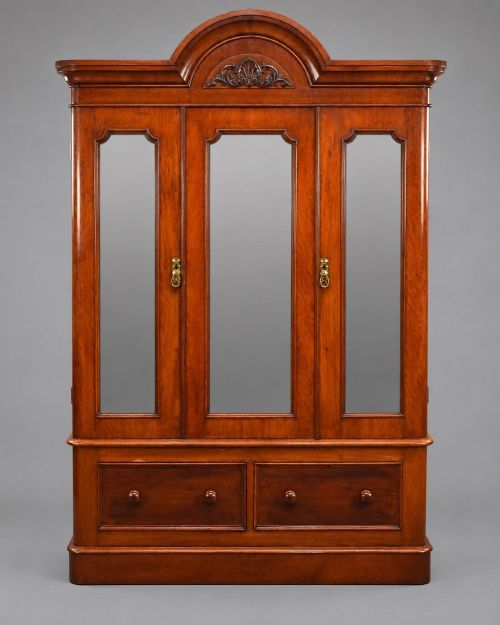
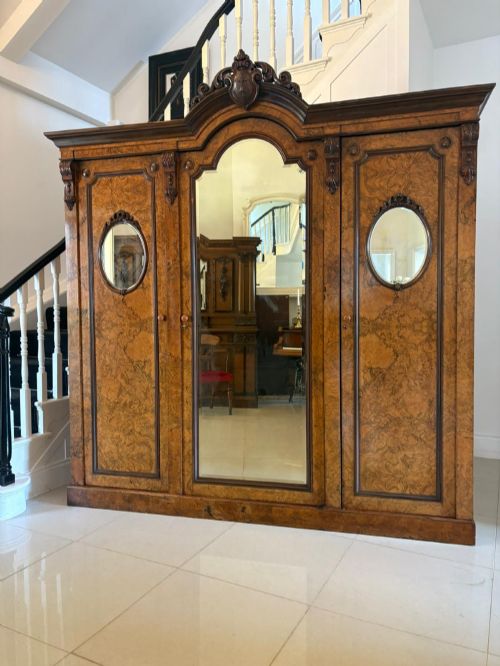
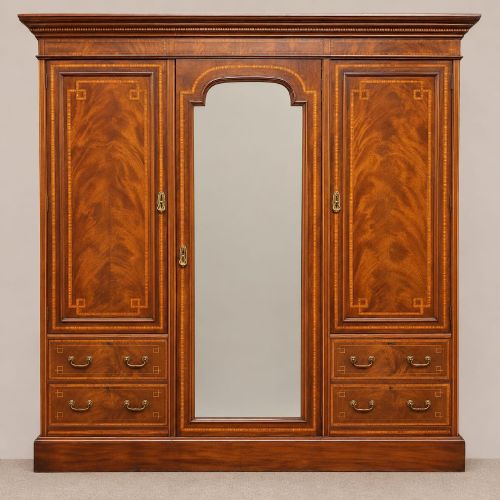
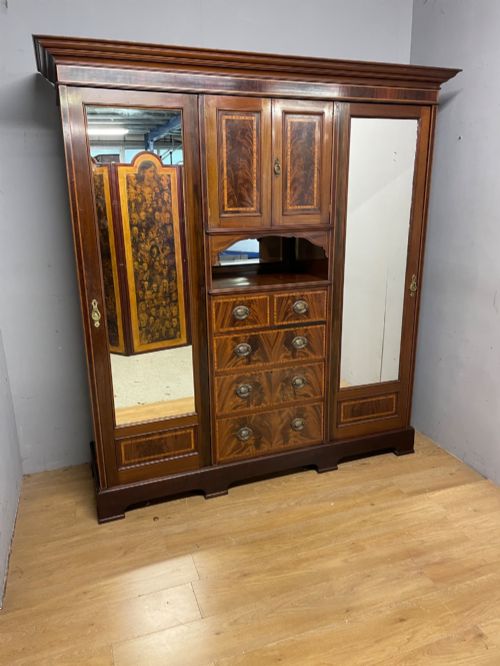
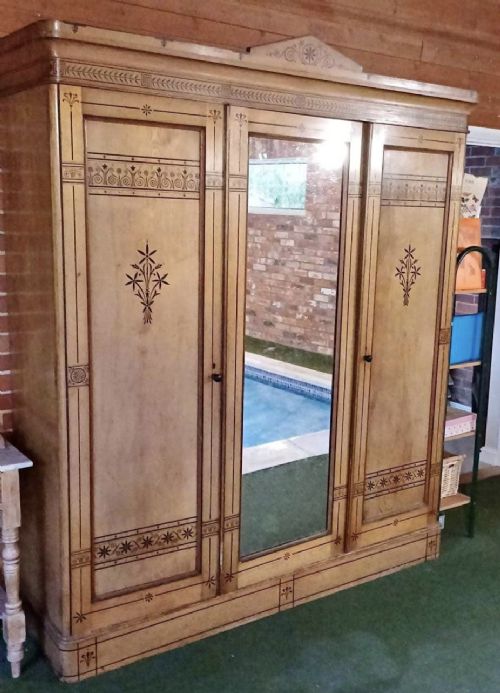
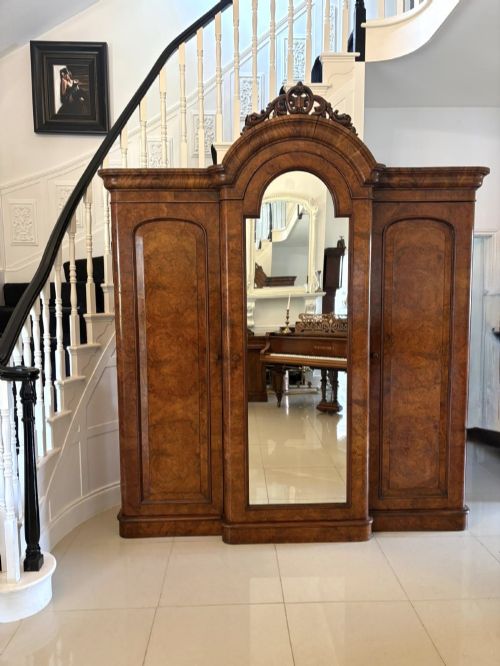
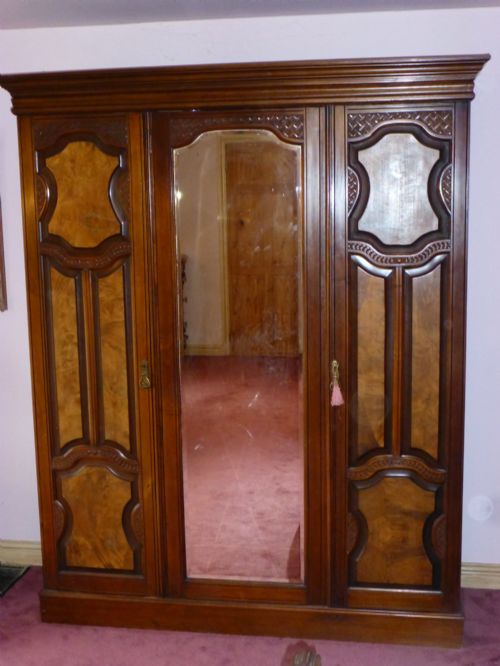
A victorian triple mirror armoire brings grand scale and clever compartmentalisation to a bedroom, offering hanging space alongside central mirrored doors.
Victorian Triple Mirror Armoire
A victorian triple mirror armoire generally takes the form of a large three-door wardrobe, often housing a central mirrored door flanked by hanging or linen sections. These substantial bedroom pieces emerge from the nineteenth century in woods such as mahogany, walnut, burr walnut, and occasionally pine or oak.
The selection here spans the Victorian era from the mid-nineteenth century up to nineteen hundred, encompassing late Victorian items as well as specific design movements like Arts and Crafts and the Aesthetic Movement. Most examples operate as compactums or combination wardrobes, integrating internal drawers and shelving alongside full-length hanging space.
Buyers encounter configurations that feature carved panels, inlaid rosewood, or bow-front centres. While many are solid and substantial constructions, a number of these large wardrobes dismantle into manageable sections for transport and placement in modern homes.
Materials and Construction
Cabinet makers of the period utilised solid timbers alongside decorative veneers, selecting highly figured burr walnut, mahogany, and walnut to create striking grain patterns on the principal doors. Secondary woods like pine frequently form the internal framing and drawer linings.
Heavy glass plates provide the large central mirrors, secured with wooden beads inside carved or moulded frames. Brass hardware, including hanging rails, door bolts, and escutcheons, provides sturdy mechanical support for doors that often span significant heights.
Victorian Triple Mirror Armoire Retail Price Guide 2026
Typical asking prices for victorian triple mirror armoire among the pieces listed under this phrase on Sellingantiques today, from the lower quarter to the upper quarter. They describe what is for sale here now, not the wider market.
Listings feature mahogany, burr walnut, and figured birch alongside specialist styles from the Aesthetic Movement and Arts and Crafts.
Assessing Quality
The distinction between standard and exceptional pieces rests primarily on the choice of timber veneer and the depth of carved detail. Highly figured burr walnut and carefully matched grain alignments elevate the visual presence of a wardrobe considerably.
Structural complexity also defines the upper tier, particularly in compactum designs that incorporate internal linen slides, jewellery drawers, and gentleman's fittings behind secondary doors. Original brass fittings, well-fitted paneling, and smooth dismantling mechanisms further distinguish superior examples.
Holland and Sons
The Victorian Triple Mirror Armoire Glossary
- Compactum
- A large wardrobe designed with internal compartments, drawers, and shelves in addition to hanging space. These configurations maximise storage efficiency within a single piece of furniture.
- Burr walnut
- Timber taken from the warted excrescence of a walnut tree, yielding intricate, swirling grain patterns. Cabinet makers prized this wood for veneering prominent door panels.
- Aesthetic Movement
- A late nineteenth-century design ethos emphasising visual beauty over narrative or moral themes. Furniture from this movement often displays clean lines and thoughtful detailing.
- Breakfront
- A cabinet design where the central section projects forward from the flanking wings. This architectural feature adds depth and shadow to large bedroom pieces.
Victorian Triple Mirror Armoire: Frequently Asked Questions
Do these large wardrobes dismantle for moving?
Many Victorian triple wardrobes separate into distinct modules, usually comprising a central carcass, two side hanging robes, a heavy cornice top, and a base plinth. This modular construction allowed nineteenth-century craftsmen to deliver substantial furniture up staircases and into domestic bedrooms.
Buyers should check individual listings to confirm whether a specific piece disassembles, as some solid formats require specialist handling during transport and installation.
What is the difference between a wardrobe and a compactum?
A standard wardrobe primarily offers hanging space behind its doors, sometimes accompanied by a single long drawer at the base. A compactum provides a much higher degree of internal division.
These pieces typically combine hanging sections with banks of internal drawers, linen slides, and shoe compartments, functioning as self-contained bedroom storage units.
How do I care for burr walnut veneer?
Burr walnut requires stable indoor humidity and protection from direct sunlight to prevent the delicate veneers from drying out or lifting over time. Regular dusting with a soft, dry cloth maintains the polished surface without the need for heavy chemical polishes.
Applying a traditional beeswax sparingly once or twice a year helps nourish the timber and preserves the rich depth of the grain.
How can I distinguish Arts and Crafts examples?
Arts and Crafts wardrobes from the late nineteenth century tend to exhibit simpler, more honest construction methods that celebrate natural timber characteristics rather than heavy historic revival styling. They frequently feature plain walnut or oak surfaces, minimal carved ornament, and distinctive hand-hammered copper or brass hardware.
These pieces often display a lighter aesthetic compared to more ornate high Victorian designs, focusing instead on proportion and utility.