



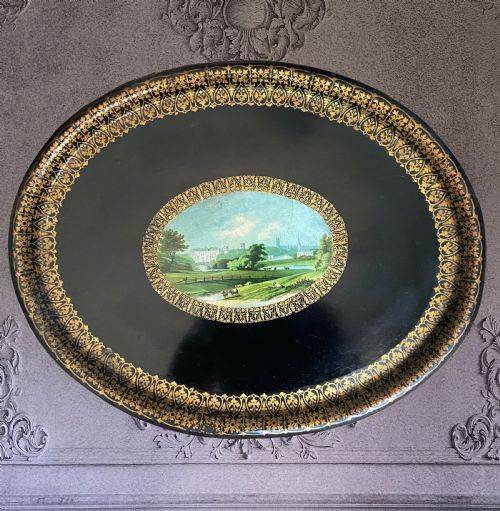


Victorian Toleware
Victorian toleware brings painted metal into domestic spaces, offering durable trays, canisters, and coal scuttles that carry deep historical charm.
Victorian Toleware
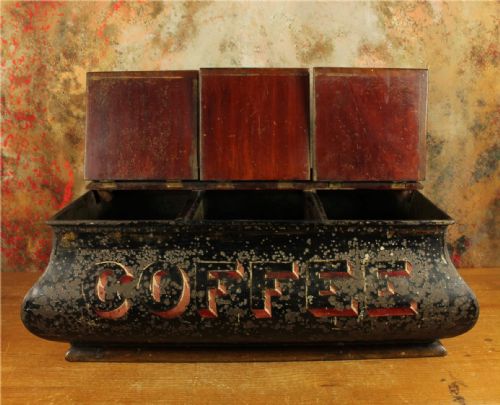
Victorian toleware comprises utilitarian and decorative objects fashioned from sheet iron or tin and finished with layered paint, lacquer, and sometimes gilt embellishment. Buyers searching for victorian toleware encounter a diverse array of household articles ranging from tea canisters and storage boxes to coal scuttles and serving trays.
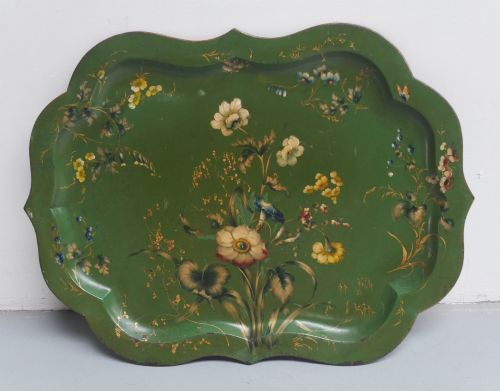
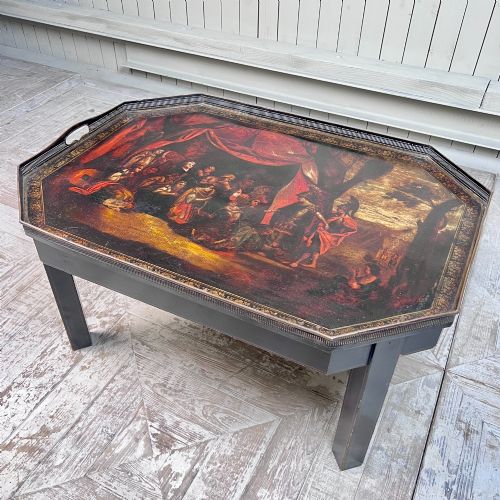
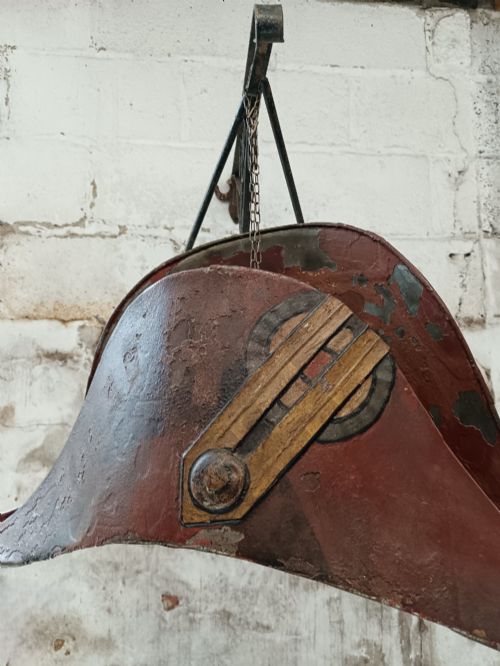
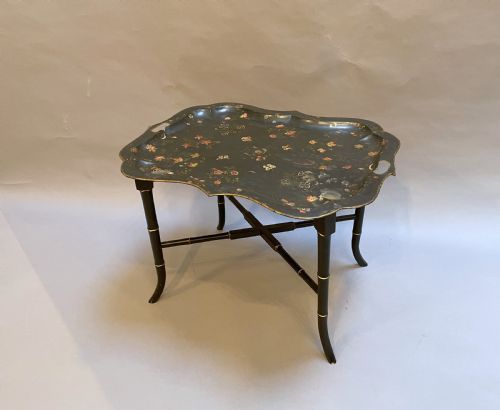
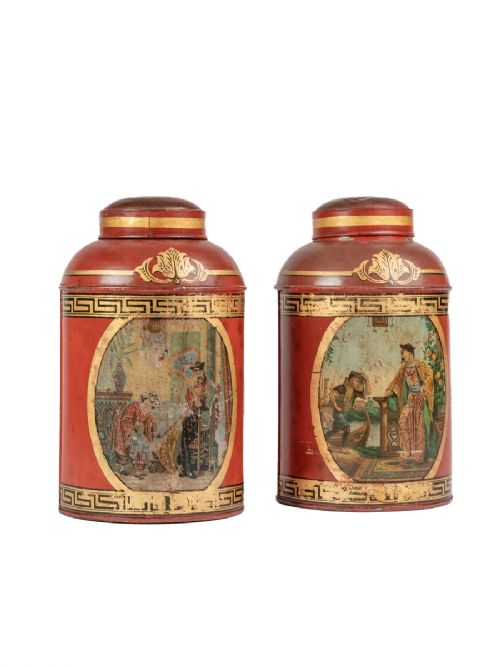
The objects frequently reflect Regency influences alongside Victorian tastes, encompassing styles such as Chinoiserie, military themes, and English country folk art. Trays and tea canisters form a large portion of these pieces, often repurposed today as coffee tables or side tables.
Origins span English centres like Pontypool as well as French workshops producing garniture sets and Napoleon III pieces. Domestic items like kitchen buckets, flour bins, and hot water cans sit alongside trade signs and decorated stands.
How they were made
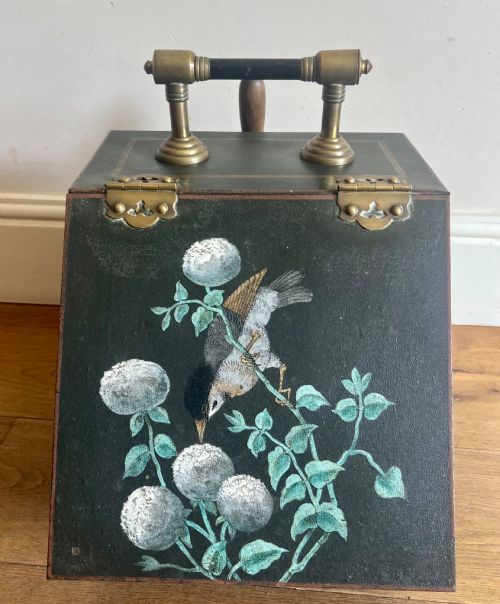
Craftsmen shaped sheet iron or tin into rigid forms such as octagonal trays, cylindrical tea canisters, and curved coal scuttles. These metal foundations required careful beating and soldering to achieve sturdy domestic vessels.
Surface decoration relied on heavy applications of paint, lacquer, and gold leaf. Artisans applied handpainted floral motifs, figurative scenes, and Orientalist designs over dark grounds, sealing the pigment to protect the metal beneath.
Victorian Toleware Retail Price Guide 2026
Typical asking prices for victorian toleware among the pieces listed under this phrase on Sellingantiques today, from the lower quarter to the upper quarter. They describe what is for sale here now, not the wider market.
A maid's kitchen bucket stands ready for chores, though its painted tin surface suggests it spent more time looking cheerful than scrubbing floors.
What varies in quality
The nuance of the handpainted artistry largely separates standard utility items from masterwork pieces. Elaborate mythological narratives and finely detailed Chinoiserie landscapes demonstrate a higher tier of skill than repetitive floral borders.
The underlying metalwork and hardware integrity also define the grade of an object. Brass rims, well-preserved lacquering, and sturdy structural foundations in iron and wood distinguish superior examples.
H. Meeson
The Victorian Toleware Glossary
- Toleware
- Painted or lacquered metalware, typically tinplate or sheet iron, produced for domestic use. The term derives from the French phrase tole peinte, meaning painted sheet metal.
- Pontypool
- An English town renowned for its early development of high-quality lacquered metalware and japanware. Pontypool pieces often feature distinctive tortoiseshell or brightly painted finishes.
- Garniture set
- A coordinated group of ornamental vessels designed to be displayed together on a mantelpiece or sideboard. These sets frequently include matched urns or vases in matching finishes.
- Chinoiserie
- A decorative style reflecting European interpretations of Chinese and East Asian artistic traditions. This aesthetic appears on toleware through painted pagodas, figures, and exotic landscapes.
- Japanware
- A heavy, dark varnish or lacquer finish applied to metal objects to mimic Japanese lacquerware. It provided a glossy, hard-wearing surface popular on nineteenth-century domestic goods.
Victorian Toleware: Frequently Asked Questions
What is victorian toleware made of?
These items are constructed primarily from sheet iron or tinplate, providing a durable metallic base for heavy coats of paint and lacquer. Additional elements such as brass rims, wooden stands, and gold leaf accents often complement the metal body.
The manufacturing process required skilled metal shaping followed by meticulous hand painting. Artisans built up dark ground layers before adding intricate floral, military, or figurative designs.
How were tea canisters used?
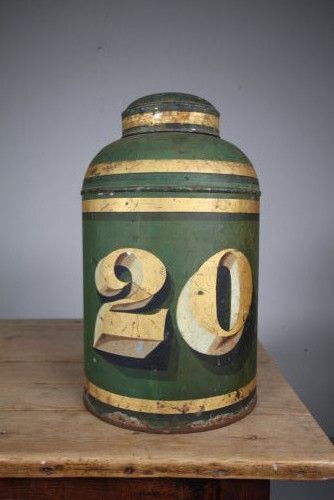
Tea canisters served as airtight storage vessels for expensive dry tea leaves, protecting the precious contents from moisture and light in nineteenth-century homes. Their robust construction and fitted lids kept the leaves fresh for daily service in the drawing room.
Today, larger examples easily transition into decorative table bases or standalone display pieces. Smaller canisters retain their original function as desktop or sideboard containers.
How do I clean toleware?
Maintenance requires gentle dusting with a soft, dry cloth to protect the fragile handpainted surface and underlying lacquer. Moisture and harsh cleaning agents can damage the historic paint layers and cause the metal underneath to corrode.
Keeping these pieces away from direct sunlight and damp environments preserves the original pigments and gold leaf. Proper care ensures the delicate artwork remains stable for generations.
Are trays meant for display?
Nineteenth-century trays functioned both as serving implements and decorative accessories for country houses and urban drawing rooms alike. Many large examples featured stands to convert them into permanent low tables for entertaining.
Their pictorial scenes and gilded borders made them suitable for wall hanging or surface display when not in active use. The sturdy iron construction easily supported heavy tea services or daily clutter.