




Victorian Tiered Credenza
A victorian tiered credenza offers layered display and storage, bringing architectural presence and rich timber grains to a room.
Victorian Tiered Credenza
When you search for a victorian tiered credenza, you encounter large display furniture, sideboards, chiffoniers, and bookcases featuring multiple levels for storage and presentation. These pieces originate primarily from the Victorian period, alongside related examples from the Regency, William IV, and 19th-century eras.
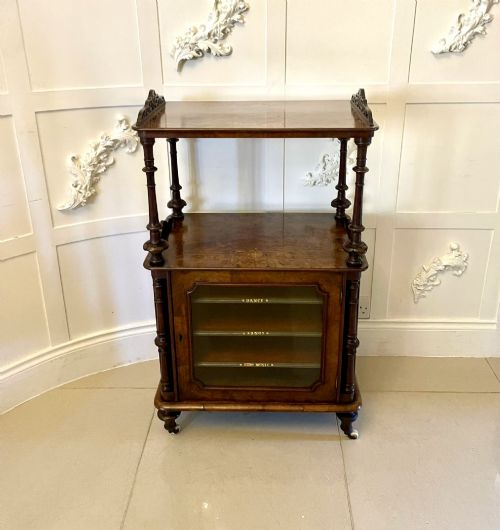
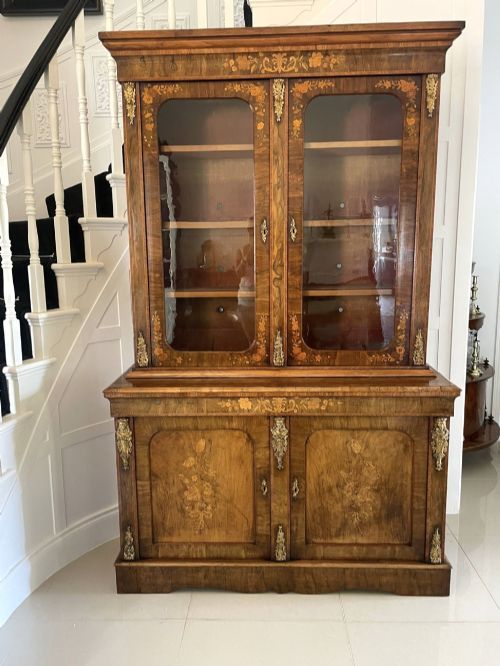
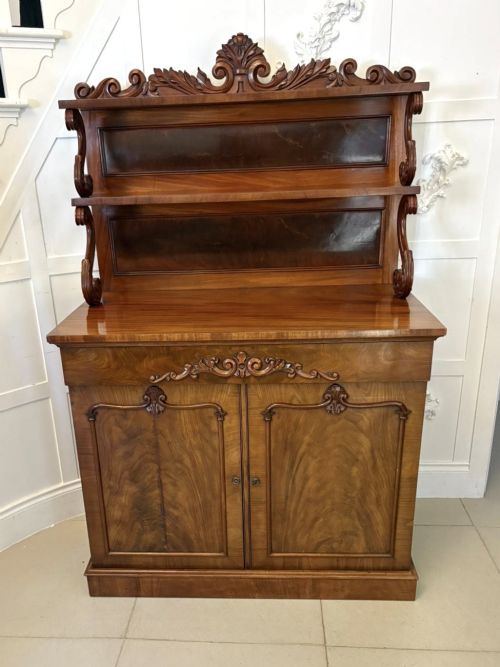
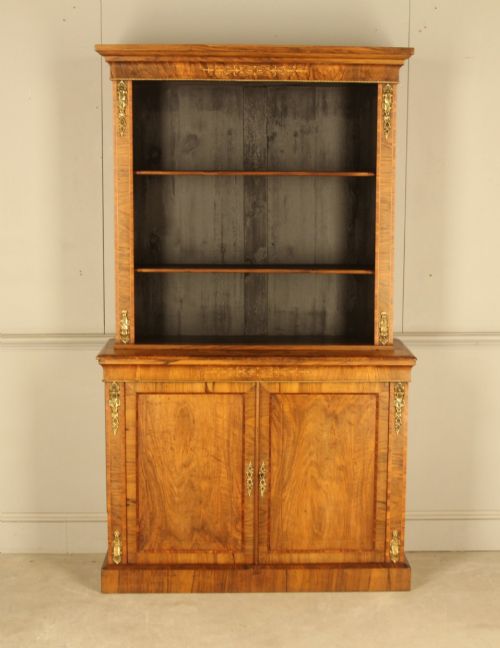
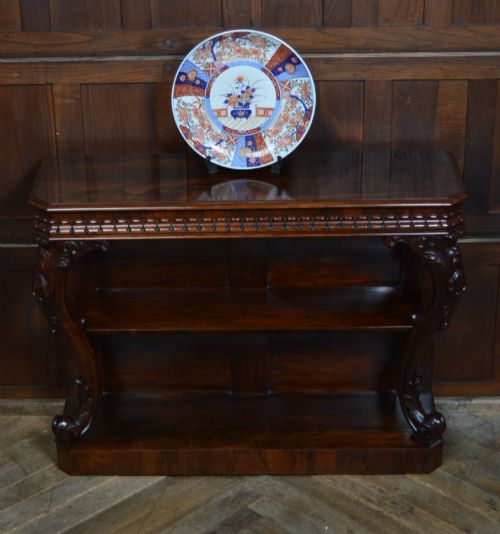
The version most commonly met on this page combines lower enclosed cupboard storage with upper display tiers, shelves, or a whatnot superstructure. Woods such as mahogany, walnut, burr walnut, rosewood, and oak dominate these forms, often enhanced by glass doors and open shelving.
Makers and workshops construct these large pieces to anchor principal reception rooms, morning rooms, and dining spaces. The tiered design allows for the exhibition of decorative ceramics and silver on upper shelves while concealing everyday items below.
Materials and Construction
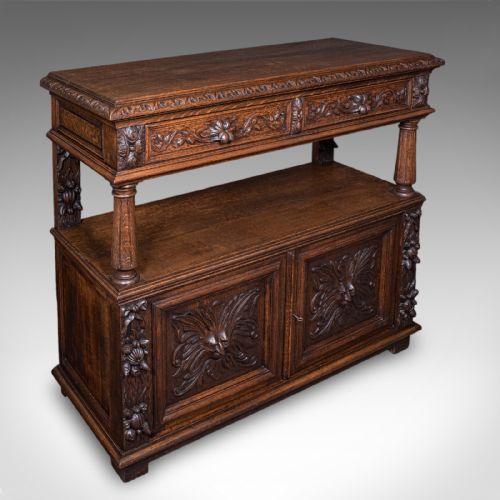
Cabinet makers utilised dense native and exotic hardwoods, applying figured veneers like burr walnut and mahogany over sturdy structural frames. Marquetry inlay, brass mounts, and carved details such as Green Man motifs or Gothic tracery frequently embellish the primary surfaces.
Superstructures incorporate turned columns, scrolled brackets, and mirrored backs to support upper display shelves and whatnots. Glazed doors utilise individual glass panes set within timber framing, while ormolu mounts provide metallic contrast to the dark wood tones.
Victorian Tiered Credenza Retail Price Guide 2026
Typical asking prices for victorian tiered credenza among the pieces listed under this phrase on Sellingantiques today, from the lower quarter to the upper quarter. They describe what is for sale here now, not the wider market.
Several Victorian buffets incorporate carved Green Man masks, watching over the dining room with leafy expressions carved straight into solid oak.
Assessing Quality and Execution
The distinction between tiers rests upon the selection of timber veneers, where highly figured burr walnut or dense mahogany indicates superior workshop selection. The depth and sharpness of hand-carved ornamentation, from Gothic panels to figural motifs, set finer examples apart from plainer commercial production.
Structural integrity depends on the precision of joinery within the tiered superstructure and the heavy lower cabinet base. High-grade pieces integrate heavy brass hardware, fine marquetry inlay, and fire-gilded ormolu mounts that remain tightly secured to the primary timber.
Robert Strahan·James Shoolbred & Co.
The Victorian Tiered Credenza Glossary
- Credenza
- A sideboard or cabinet designed for display and storage, often featuring raised tiers or a central cupboard flanked by glass-fronted compartments. This form evolved during the 19th century to serve both dining and drawing room functions.
- Chiffonier
- A compact sideboard or low cabinet typically fitted with drawers and doors beneath an upper shelf or tier. It serves as a practical surface for serving or display in smaller reception rooms.
- Whatnot
- A piece of furniture consisting of a series of open shelves supported by pillars or columns, used for displaying ornaments. It frequently forms the upper tier of a Victorian cabinet or sideboard.
- Marquetry
- The art of applying decorative veneer pieces of different woods, metals, or ivory to a structured base to form geometric or pictorial designs. This technique decorates the primary doors and friezes of finer cabinets.
- Ormolu
- Gilt bronze mounted onto furniture surfaces as decorative enrichment. It provides bright metallic highlights against dark woods like walnut and mahogany.
Victorian Tiered Credenza: Frequently Asked Questions
What is a tiered credenza?
A tiered credenza is a large 19th-century cabinet or sideboard featuring multiple levels for display and enclosed storage below.
These pieces combine cupboards with upper shelves or whatnots, designed for principal rooms to hold porcelain and books.
How were these cabinets used?
Owners used them in dining rooms and morning rooms to store tableware and display decorative objects on upper tiers.
The combination of open shelving and locked cupboards allowed households to exhibit valuables while concealing daily items.
What woods are most common?
Mahogany, walnut, and burr walnut form the primary timbers seen across these Victorian and 19th-century storage pieces.
Cabinet makers also utilised oak, rosewood, and pollard oak, often enhancing the surfaces with marquetry and brass mounts.
How do I identify a Gothic Revival piece?
Gothic Revival examples feature architectural motifs such as pointed arches, heavy linenfold panels, and carved figural details.
Dark oak and walnut timbers combine with robust construction to evoke medieval architectural forms within a 19th-century context.