


Victorian Three Tier Shelf
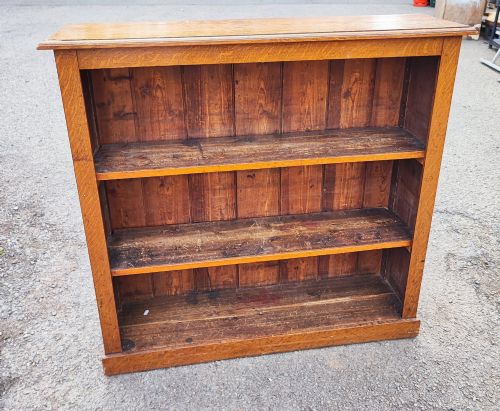
A victorian three tier shelf brings tiered display space to a room, offering structured staging for books, ceramics and decorative objects.
Victorian Three Tier Shelf
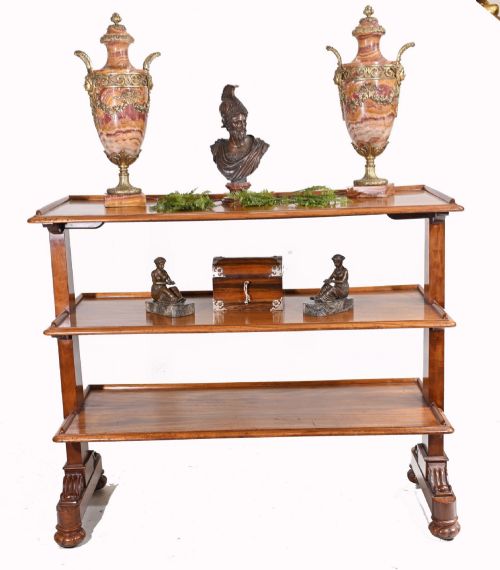
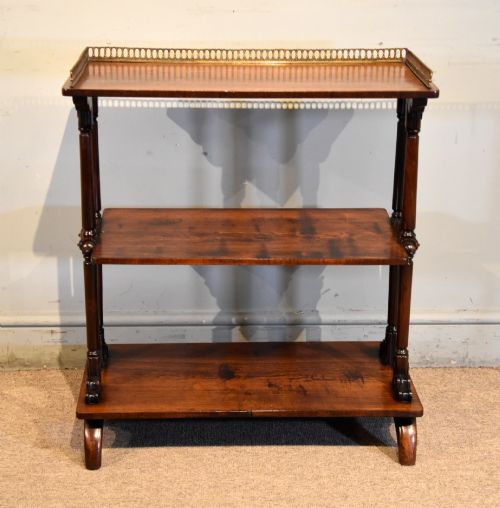
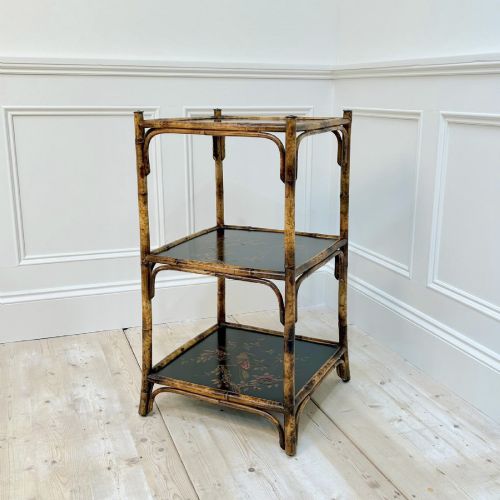
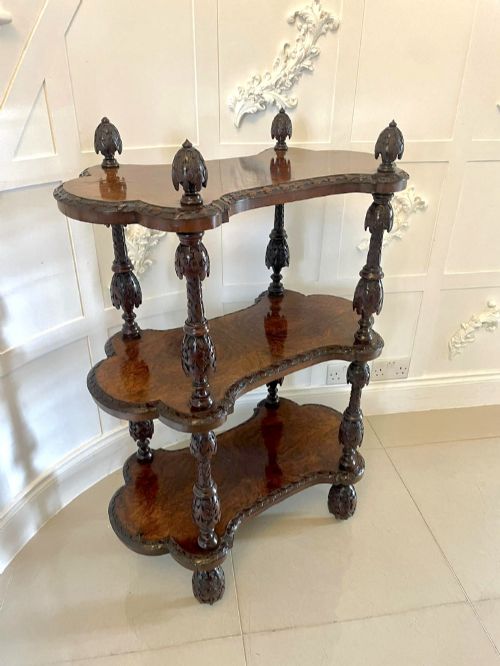
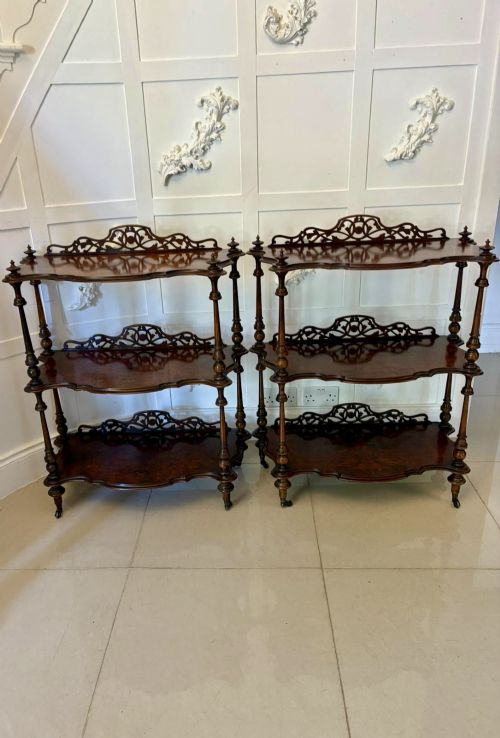
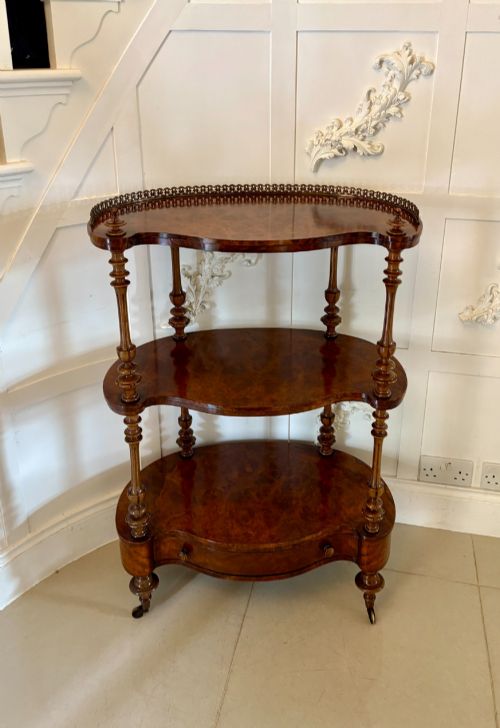
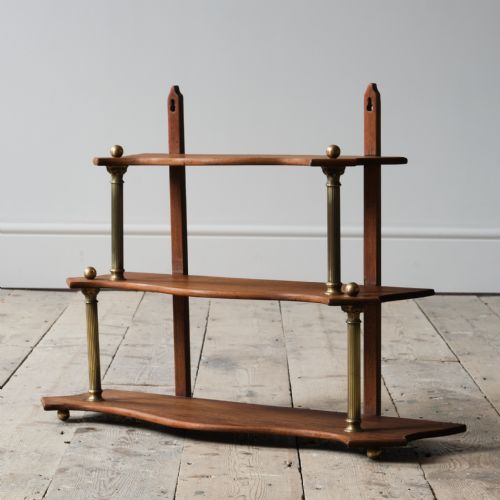
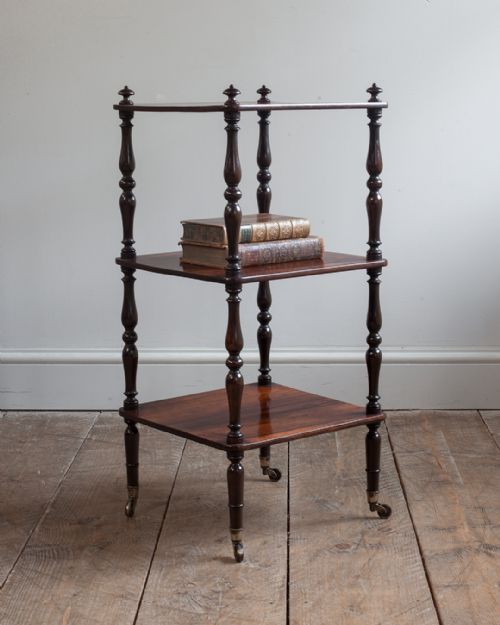
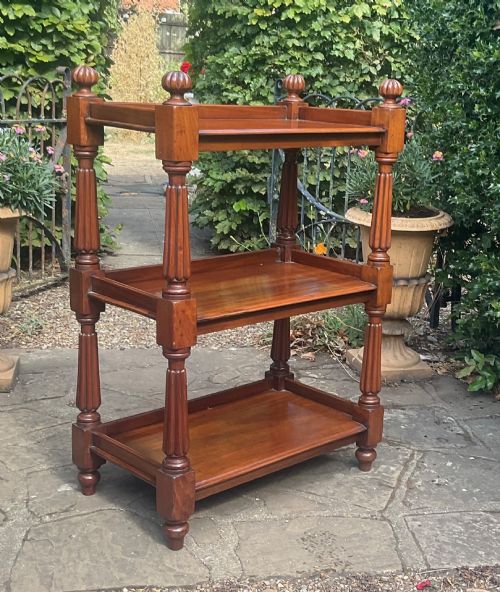
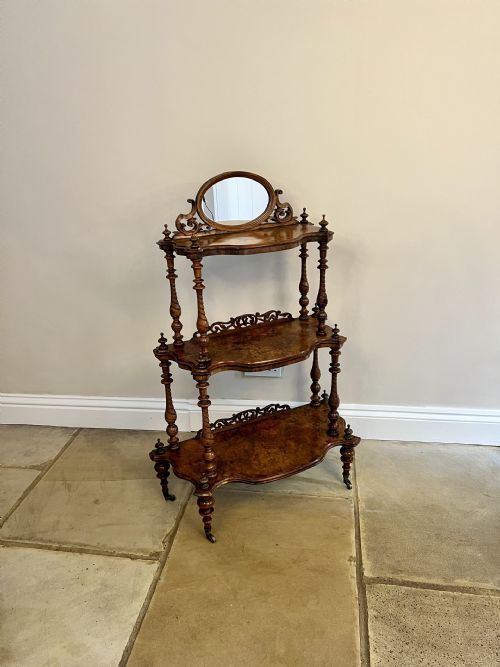
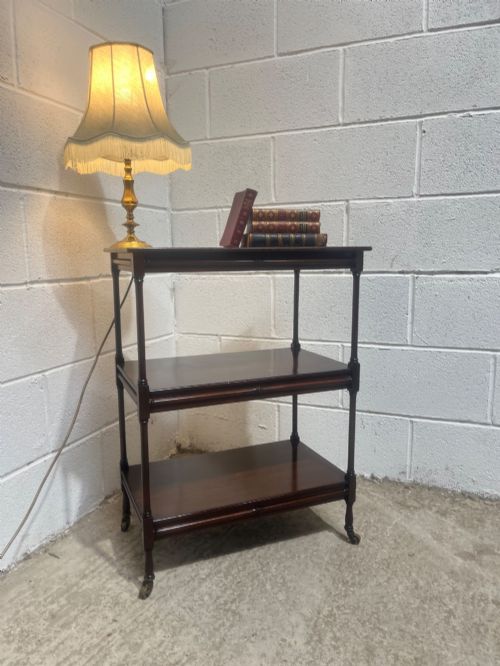
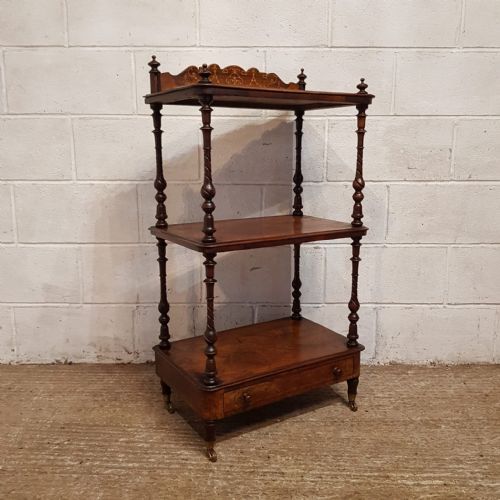
A victorian three tier shelf typically appears as a whatnot, etagere or wall-hanging unit designed to hold books and ornaments across multiple levels. These multi-tiered display pieces emerge in forms ranging from freestanding corner units to mobile buffets mounted on castors.
The pieces on this page span the nineteenth century, including Victorian, William IV and Regency periods. While many examples stand on the floor as central display furniture, smaller variants secure directly to walls or function as compact side tables.
Makers utilised distinct regional woods and functional designs, producing everything from narrow bedside étagères to substantial exhibition quality cabinets with carved supports. Buyers encounter variations in tier count, shape and mobility, though the three-tier format remains a constant structural choice.
Assessing quality
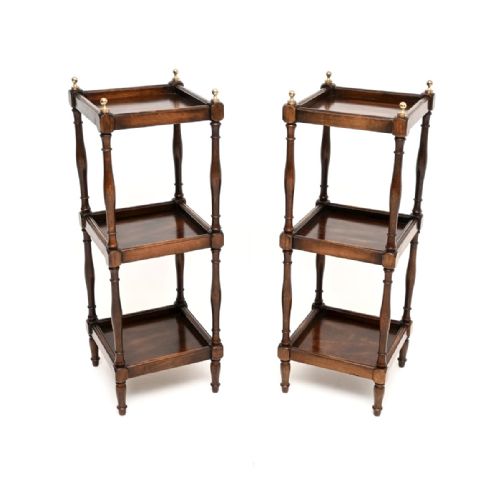
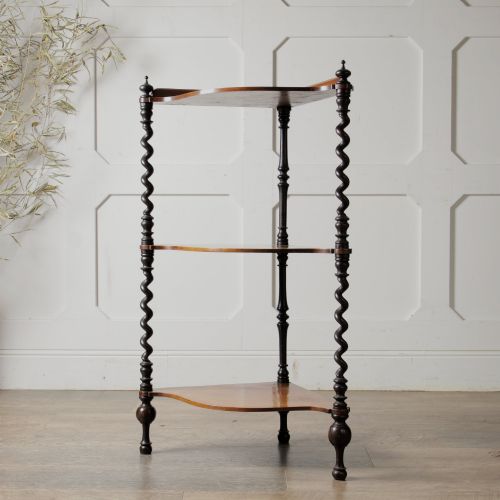
Quality reveals itself in the selection of timber veneers and the crispness of turned supports like barley twists or spindle galleries. Superior examples exhibit finely figured burr walnut or rich mahogany with integrated brass mounts and original castors.
Structural integrity and proportion distinguish standard utilitarian units from exhibition quality pieces. The finest items balance multiple stacked tiers securely on balanced feet or wall fixtures without wobble or crude repairs.
Victorian Three Tier Shelf Retail Price Guide 2026
Typical asking prices for victorian three tier shelf among the pieces listed under this phrase on Sellingantiques today, from the lower quarter to the upper quarter. They describe what is for sale here now, not the wider market.
Some nineteenth-century tables arrived with built-in mobility, allowing tea service to follow homeowners from parlour to library without a spill.
Samson and Son London
The Victorian Three Tier Shelf Glossary
- Whatnot
- A piece of furniture consisting of several open shelves for displaying small objects. They became particularly popular during the nineteenth century for parlours and drawing rooms.
- Étagère
- A French term for a piece of furniture with a set of open shelves for displaying ornaments. These often share similarities with English whatnots and tiered buffets.
- Barley twist
- A carved wooden column shaped to resemble a twisted rope or strand of barley. This decorative turning method frequently forms the upright supports of tiered shelving.
- Campaign
- Furniture designed to be easily dismantled and transported for travel. These pieces often incorporate brass corners and recessed carrying handles.
Victorian Three Tier Shelf: Frequently Asked Questions
What is a victorian three tier shelf used for?
These tiered pieces serve as display furniture for books, ceramics and decorative ornaments in living spaces. Their multiple levels maximise vertical storage without occupying a large floor footprint.
Historically, households utilised them in drawing rooms and parlours to showcase prized possessions. Today, they function well in hallways, bedrooms or studies for practical storage and display.
How do I tell a whatnot from an etagere?
A whatnot is traditionally an English multi-tiered shelving unit designed for ornaments and books. An étagère is the French equivalent, often sharing identical structural characteristics.
In practice, antique dealers and cataloguers use the terms interchangeably for nineteenth-century tiered furniture. The distinction usually rests on stylistic details rather than functional differences.
Are these shelves sturdy enough for heavy books?
Most tiered units handle moderate loads of books and display items across their wooden levels. Freestanding versions with solid mahogany or oak uprights offer substantial weight capacity.
Wall-hanging versions require secure mounting into wall studs to support heavier volumes safely. Lighter étagères with delicate turned spindles suit decorative ceramics better than heavy folios.
How should I care for burr walnut shelves?
Burr walnut requires dusting with a soft, dry cloth to protect the delicate grain and veneer surface. Avoid placing furniture in direct sunlight or near heat sources to prevent timber splitting.
Applying a traditional beeswax polish periodically helps nourish the wood and maintain its lustre. Avoid silicone-based sprays, which can damage nineteenth-century French polish finishes.