





Victorian Tea Ware
Victorian tea ware brings together the ceremony of the nineteenth-century table through caddies, trays, and kettles crafted to hold and pour with distinction.
Victorian Tea Ware
When you search for victorian tea ware, you encounter a range of items designed for the preparation, storage, and serving of tea during the nineteenth century. The selection spans utilitarian vessels like teapots and copper kettles to specialised storage containers including rosewood and walnut tea caddies.
The pieces most frequently met on this page include tea caddies featuring intricate Tunbridge Ware or parquetry inlay, alongside metalware items such as silver plated spirit kettles and japanned samovars. Form follows function closely across these objects, reflecting the domestic rituals of the period.
Origins vary from English workshops, notably those producing Tunbridge Ware, to continental centres including Sorrento and France, alongside occasional Japanese export pieces. This mix provides a broad view of the diverse decorative tastes influencing tea service throughout the era.
Materials and construction
Makers utilised dense timbers such as rosewood, walnut, and boxwood for cabinetry and tea caddies, frequently embellishing surfaces with precise Tunbridge Ware marquetry and parquetry patterns. Wood selection prioritised stability and a fine grain capable of taking a high polish.
Metal items rely on brass, copper, and silver plate, often worked into samovars, spirit kettles, and trays with japanned or painted finishes. These metalworking techniques provided durable surfaces for boiling water and carrying heavy porcelain or ceramic vessels.
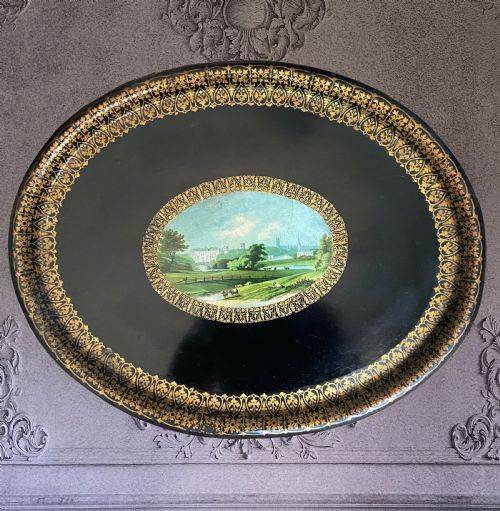
Earthenware, ceramic, and papier-mâché lacquer appear in teapots and trays, incorporating moulded forms and hand-finished details. Craftspeople combined traditional joinery with specialised surface treatments to ensure these service pieces survived daily use.
Victorian Tea Ware Retail Price Guide 2026
Typical asking prices for victorian tea ware among the pieces listed under this phrase on Sellingantiques today, from the lower quarter to the upper quarter. They describe what is for sale here now, not the wider market.
Early bargeware teapots often arrived with hand-painted floral flourishes that refused to conform to standard botanical rules.
Gradations of quality
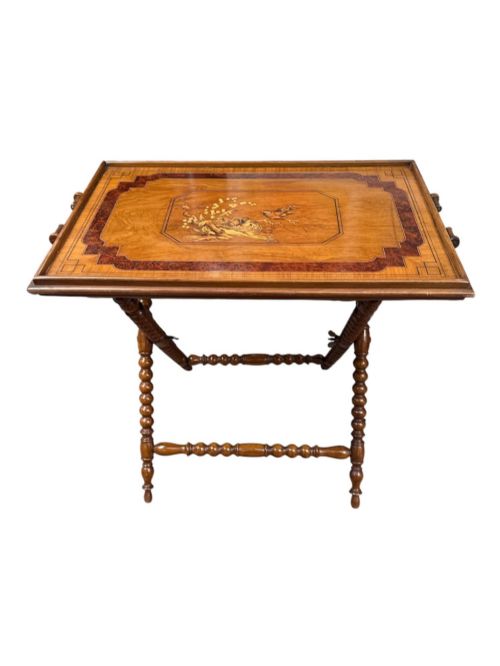
The standard of execution in inlay work and marquetry distinguishes finer pieces from ordinary examples, particularly in the precision of geometric wood mosaics found on caddies and tables. Sharpness of line and tightness of fit in the timber segments denote superior workmanship.
Surface finish and metal preservation play a major role in establishing the quality of kettles, samovars, and trays. Original patination, careful chasing of brass and copper, and intact japanning indicate higher-tier production originating from established workshops.
Structural integrity of the wooden carcassing, especially in domed and hinged tea caddies, marks the difference between basic utility items and accomplished decorative pieces. Well-fitted interiors and sound hinging show deliberate attention to longevity.
Benetfink & Co·Henry Hollamby
The Victorian Tea Ware Glossary
- Tea caddy
- A small box or chest designed for storing loose tea leaves, often fitted with internal compartments and a lock. They evolved from porcelain jars into elaborate wooden caddies during the nineteenth century.
- Tunbridge Ware
- A form of British woodwork characterised by intricate mosaic designs made from many thousands of tiny pieces of naturally coloured woods. It was used extensively to decorate boxes, trays, and tea caddies in Kent.
- Samovar
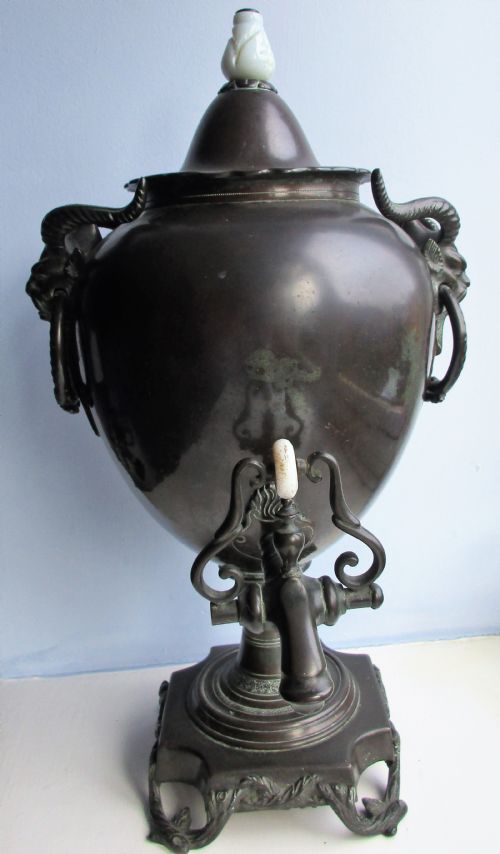
- A heated metal container traditionally used to boil and heat water for tea, frequently mounted on a stand with a tap. Examples often feature japanned finishes or polished brass construction.
- Marquetry
- The art and craft of applying pieces of veneer to a structure to form decorative patterns, pictures, or designs. It appears frequently on the surfaces of nineteenth-century occasional tables and tea chests.
- Spirit kettle
- A portable metal kettle fitted above a small spirit burner, used for keeping water hot at the tea table. These vessels are typically supported by decorative metal stands.
Victorian Tea Ware: Frequently Asked Questions
What is a tea caddy?
A tea caddy is a dedicated container used to store dry tea leaves securely, protecting them from moisture and light. In the nineteenth century, tea was an expensive commodity, so these boxes were often fitted with locks and internal lids.
They range from simple wooden boxes to highly decorative caddies inlaid with contrasting timbers or mother-of-pearl. Many feature internal compartments to separate different varieties of leaf.
What is Tunbridge Ware?
Tunbridge Ware is a distinctive type of decorative woodwork originating from the town of Tunbridge Wells in Kent. Craftsmen assembled thousands of microscopic blocks of naturally coloured wood to create pictorial or geometric mosaics.
This technique decorated the lids and panels of tea caddies, work boxes, and card tables. The resulting surfaces depict castles, flowers, or geometric borders using no artificial stains.
How do I care for wooden tea caddies?
Wooden tea caddies require stable environmental conditions away from direct sunlight and extreme humidity changes to prevent the wood from warping. Gentle dusting with a dry, soft cloth preserves the polish without stripping the finish.
Application of appropriate paste wax helps maintain the lustre of rosewood or walnut surfaces. Avoid using wet cloths or modern chemical sprays on antique timber and inlaid mosaic work.