



Victorian Tea Cup
These Victorian tea cup selections bring nineteenth-century refinement to the table, combining delicate bone china and porcelain with hand-painted detail for daily use or display.
Victorian Tea Cup
A Victorian tea cup represents the social rituals of the nineteenth century, most frequently appearing paired with a matching saucer or as part of a larger afternoon tea service.
The pieces on this page span the Victorian era alongside related nineteenth-century iterations, featuring works from English factories like Royal Crown Derby and Coalport as well as continental makers.
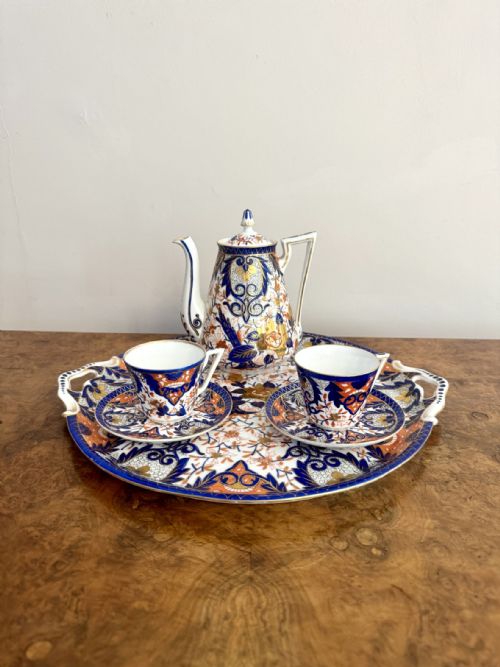
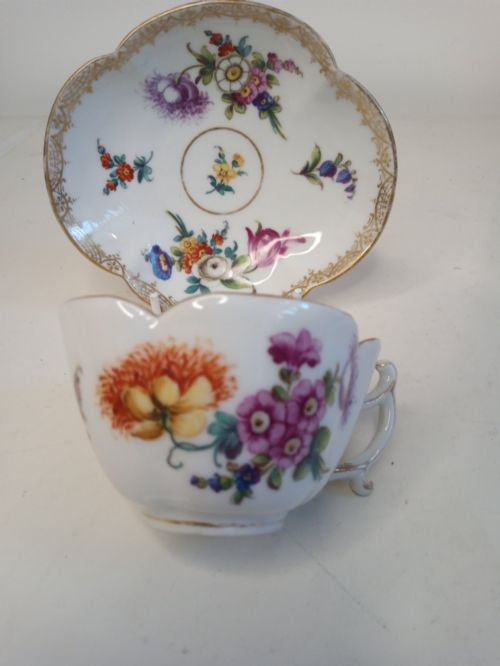
Buyers will encounter single trios, matched pairs, and full tea services decorated in patterns ranging from Imari designs to delicate floral hand-painting.
Evaluating quality and execution
Finer examples distinguish themselves through the precision of the hand-painting and the delicacy of the porcelain body, where thinner walls demonstrate greater skill in firing.
The application of gold leaf and enamel work separates standard production pieces from superior works, with well-preserved gilding indicating careful handling and higher initial manufacturing standards.
Victorian Tea Cup Retail Price Guide 2026
Typical asking prices for victorian tea cup among the pieces listed under this phrase on Sellingantiques today, from the lower quarter to the upper quarter. They describe what is for sale here now, not the wider market.
Some nineteenth-century cups feature hidden painted motifs inside the base that only become visible as the tea is finished.
Royal Worcester·Minton·Moser·Davenport·Coalport·Royal Crown Derby·Staffordshire
The Victorian Tea Cup Glossary
- Bone china
- A type of soft-paste porcelain incorporating bone ash, known for its milky white appearance and high mechanical strength. This material allowed makers to produce thinner, more translucent cups than standard earthenware.
- Gilding
- The application of gold leaf or gold powder to the surface of ceramics for decorative effect. Hand-gilded details often show slight variations under magnification.
- Imari
- A decorative style originating in Japan characterised by underglaze blue and iron red, heavily adopted by nineteenth-century English potteries. These patterns frequently incorporated secondary colours like green and gold.
- Trio
- A matched set consisting of a tea cup, saucer, and matching side plate. They formed the standard place setting for formal nineteenth-century afternoon tea.
Victorian Tea Cup: Frequently Asked Questions
How do I care for antique tea cups?
Wash these pieces by hand using lukewarm water and a mild detergent rather than placing them in a dishwasher. Avoid abrasive sponges that can wear away historic enamel and gold leaf.
Store them securely on flat surfaces, keeping cups unstacked or separated with cloth to protect their delicate rims and handles from chips.
Can I still use these cups for tea?
Many nineteenth-century cups remain fully functional for serving hot beverages, provided they are free from hairline cracks or structural damage. Thermal shock should be avoided by not pouring boiling water directly into a cold cup.
Gold-decorated or heavily enamelled pieces warrant extra caution, as aggressive daily use can wear down hand-painted details over many years.
What is an Imari pattern?
Imari refers to a distinctive decorative palette featuring deep cobalt blue and iron red, typically accented with gold leaf. English potteries adapted these Japanese designs extensively during the nineteenth century.
Pieces decorated in this manner display rich, contrasting colours that remain vibrant and highly collectable today.
How do I identify the period?
Maker marks stamped or painted on the underside of the porcelain serve as the primary indicator of date and origin. Reference guides match these ciphers to specific active years for factories like Coalport and Royal Crown Derby.
Stylistic cues such as neoclassical forms or revival motifs also help narrow down the decade of manufacture.