





Victorian Tall Clock
A victorian tall clock stands as a towering piece of horological history, bringing mechanical precision and imposing scale into a room.
Victorian Tall Clock
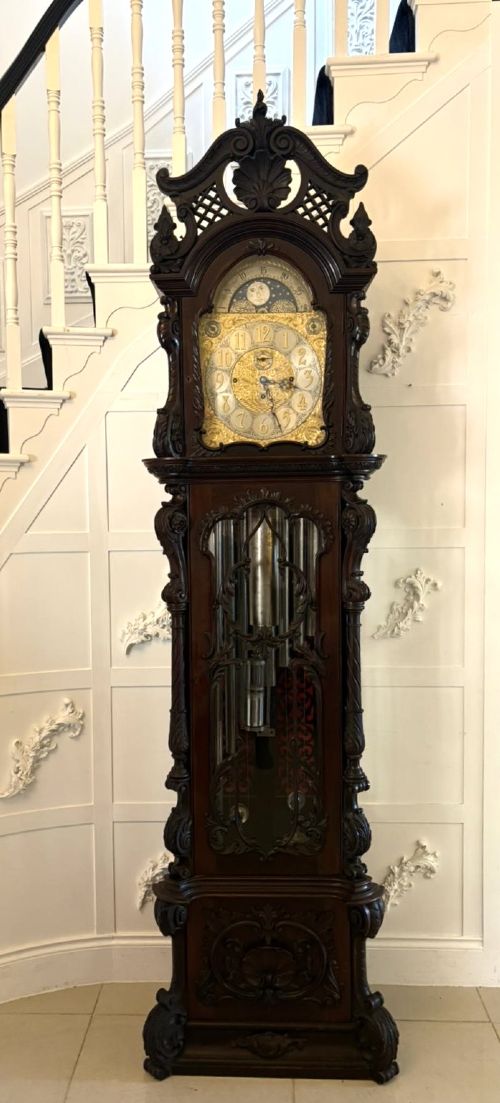
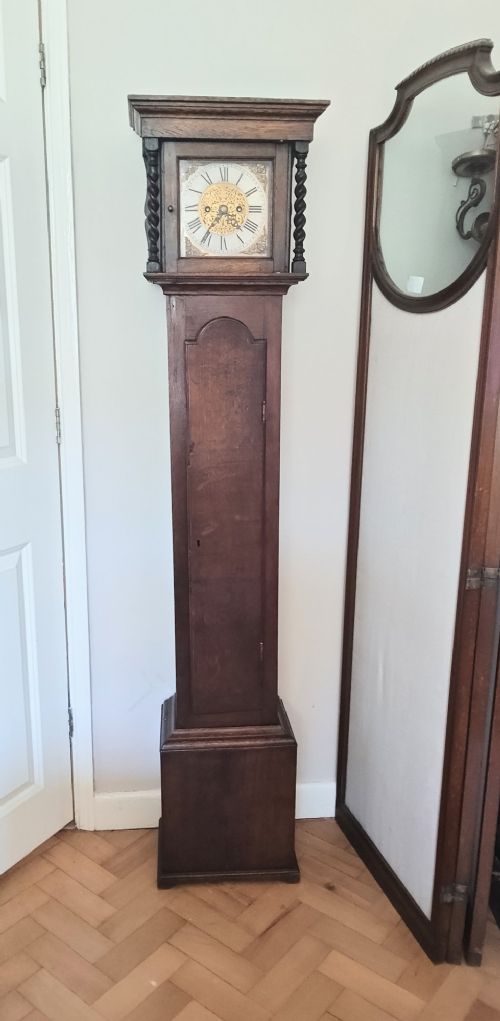
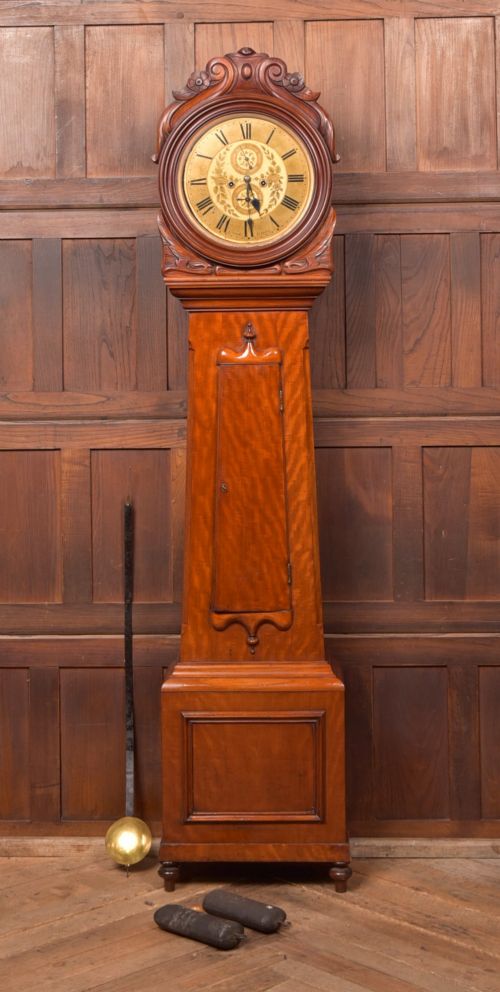
A victorian tall clock typically manifests as a longcase or grandfather clock, housing weight-driven or spring-driven movements within a substantial timber enclosure. These vertical timepieces span various stylistic revivals and regional interpretations, featuring prominently in domestic interiors from the nineteenth century onwards.
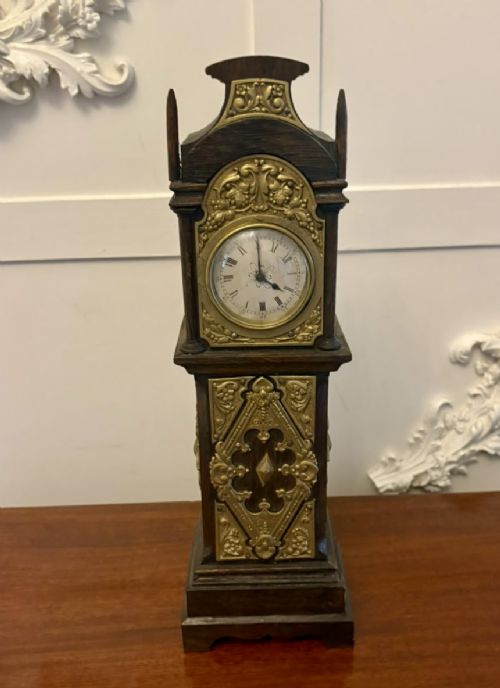
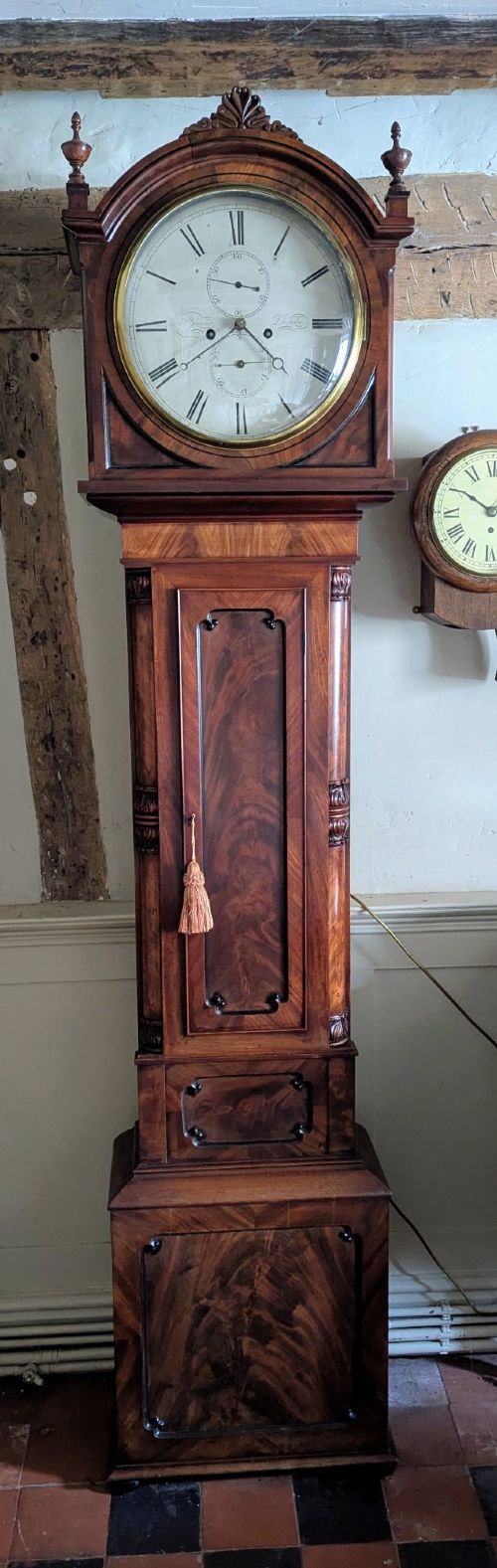
The selections available here range from grand chiming specimens with multiple tubes to compact drumhead variations and miniature table clocks. Scottish regional makers contribute significantly to the variety, alongside examples displaying Chippendale revival motifs and domestic regulator configurations.
Tall timepieces of this era serve both practical timekeeping functions and grand decorative roles, often incorporating arched dials, rolling moon mechanisms, and carved wooden cases. Buyers encounter pieces originating across the Victorian period as well as adjacent Edwardian and Georgian eras.
Materials and construction
Cabinetmakers utilised dense timbers such as mahogany and oak to construct the tall vertical housings, frequently applying carved details, inlay work, and glass panels. Metal components, including brass and iron, form the complex gear trains, dials, and regulating mechanisms housed within.
Dials combine painted iron or enamel surfaces with delicate hand-written numerals and signatures, protected behind clear glass doors. The interplay of heavy timber cases and intricate internal brass mechanics defines the physical construction of these tall floor-standing clocks.
Victorian Tall Clock Retail Price Guide 2026
Typical asking prices for victorian tall clock among the pieces listed under this phrase on Sellingantiques today, from the lower quarter to the upper quarter. They describe what is for sale here now, not the wider market.
Some tall clocks include a silent mode for light sleepers who prefer undisturbed nights.
Assessing quality in tall timepieces
Quality reveals itself in the crispness of the timber carving, the choice of well-figured mahogany or oak, and the complexity of the internal movement, such as nine-tube chiming or regulator configurations. Finer examples display harmonious proportions across the hood, trunk, and base, integrating decorative elements without clutter.
The distinction between standard domestic pieces and exhibition quality work rests on the precision of the dial painting, the legibility of the maker's signature, and the integrity of the fitted glass and brass fittings.
Tait Peebles·Priory of Dundee·Andrew Thom·David Craig·James Wood·David Griffith·Geo Tarratt·Sam Robson
The Victorian Tall Clock Glossary
- Longcase clock
- A tall pendulum clock enclosed in a wooden case with a weighted movement hanging freely. These floor-standing pieces are frequently referred to as grandfather clocks.
- Regulator
- A precision pendulum clock designed to keep exceptionally accurate time. Such movements often serve as a standard against which other clocks are set.
- Drumhead clock
- A clock featuring a circular dial housing mounted atop a tapered wooden trunk. This specific regional style appears frequently in Scottish horology.
- Fusee
- A conical pulley used in spring-driven clocks to equalise the torque of the mainspring as it unwinds. This mechanical addition ensures steady power delivery to the gear train.
Victorian Tall Clock: Frequently Asked Questions
How do I set up a tall clock?
Setting up involves securing the wooden case to a level floor and carefully hanging the pendulum and weights. Care must be taken not to force the mechanical train during initial startup.
Allow the movement to settle before adjusting the time via the minute hand, ensuring the pendulum achieves a steady, even beat.
Where should I place a tall clock?
Position the piece against an interior wall away from direct sunlight, heating vents, and damp areas. Stable environmental conditions help protect the timber case and internal metal components.
Ensure the floor surface provides a rigid, vibration-free foundation so the pendulum swings without interference.
How do eight-day movements work?
An eight-day movement requires winding approximately once a week using a key inserted into holes on the dial face. Weights descend slowly down the trunk over this period to power the going train.
This mechanism offers convenience compared to daily-wound alternatives while maintaining reliable timekeeping accuracy.