

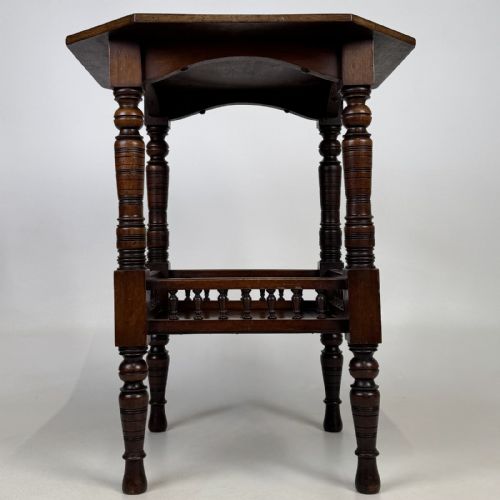
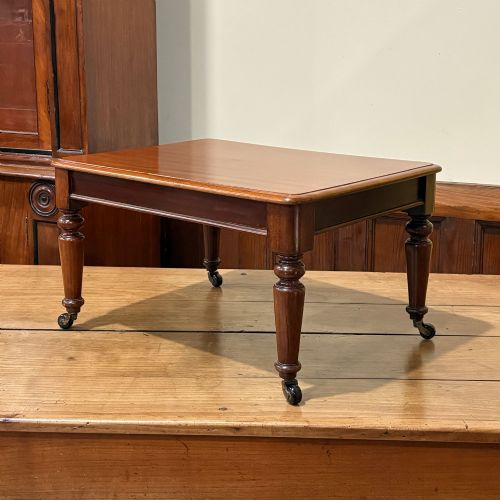
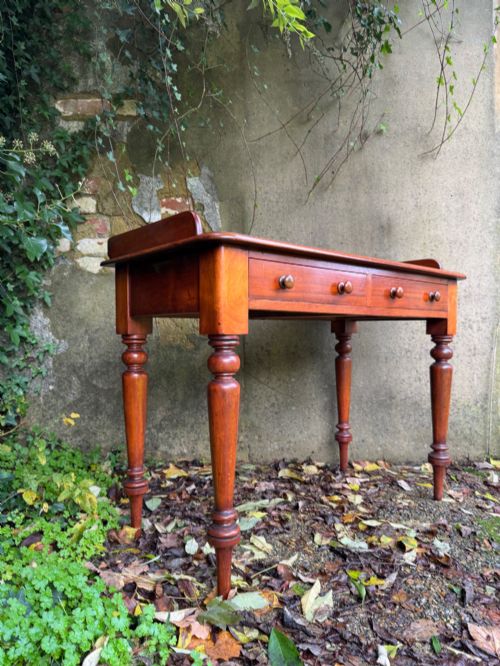
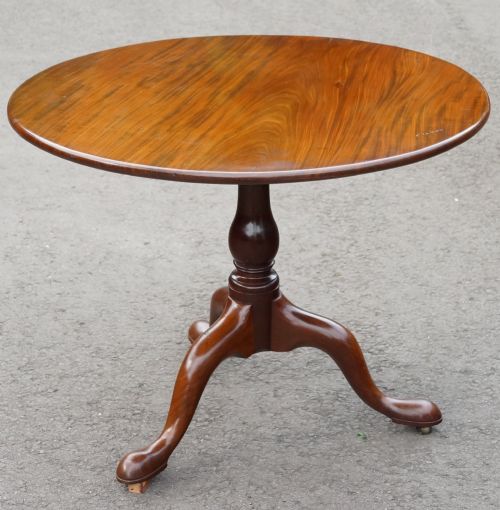
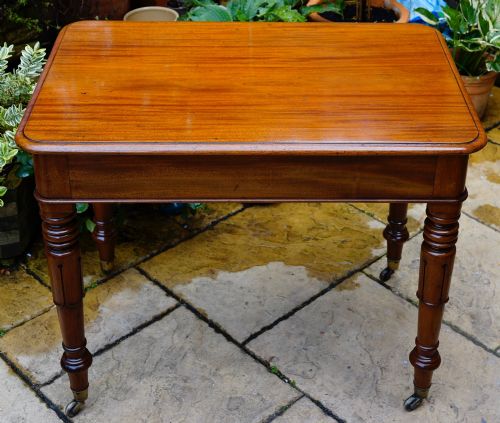
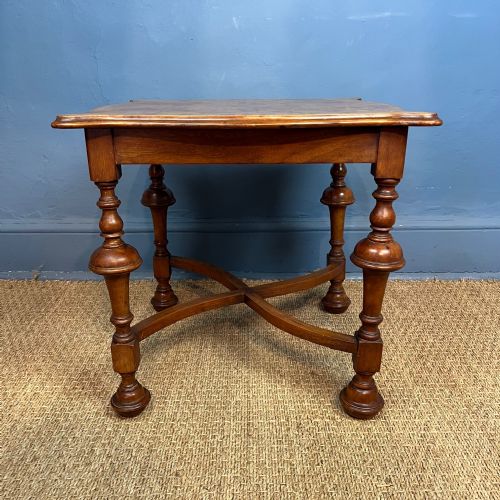
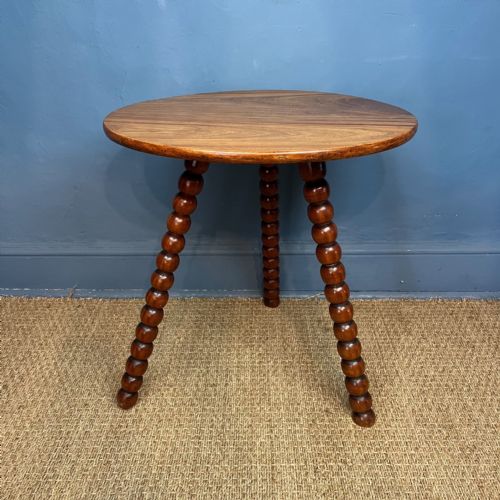
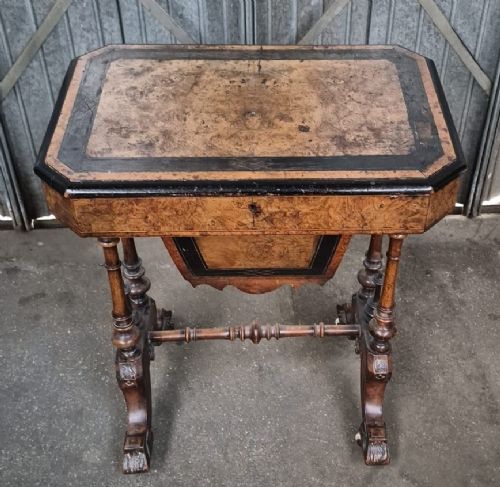
Victorian Table with Turned Legs
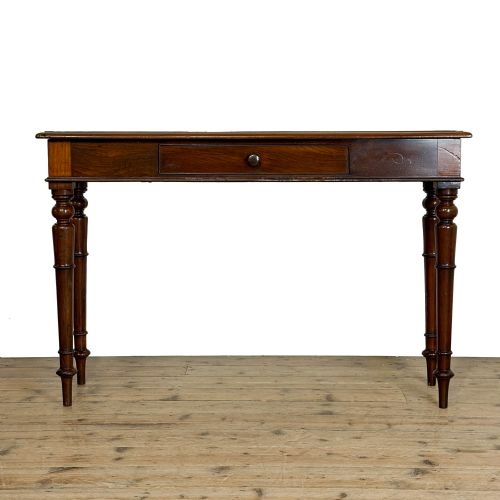
A victorian table with turned legs brings solid nineteenth-century timber and honest joinery straight into a modern room.
Victorian Table with Turned Legs
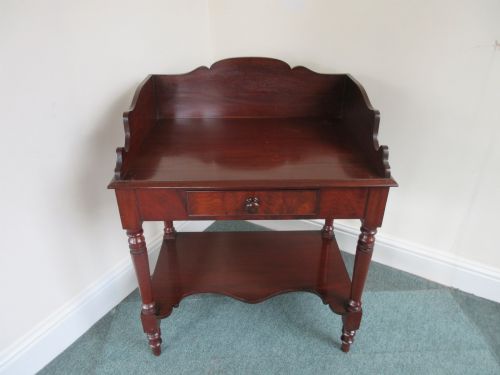
When you search for a victorian table with turned legs, you encounter a wide selection of practical household furniture spanning side tables, writing desks, and sturdy kitchen pieces. The nineteenth-century examples often appear in rich timbers like mahogany and oak, alongside domestic pine used for everyday utility.
Kitchen and farmhouse tables dominate the simpler end of the scale, featuring turned supports that provide sturdy clearance for seating. More formal writing desks and occasional tables introduce fine veneers and decorative mouldings while retaining the characteristic cylindrical leg supports.
Origins stretch from rural workshops producing utilitarian pine furniture to metropolitan cabinet makers crafting refined mahogany and satin birch pieces. Edwardian examples occasionally join the Victorian mix, sharing the same traditional turned leg construction methods.
Materials and construction
Cabinet makers utilised dense hardwoods such as mahogany, oak, and birds-eye maple for formal writing tables and centre pieces, often applying polished finishes to reveal natural grain patterns. Domestic items relied heavily on pine and fruitwood, sometimes finished with lead-based paint or left in a natural scrubbed state.
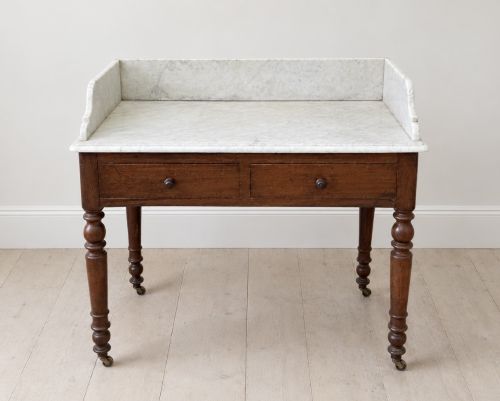
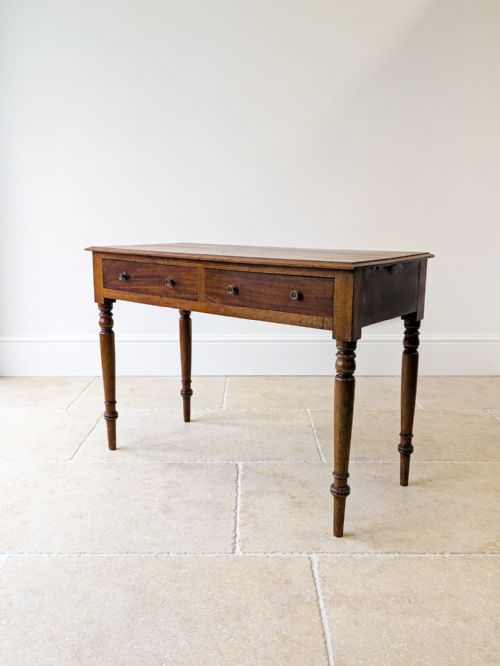
Legs were shaped on a lathe to create turned profiles, ranging from simple cylindrical columns to bobbin and spool shapes. These turned supports joined the table tops and friezes using traditional mortise and tenon joints, sometimes incorporating drawers with hand-cut dovetail construction.
Victorian Table with Turned Legs Retail Price Guide 2026
Typical asking prices for victorian table with turned legs among the pieces listed under this phrase on Sellingantiques today, from the lower quarter to the upper quarter. They describe what is for sale here now, not the wider market.
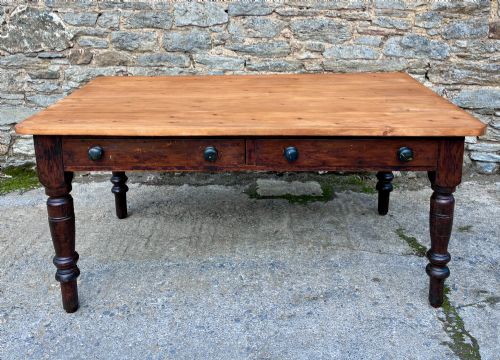
Several pine tables retain their original paint, offering a bright splash of historic colour beneath scrubbed timber tops.
Factors of quality
The distinction between standard utility furniture and superior cabinet work lies in timber selection and secondary wood usage. Higher quality writing desks and work tables employ solid mahogany or figured veneers throughout, rather than relying on stained secondary conifers.
Execution of the turned legs and joinery dictates overall stability and finish. Crisp lathe work on the turned elements and tight, flush drawer construction indicate a higher standard of workshop production.
Johnstone and Jeanes·J A Mein·Druce and Co
The Victorian Table with Turned Legs Glossary
- Turned legs
- Wood supports shaped on a rotating lathe to produce cylindrical, tapered, or decorative profile patterns.
- Frieze
- The horizontal band or rail beneath the table top, frequently housing one or more storage drawers.
- Pembroke table
- A drop-leaf table featuring hinged flaps on opposing sides and slender supporting legs.
- Satin birch
- A pale, lustrous timber utilised by nineteenth-century cabinet makers for decorative writing desks and tables.
- Cricket table
- A small three-legged round table with turned supports, traditionally used in domestic settings.
Victorian Table with Turned Legs: Frequently Asked Questions
How do I identify a genuine nineteenth-century turned leg table?
Examine the construction methods visible underneath the top and inside the drawers. Hand-cut dovetails and timber shrinkage indicate older workshop production.
Check the turning style on the legs for tool marks consistent with traditional lathe work rather than modern automated duplication.
Were these tables used for dining or writing?
Tables with turned legs served multiple domestic functions depending on their original scale and fitted components. Smaller variants operated as writing desks, work tables, or washstands.
Larger pine and oak examples functioned as kitchen or farmhouse dining surfaces for daily family meals.
How should I care for an antique pine or mahogany table?
Maintain timber surfaces by applying natural beeswax rather than modern silicone polishes to preserve the finish. Keep tables away from direct heat sources and dramatic humidity shifts to prevent wood splitting.
Use coasters and felt pads to protect older polished or painted tops from moisture rings and scratches.
Can I use a Victorian kitchen table in a modern workspace?
Sturdy pine and hardwood tables provide generous surface areas and stable foundations well suited for contemporary office use. Their deep friezes and drawers offer convenient storage for modern stationery and laptops.
Ensure you verify the floor clearance beneath the frieze to guarantee comfortable legroom for seating.