
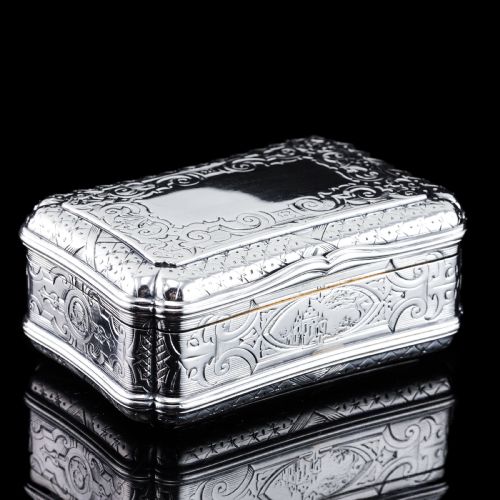


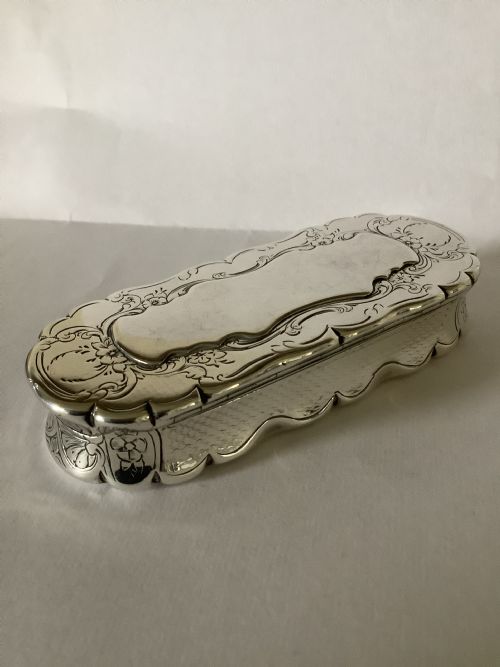


Victorian Table Snuff Box
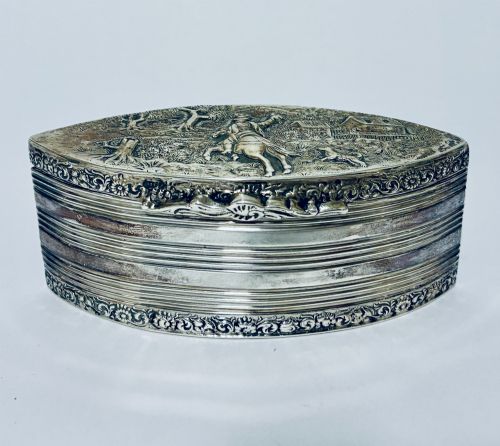
A victorian table snuff box sits heavy in the hand, designed to hold tobacco and command attention on any surface.
Victorian Table Snuff Box
Most pieces date from the nineteenth century, reflecting the peak of domestic tobacco use and formal social rituals. These boxes range from simple geometric forms to heavily ornamented presentation pieces with gilt interiors.
The objects serve as functional containers that double as decorative display items for desks and drawing rooms. Their presence marks an era when small personal accessories received elaborate artistic attention.
Materials and Construction
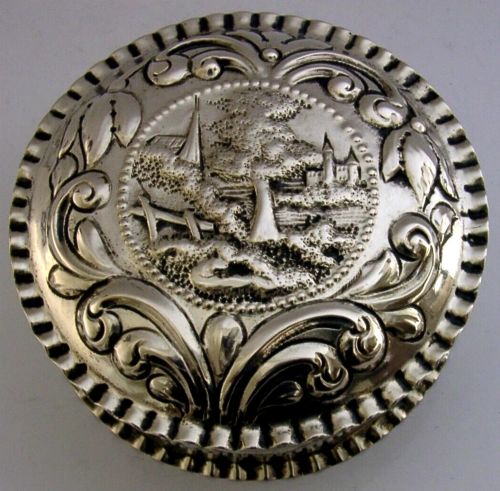
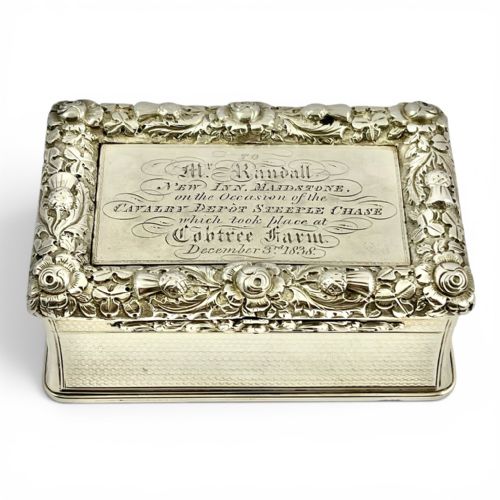
Silversmiths utilised sterling silver and solid silver for the primary body, often applying vermeil or gilding to the interior surfaces to protect the metal from the corrosive nature of tobacco. Cast borders and intricate hand engravings required skilled chasing and repoussé techniques.
Alternative materials include amboyna wood, tortoiseshell, and treen, which were shaped and polished to highlight natural grain and colour. Makers also employed niello inlay and papier-mâché to achieve contrasting decorative surfaces on non-metal boxes.
Listings feature sterling silver, amboyna wood, and tortoiseshell across Victorian, Georgian, and Edwardian periods.
Distinctions in Execution
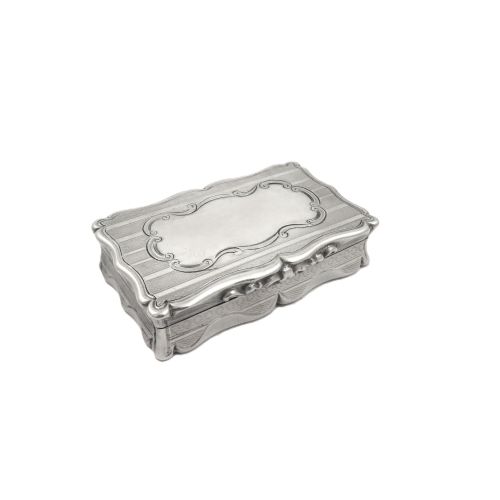
The weight and thickness of the metal establish the foundational substance of a silver piece, separating substantial boxes from lighter examples. Crispness in cast acanthus borders and depth in engraved scrolls demonstrate the hand of a master silversmith.
Fitted hinges and tightly closing lids indicate precision in original construction, ensuring the box seals effectively. The presence of clear hallmarks and named makers adds documented origin and structural integrity.
Edward Smith·Frederick Mason·Edward Edwards·David Pettifer·Nathaniel Mills·Thomas Johnson·Charles Rawlings and William Summers
The Victorian Table Snuff Box Glossary
- Castle Top
- A specific form featuring a detailed engraving or cast relief of a famous building or landscape on the lid. These pieces depict architectural scenes with high precision.
- Niello
- A black metallic alloy used as an inlay on engraved metal surfaces. It creates a dark contrast against polished silver.
- Vermeil
- Sterling silver plated with a thin layer of gold. This finish provides a warm yellow tone to the interior of silver boxes.
- Treen
- Small handmade wooden objects produced from burls or timber. This term covers turned and carved wooden receptacles.
- Cartouche
- An ornamental frame or panel, usually with a curved border, designed to hold an inscription or coat of arms. It often centres the lid design.
Victorian Table Snuff Box: Frequently Asked Questions
How were table snuff boxes used?
These boxes rested on dining or drawing room tables for guests to help themselves during gatherings. Opening the hinged lid released pinches of powdered tobacco for social consumption.
Owners kept them filled within easy reach, turning a daily habit into a shared ritual. Their substantial size meant they stayed stationary rather than travelling in pockets.
Are these boxes made of solid silver?
Many examples consist of sterling or solid silver, marked with traditional British assay office stamps. Some pieces incorporate gilt interiors or contrasting materials like wood and metal.
Alternative versions utilise pewter, bronze, or papier-mâché instead of precious metals. Hallmarks on silver items help verify the specific metal standard and origin.
How do I identify the period?
Maker marks and date letters stamped onto silver pieces provide precise manufacturing years. Stylistic clues such as Rococo revival scrolls or castle top engravings point toward specific decades.
Materials like amboyna wood and tortoiseshell often align with mid-nineteenth century production trends. Comparing design elements against documented silversmith active dates confirms the era.
How do I care for antique silver?
Gentle dusting with a soft cloth prevents surface grime from settling into engraved crevices. Avoid harsh chemical dips that strip away the natural patination built up over generations.
Store pieces in stable environments away from direct sunlight and excessive moisture. Proper handling preserves the delicate hinges and original surface finishes.