
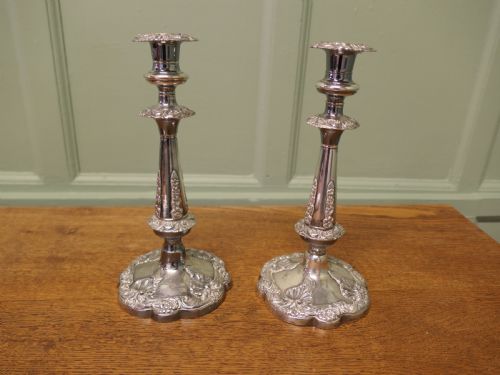
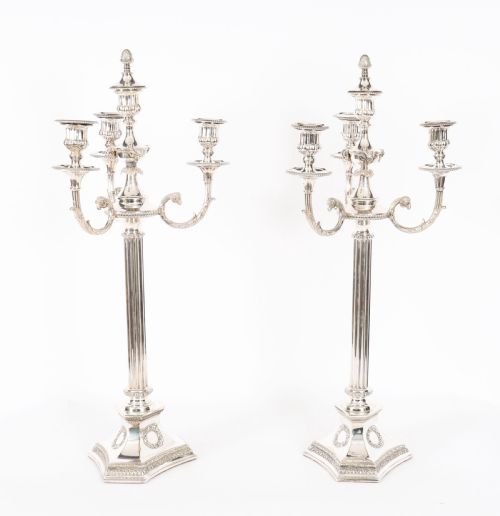
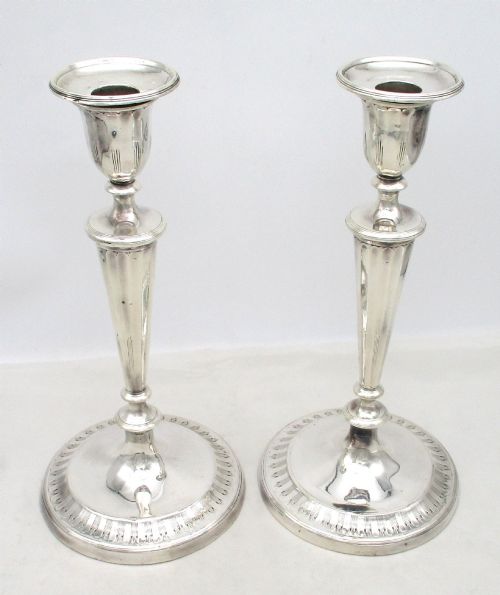
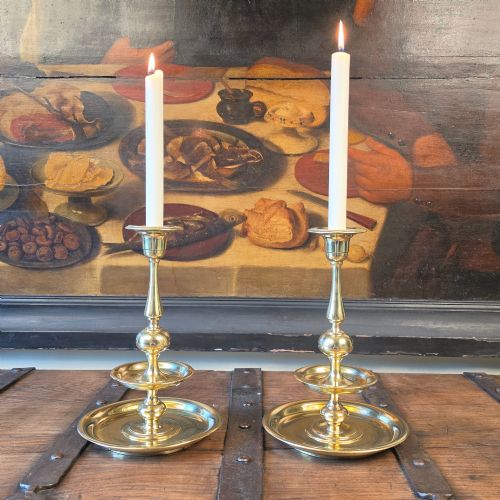

Victorian Table Candle Holders
Victorian table candle holders bring nineteenth-century illumination to a room, offering functional metal and plated designs for everyday dining.
Victorian Table Candle Holders
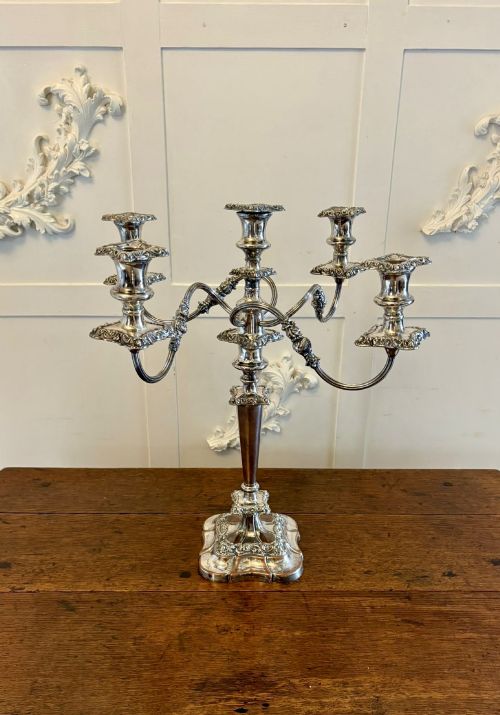
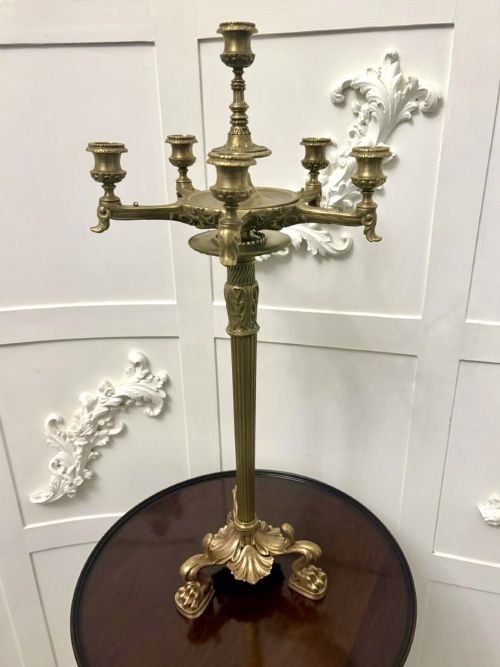
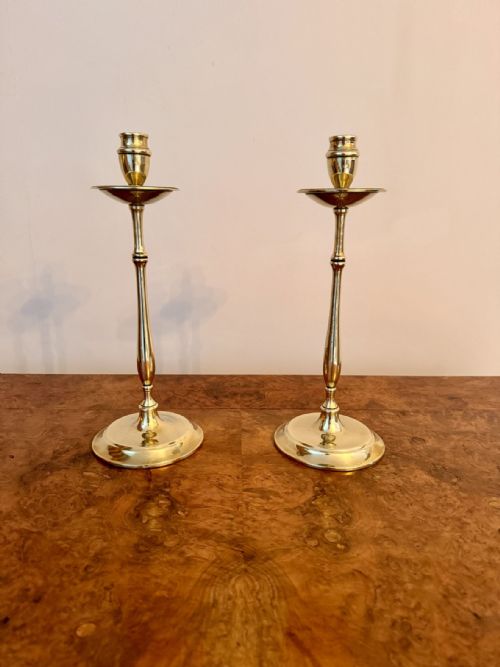
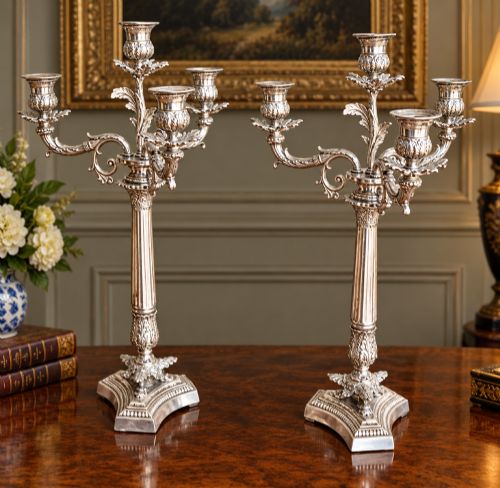
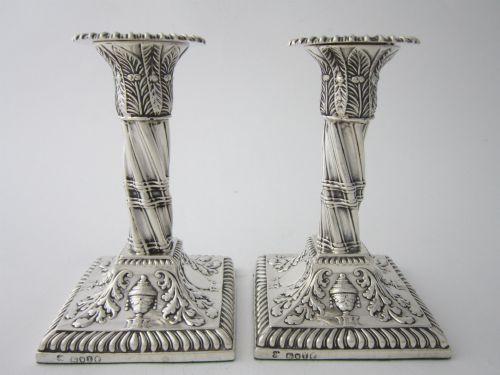
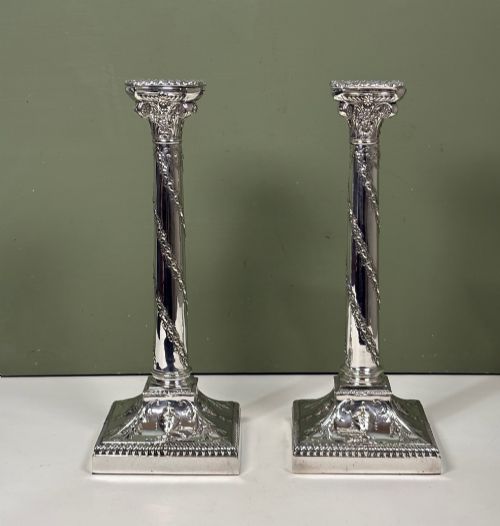
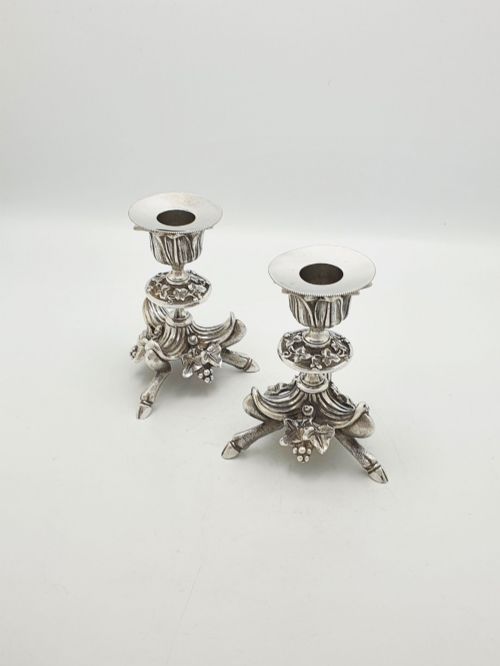
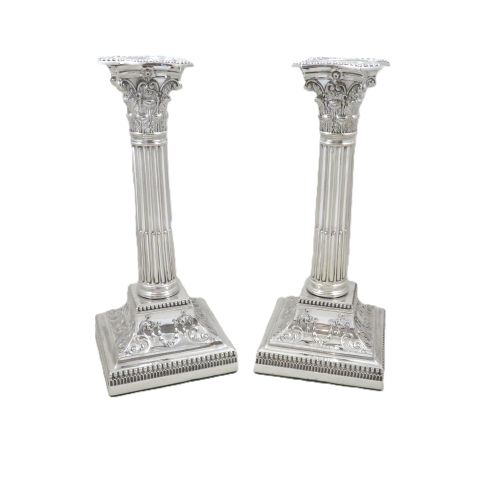
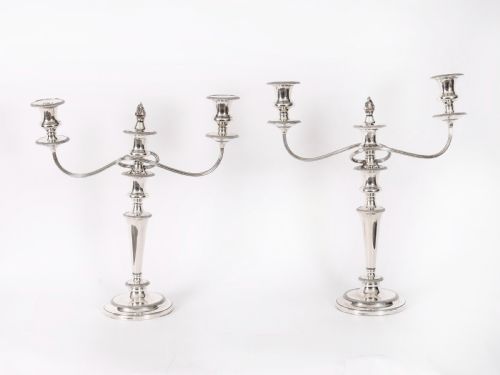
Victorian table candle holders encompass candlesticks, multi-light candelabra, and table lamps originating across the nineteenth century and into the early twentieth century. These items appear frequently in matching pairs and utilise styles ranging from plain classical revival forms to heavily ornamented rococo and neoclassical designs.
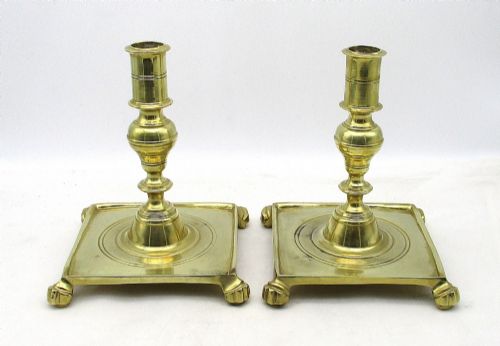
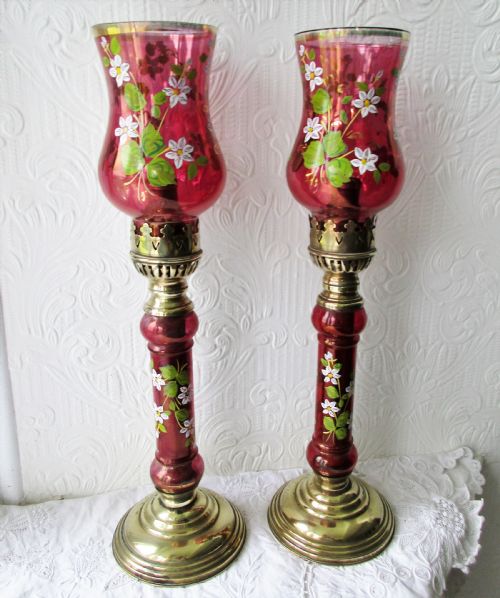
The version most commonly met on this page is the pair of silver plated or brass candlesticks, often dating from the middle decades through to 1900. Alongside standard sticks, buyers encounter specialised pieces such as candle lamps with glass shades, ejector mechanisms, and multi-light candelabra designed for dining tables and mantelpieces.
Materials and Techniques
Makers utilised cast and spun metals, predominantly brass, bronze, and various forms of silver plating including electroplated nickel silver and sterling silver. Many brass items employ seamed construction methods or internal ejector mechanisms to lift remaining wax stubs.
Surface decoration frequently incorporates applied ornamentation like champleve enamel, gilding, and decorative glass or porcelain components. Silver plated items often rely on Sheffield manufacturing techniques to bond thin silver sheets or deposits onto base metal foundations.
Judging Quality
Quality rests in the crispness of the casting and the structural weight of the metal rather than surface ornamentation alone. Superior examples display deep, sharp chasing on cast brass, bronze, and silver, whereas lesser pieces show soft, rounded details from worn production moulds.
Construction methods also divide the range, with heavier, solid components and precise joints marking the upper tier of production. Finer pairs retain matched proportions and original structural components without replacement parts or unstable bases.
Garrard & Co·Frederick J Smith & Co·Wm Tonks & Sons·Smith & Sissons & Co·WMF
The Victorian Table Candle Holders Glossary
- Candelabra
- A branched lighting fixture holding multiple candles on a single base. These often feature removable arms that convert the piece into a standard candlestick.
- Electroplated Nickel Silver
- A base metal alloy of copper, nickel, and zinc coated with a thin layer of pure silver through electrolysis. This process became widespread during the Victorian era for affordable tableware.
- Ejector
- A concealed internal spring mechanism operated by a thumbpiece to push remaining candle stubs up and out of the socket. This practical device appears frequently in nineteenth-century brass candlesticks.
- Champleve
- An enamelling technique where troughs are dug into a metal surface and filled with vitreous paste before firing. The method creates colourful geometric or pictorial patterns on bronze frames.
- Corinthian Column
- A classical architectural column form featuring ornate acanthus leaf capitals. Makers frequently adapted this design for tall brass and silver candlesticks.
Victorian Table Candle Holders: Frequently Asked Questions
How do I clean tarnished brass and silver plated holders?
Use a soft cloth and a specialised metal polish appropriate for the specific material, taking care not to rub through thin silver plating.
Avoid abrasive scouring pads or harsh chemical dips that strip away the original aged patina and underlying metal.
Can I use standard modern candles in these holders?
Many nineteenth-century sockets accommodate standard taper candles, but nineteenth-century sizing often varies slightly from contemporary dimensions.
Use small wax grips or carefully pare down the base of the candle to ensure a secure, upright fit in older tapered sockets.
How do I identify the period of a metal candle holder?
Examine the construction marks, base weighting materials, and prevailing design styles such as neoclassical columns or rococo revival scrolls.
Nineteenth-century pieces often display specific casting seams, maker stamps, and electroplate designations that distinguish them from earlier or later reproductions.