


Victorian Table Candelabra
Victorian table candelabra bring towering branched illumination and formal dining grandeur to a room, appearing most often in silver plate and brass.
Victorian Table Candelabra
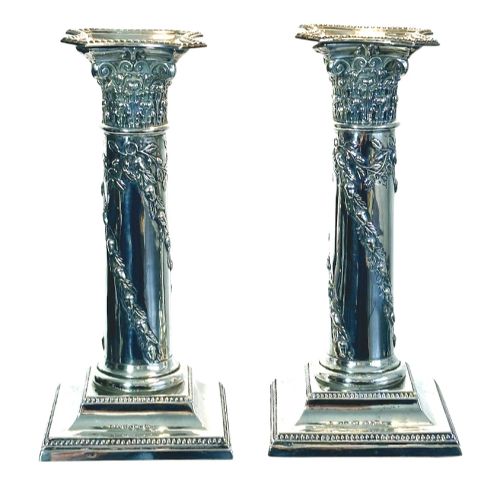
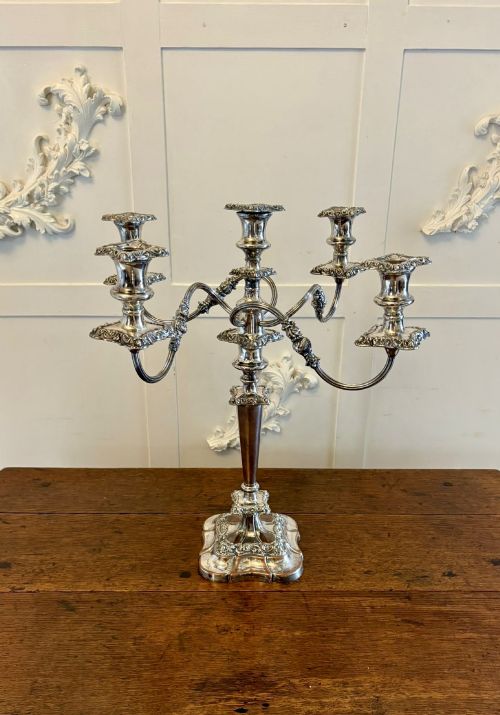
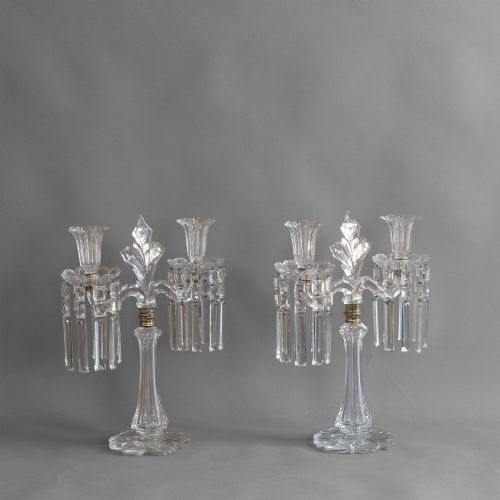
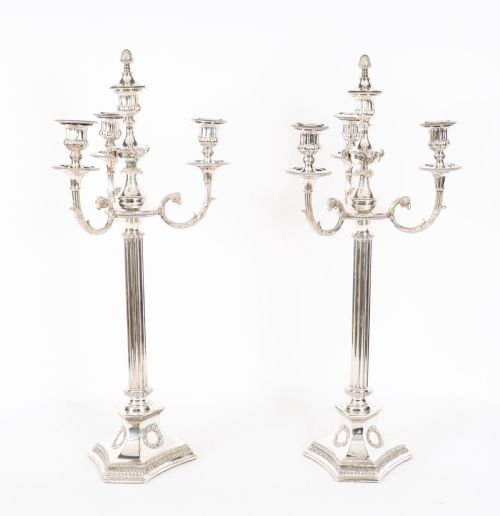
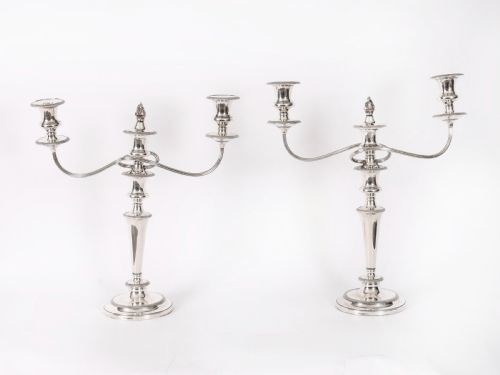
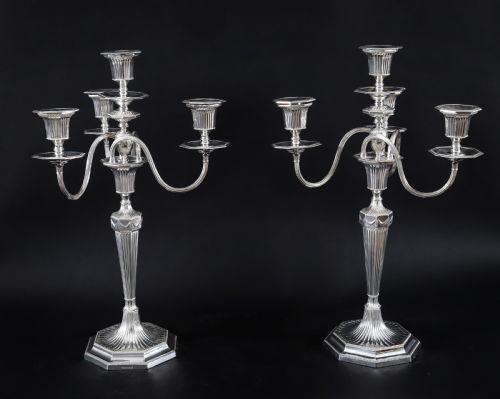
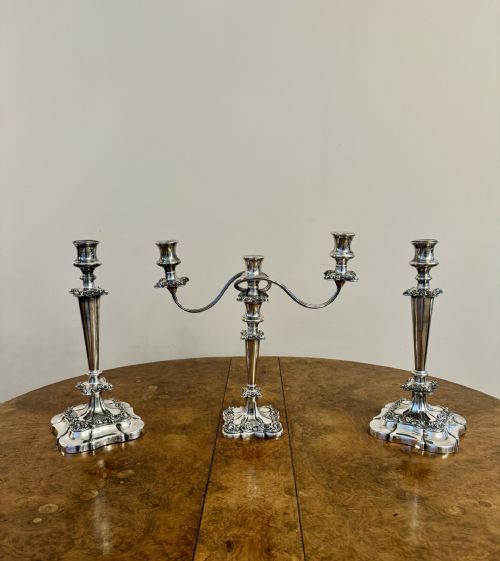
Victorian table candelabra are standing lighting fixtures designed to hold multiple candles, originating mainly from the nineteenth century. These pieces range from simple twin-light configurations to large dining table centrepieces carrying five or six branches.
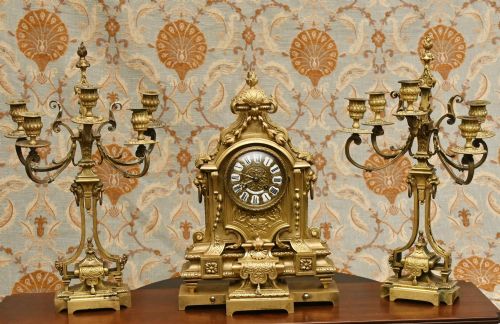
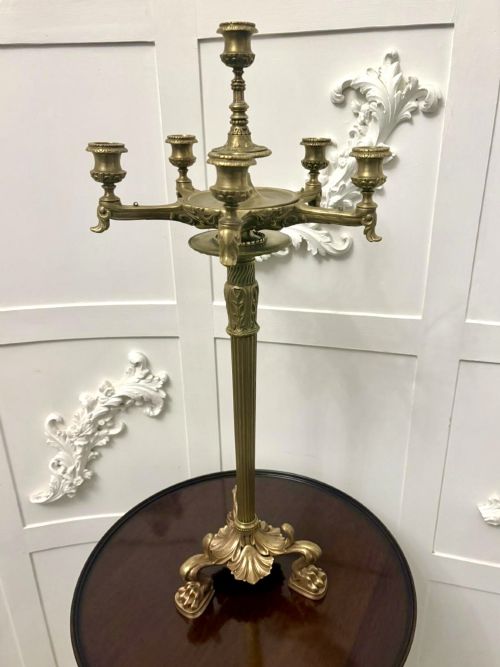
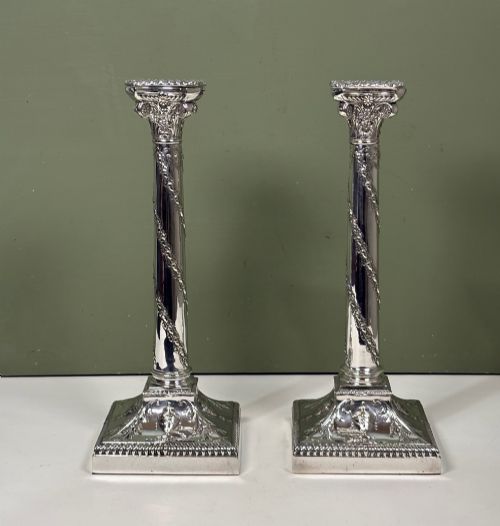
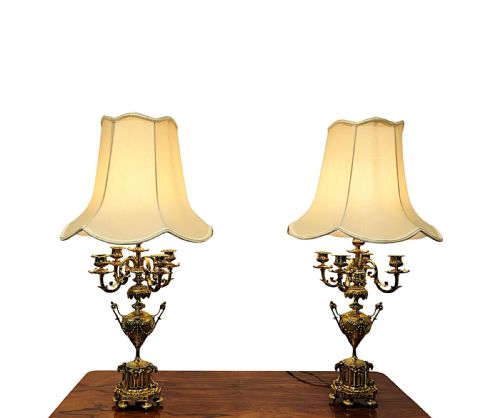
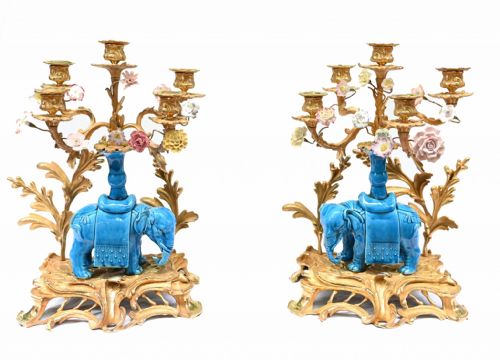
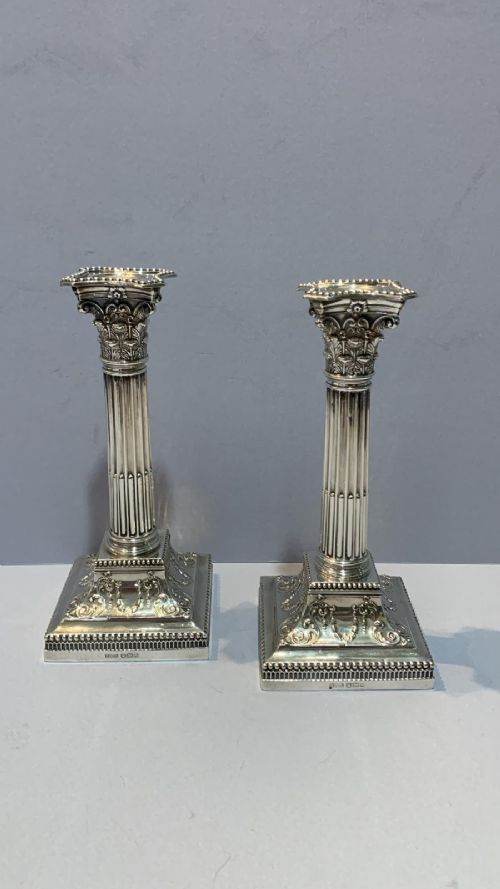
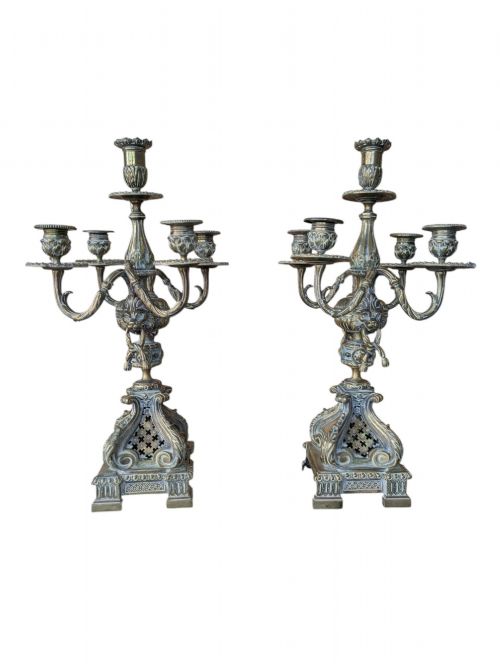
The versions most commonly met on this page include substantial silver plated designs with detachable sconces alongside polished brass and bronze pairs. Certain examples show the influence of French styles or incorporate porcelain and marble elements.
Makers and makers' marks occasionally identify specific Sheffield or London manufacturers, though many surviving pieces remain unattributed. Buyers encounter both original candle-holders and items that were subsequently converted to table lamps.
How they were made
Makers constructed these pieces using metals such as silver plate over a base metal, solid brass, bronze, and gilt brass. Techniques involved casting heavy components, chasing surface detail by hand, and assembling branched arms around a central column.
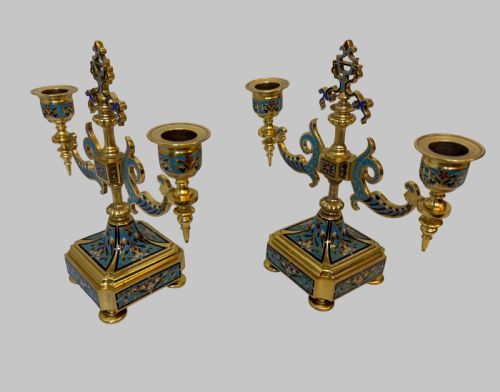
Decorative additions included champleve enamel panels, inset porcelain plaques, and contrasting marble bases. Silver plated items utilised early electroplating methods developed during the period to coat base metals with a durable layer of silver.
Victorian Table Candelabra Retail Price Guide 2026
Typical asking prices for victorian table candelabra among the pieces listed under this phrase on Sellingantiques today, from the lower quarter to the upper quarter. They describe what is for sale here now, not the wider market.
Listings demonstrate a frequent use of silver plate and brass, alongside bronze, marble, and porcelain elements.
What varies in quality
The standard of execution separates basic production items from exceptional workshop output, visible in the crispness of cast ornamentation and the depth of hand-chased detail. Heavier gauge metal and secure joint construction indicate superior original manufacture.
Completeness significantly affects standing, particularly the presence of matching detachable sconces, original drip pans, and balanced branch symmetry. Finer examples retain intact gilding, undamaged enamel, and uncompromised structural alignment across all arms.
Hawksworth Eyre·Garrard & Co·Wm. Tonks & Sons·Smith & Sissons & Co·Sitzendorf·Elkington
The Victorian Table Candelabra Glossary
- Candelabra
- A branched lighting fixture designed to hold multiple candles upon a single base. These objects served as functional dining table centrepieces and decorative mantel furnishings.
- Sconce
- The removable cup or nozzle situated at the top of a candle branch to catch dripping wax. Detachable sconces facilitate cleaning and maintenance.
- Silver Plate
- A thin layer of silver bonded to a base metal substrate, such as copper or nickel brass. This technique allowed domestic items to achieve the appearance of solid silver at lower cost.
- Ormolu
- Finely chased gilt bronze used for decorative mounts and structural elements on nineteenth-century furnishings. The technique involves applying a gold amalgam to heated bronze.
- Champleve
- An enamelling technique where troughs or cells are hollowed out of a metal surface and filled with vitreous enamel before firing. The resulting design sits flush with the surrounding metal borders.
Victorian Table Candelabra: Frequently Asked Questions
How do I clean silver plated candelabra?
Use a soft cloth and a gentle silver cleaner formulated to protect plated surfaces from excessive abrasion. Avoid harsh dips that can strip the underlying metal coating.
Take care around joints and chased ornamentation where residue tends to accumulate. Regular dusting with a dry microfiber cloth prevents the need for heavy chemical cleaning.
Were these originally wired for electricity?
Nineteenth-century examples were designed exclusively for wax or tallow candles. Conversion to electricity occurred later in many instances, often altering the internal wiring channels.
Buyers find both unconverted candle-bearing fixtures and items modified into table lamps. Restoration back to candle use is sometimes possible depending on prior alterations.
How can I tell a Victorian piece from a later copy?
Examine the construction methods, casting seams, and patination patterns across the metal surfaces. Nineteenth-century manufacturing often leaves specific tool marks and assembly methods distinct from modern reproductions.
Maker stamps, registry marks, and material weights provide further context regarding the era of production. Consulting known period catalogues helps verify stylistic consistency.