



Victorian Swivel Fob
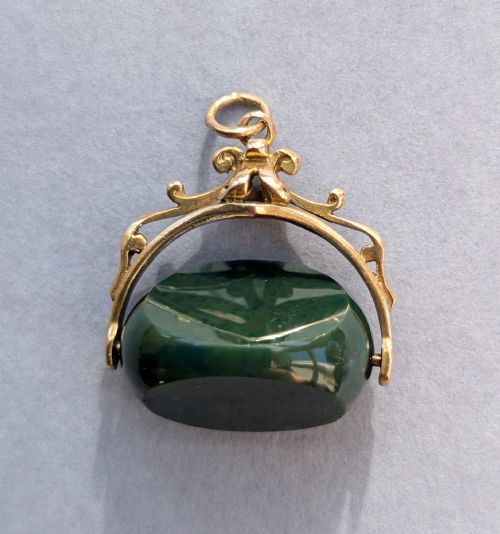
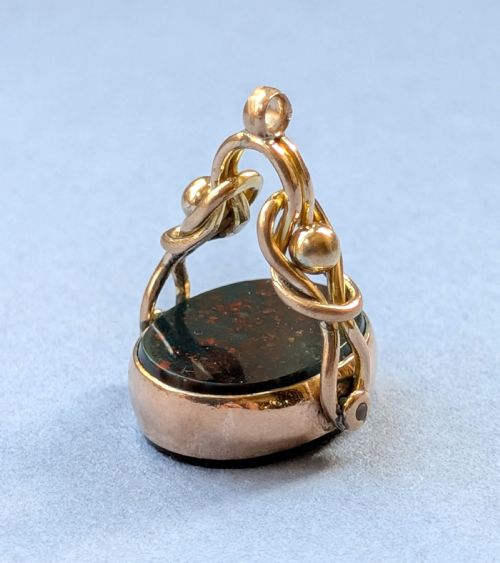
A victorian swivel fob is a turning seal or charm once worn from a pocket watch chain, offering two distinct faces to display.
Victorian Swivel Fob
A victorian swivel fob sits on a central pivot within a metal mount, allowing the wearer to spin the stone panel with a flick of the finger. These pieces appear frequently alongside watch chains and pocket watch accessories from the late nineteenth and early twentieth centuries.
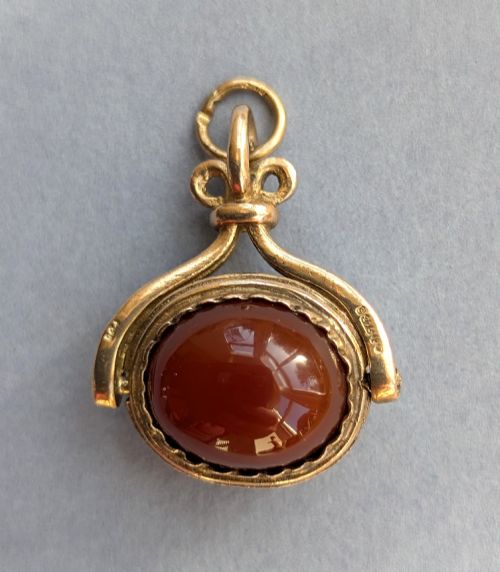
The most common formats combine precious metals like 9ct gold or sterling silver with hardstones such as bloodstone and carnelian. They connect directly to watch chains or function as standalone pendants and charms.
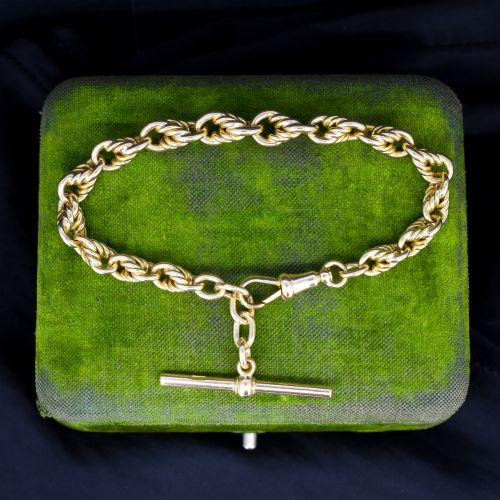
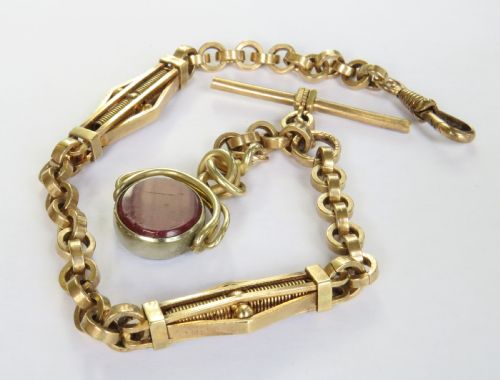
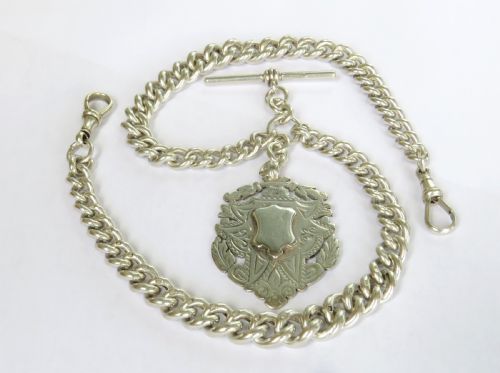
Makers fashioned these spinning seals in various shapes, including round, oval, and horseshoe designs, often integrating them into heavier watch chain bracelets and necklaces. Collectors encounter them as standalone items or attached to complete albert chains with T-bars.
Materials and construction
Goldsmiths and silversmiths shaped 9ct gold, 18ct yellow gold, rolled gold, and sterling silver into sturdy frames designed to hold rotating bezels securely. The central swivel mechanism required precise engineering so the stone panel could turn smoothly without wobbling in its mount.
Craftspeople set natural hardstones like bloodstone, cornelian, agate, and sardonyx into the rotating frames, frequently polishing the flat faces for engraving heraldic crests or initials. Metal components were often cast, chased, or faceted to catch the light during daily wear.
Victorian Swivel Fob Retail Price Guide 2026
Typical asking prices for victorian swivel fob among the pieces listed under this phrase on Sellingantiques today, from the lower quarter to the upper quarter. They describe what is for sale here now, not the wider market.
Current listings feature pieces spanning from the late Victorian era through the Edwardian period into the 1930s, utilising sterling silver, 9ct gold, and bloodstone.
Assessing quality and craftsmanship
The weight and gauge of the gold or silver mount dictate the substance of the piece, with heavier chains and fobs demonstrating superior metal content. Solid 9ct and 18ct gold pieces sit at the higher end compared to rolled gold or gilt metal alternatives.
The quality of the stone cutter's work defines the piece, particularly the depth of the polish and the tight fit of the bezel around the carnelian or bloodstone. A well-made swivel mechanism maintains firm tension over decades of use, turning cleanly on its axis.
The Victorian Swivel Fob Glossary
- Swivel fob
- A double-sided pendant mounted on a central axis that rotates to display either face. This mechanism allowed gentlemen to switch between different monograms or stone types.
- Albert chain
- A pocket watch chain attached to a waistcoat buttonhole via a T-bar. These chains frequently carry the swivel fob as a central drop pendant.
- Bloodstone
- A dark green chalcedony flecked with red spots of jasper. Victorian lapidaries prized this stone for signet seals and spinning fobs.
- Carnelian
- A brownish-red variety of quartz crystal used widely in antique jewellery. Its warm translucent colour made it a popular choice for the primary face of a swivel fob.
- Rolled gold
- A manufacturing method where a sheet of gold is mechanically bonded to a base metal core. This technique provided the appearance of solid gold at a lower cost.
Victorian Swivel Fob: Frequently Asked Questions
How did Victorians use a swivel fob?
Owners attached the fob to a pocket watch chain worn across a waistcoat or pinned to clothing. The rotating centre allowed the wearer to display different stones or blank engraving surfaces depending on the occasion.
Today, many buyers remove the fob from the antique chain and wear it as a pendant on a modern necklace. Others keep the complete assembly of chain, T-bar, and fob intact as a historic textile accessory.
What stones appear in these fobs?
The listings show bloodstone and carnelian as the primary materials set into the rotating bezels. Agate, sardonyx, and faceted citrine also appear frequently within gold and silver mounts.
These hardstones were chosen for their durability and suitability for carving personal ciphers or initials. The reverse side often featured a contrasting stone to give the piece dual functionality.
How do I date a swivel fob?
Dating relies on hallmarks stamped into the metal mounts, stylistic cues in the chasing, and the context of accompanying watch chains. Pieces span the Victorian, Edwardian, and early twentieth-century periods.
Assay office marks and maker stamps provide precise years when present on solid gold or silver items. Rolled gold examples are typically dated by the style of the jump rings and swivel loops.
Are these fobs made of solid gold?
The materials range from solid 9ct rose gold and 18ct yellow gold to sterling silver, rolled gold, and gold plate. Each piece's listing specifies the exact metal content recorded in the physical hallmarks or tested properties.
Solid gold pieces carry greater weight and metal value, while rolled gold items offer an accessible alternative with the same visual presence. Both types utilise identical spinning mechanisms and stone settings.