


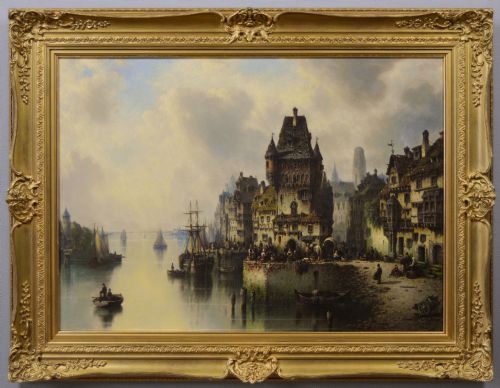


Victorian Swept Frame Artwork
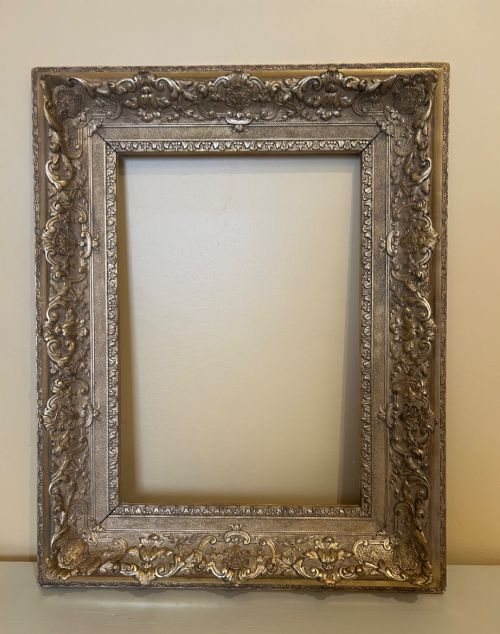
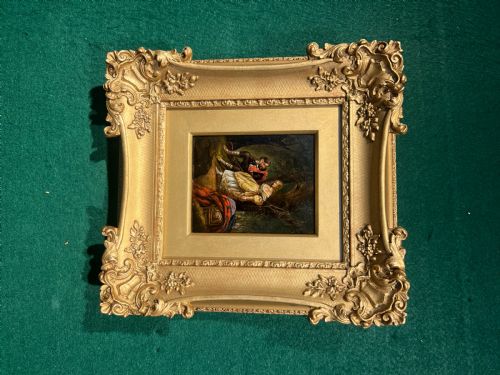
Victorian swept frame artwork combines nineteenth-century oil paintings with deeply moulded, curved frames that catch the light from every angle.
Victorian Swept Frame Artwork
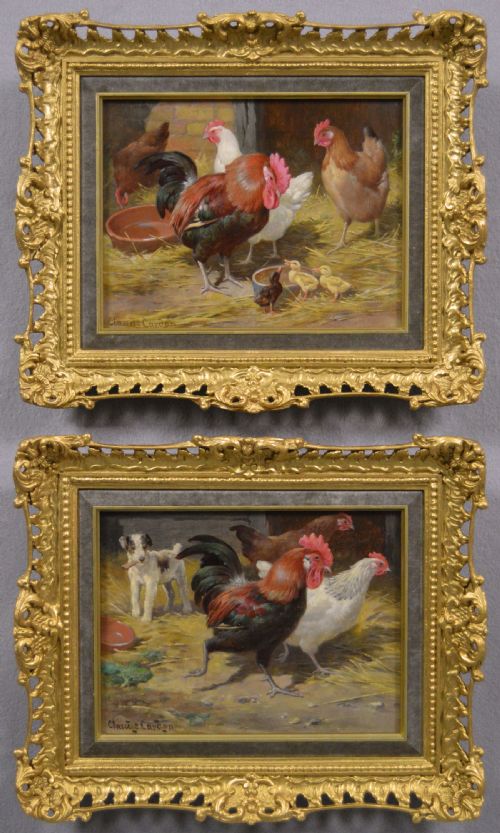
Victorian swept frame artwork consists of oil paintings housed within ornate, curved wooden or gesso frames dating primarily from the nineteenth century. These pieces capture period scenes ranging from pastoral farmyards and Scottish landscapes to busy continental harbours and floral studies.
The most common examples encountered here are nineteenth-century landscape and genre paintings set within elaborate giltwood or composition mouldings. These works reflect the decorative tastes of the Victorian era, where heavy, reflective framing enhanced the depth and drama of the canvas within.
How they were made
The frames are constructed using carved wood or moulded composition and gesso applied over a wooden base, which is then heavily gilded. This process created deep, sweeping curves and sculptural corner ornaments designed to catch ambient room light.
The artworks themselves are executed in oil paint on canvas or board, utilising traditional nineteenth-century pigments and layering techniques. Skilled artists built up rich textures for subjects such as woodland rivers, farm animals, and coastal townscapes.
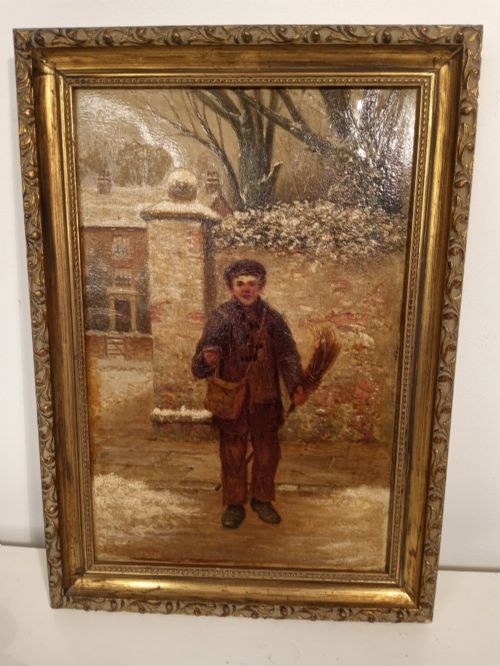
A Victorian chimney sweeper immortalised in oils proves that nineteenth-century artists found dignity in the sootiest of local professions.
What varies in quality
Quality in these pieces is dictated by the depth and crispness of the moulding on the frame and the artistic competency within the oil painting. Finer examples display hand-modelled gesso details without heavy casting flaws and confident brushwork on the canvas.
The preservation of the original gilding and the condition of the canvas surface also determine the tier of the piece. Untouched original surfaces with minimal restoration stand apart from items that have undergone heavy repainting or regilding.
Claude Cardon·Arthur Herbert Rigg·Percival Glenfern·J Barclay·William Miller Frazer·Emily Selinger·William Sidney Cooper·Ludwig Hermann·George Parson-Norman·John Holland Snr
The Victorian Swept Frame Artwork Glossary
- Swept frame
- A picture frame characterised by deep, undulating ogee curves and elaborate moulded corners. These were designed to project the artwork outward into the room.
- Gesso
- A plaster-like mixture applied to wooden frame bases to create a smooth surface for gilding. It allowed craftsmen to carve or stamp intricate decorative relief patterns.
- Giltwood
- Timber that has been coated in gold leaf or a metallic finish. It provides a luminous, reflective surface popular in nineteenth-century interiors.
- Composition
- A moulded material made from whiting, linseed oil, resin, and glue, pressed into metal moulds. It was widely used in the Victorian period to produce ornate frame ornaments cheaply.
- Genre painting
- Artwork depicting scenes from everyday life, such as farmyards, street scenes, and domestic interiors. These subjects were highly favoured by Victorian collectors.
Victorian Swept Frame Artwork: Frequently Asked Questions
Are these frames original to the paintings?
Many nineteenth-century oil paintings remain in their period swept frames, which were chosen to complement the dramatic style of the era. However, frames and canvases were often paired together over the decades as owners sought specific aesthetic matches.
Examining the fit at the back and the wear on the rebate helps determine if the pairing is long-standing. Original combinations show consistent ageing across both the artwork and the surrounding gilt moulding.
How should I clean a gilt swept frame?
Gilt frames require extremely gentle maintenance because the gold leaf or metallic surface is delicate and easily damaged by moisture or friction. Dusting should be done very carefully using a soft, dry brush without applying pressure.
Water and chemical cleaning agents must be avoided entirely, as they can strip the gilding or soften the underlying gesso. Professional conservators should handle any deeper cleaning or restoration work.
Where should I hang these heavy pieces?
Because nineteenth-century oil paintings and their solid wood or gesso frames are exceptionally heavy, they require secure wall fixings. Using appropriate wall plugs and screws screwed directly into studs or solid masonry is essential for safety.
Positioning the artwork away from direct sunlight and strong heat sources protects the oil paint from cracking and prevents the wooden frame from drying out and warping.
How do I identify a nineteenth-century frame?
Nineteenth-century frames typically feature heavy timber construction covered in layered gesso and composition ornament. The corners often contain deep relief scrolls and floral motifs characteristic of Victorian taste.
Looking at the back reveals older hand-cut screws, oxidized fixings, and dry, patinated wood rather than modern metal brackets. The weight and complexity of the mouldings also point clearly to period manufacture.