


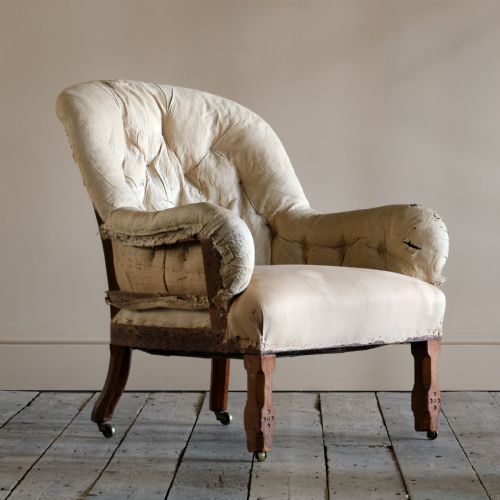


Victorian Style Tub Chair
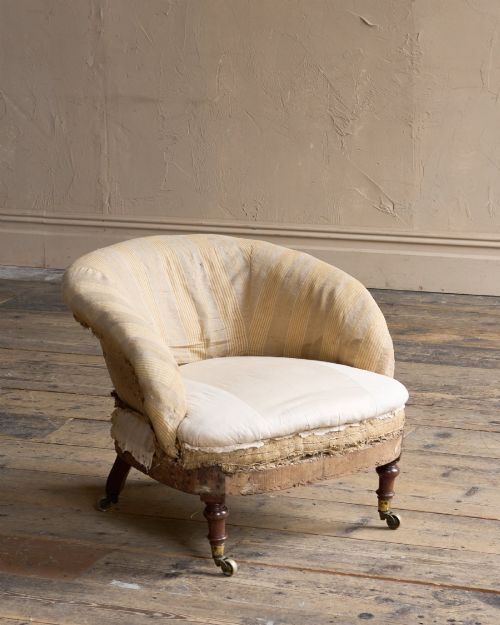
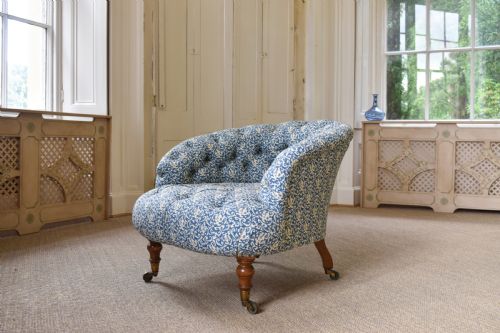
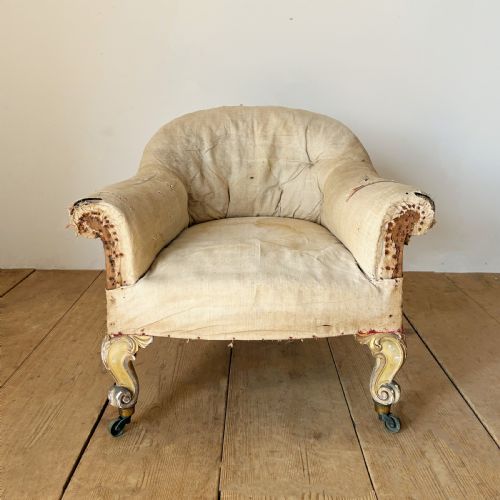
These Victorian style tub chair pieces offer curved enclosing backs that suit a study or library.
Victorian Style Tub Chair
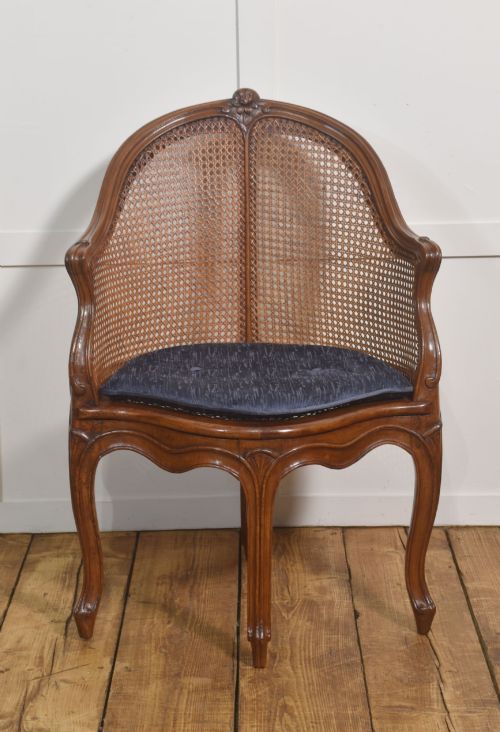
Makers drew on diverse design influences during the period, producing pieces that reflect French Louis XV style, Aesthetic Movement principles, and Rococo Revival curves. These armchairs and desk chairs appear alongside broader nineteenth-century club armchairs and elbow chairs.
Originating in the nineteenth century, these pieces encompass both simple timber frames and more elaborate inlaid or carved designs. The form remains a practical choice for domestic interiors, offering deep seating within a compact footprint.
How victorian style tub chairs were constructed
Cabinetmakers utilised sturdy hardwoods such as mahogany, walnut, timber, and burr elm to build the structural frames of a victorian style tub chair. These durable timbers supported complex curves, turned legs, and carved details.
Upholstery techniques involved traditional stuffing finished in leather, fabric, calico, or cane panels. Decorative elements often included brass inlay, silver gilt, and painted finishes applied to the wooden frameworks.
Victorian Style Tub Chair Retail Price Guide 2026
Typical asking prices for victorian style tub chair among the pieces listed under this phrase on Sellingantiques today, from the lower quarter to the upper quarter. They describe what is for sale here now, not the wider market.
Some nineteenth-century makers evidently decided that plain wood was simply not chatty enough, adding brass wire so the chair could gleam from across the room.
What defines quality in these chairs
The standard of timber selection and the precision of cabinetmaking set the finest examples apart from standard workshop production. Grain movement in walnut, mahogany, and burr elm dictates the visual depth of the wooden frame.
Refinement in carving, the integration of brass or wood inlay, and the execution of cane work indicate the hand of a skilled maker. Original upholstery materials and the integrity of the curved frame structure further influence the standing of each piece.
Howard & Sons·Gillows·Jenks & Wood·Hampton and Sons
The Victorian Style Tub Chair Glossary
- Tub chair
- An armchair with a continuous curved back and low arms forming a deep, enclosed seat. This form provides distinct lateral support.
- Walnut
- A dense hardwood prized for its rich grain and dark colour, frequently utilised for nineteenth-century seating frames. It accepts fine carving and a high polish.
- Cane
- Woven rattan or split plant material used to form light, flexible panels for chair backs and seats. It requires careful hand-weaving.
- Mahogany
- A durable tropical timber valued for stability and reddish-brown tones, common in nineteenth-century cabinetmaking. It allows for crisp turning and inlay.
- Aesthetic Movement
- A nineteenth-century design current emphasising artistic expression, simplicity, and Japanese-inspired motifs. It rejected heavy Victorian ornamentation.
Victorian Style Tub Chair: Frequently Asked Questions
What is a tub chair?
A tub chair is an upholstered armchair with a rounded, enclosing back that curves down to form low arms. The design creates a cocoon-like seat intended for comfort.
Such chairs emerged in various forms during the nineteenth century, serving as desk chairs or parlor seating. Their compact curved footprint makes them adaptable for studies and smaller reception rooms.
How do I identify nineteenth-century frames?
Nineteenth-century frames display traditional joinery methods, hand-carved details, and dense timbers like mahogany, walnut, and burr elm. Examination of the underside and structural joints reveals the age and method of construction.
Stylistic cues such as French Louis XV curves, Aesthetic Movement lines, or Rococo Revival motifs also help date the piece. Maker stamps or labels, when present, provide definitive attribution.
Where should I place a tub chair?
A tub chair suits studies, libraries, and bedrooms where its enclosed back offers a comfortable reading seat. Its compact scale allows it to sit easily in corners or beside a desk.
Pairing the chair with appropriate period furniture or contrasting modern decor highlights its curved silhouette. The piece functions well as a standalone accent or part of a seating group.
What materials were used?
Makers constructed the frames using hardwoods like mahogany, walnut, timber, and burr elm. These woods provided the necessary strength for curved backs and slender legs.
Upholstery options included leather, fabric, calico, and cane panels, sometimes accented with brass inlay or painted surfaces. These varied materials reflect the diverse aesthetic influences of the nineteenth century.