


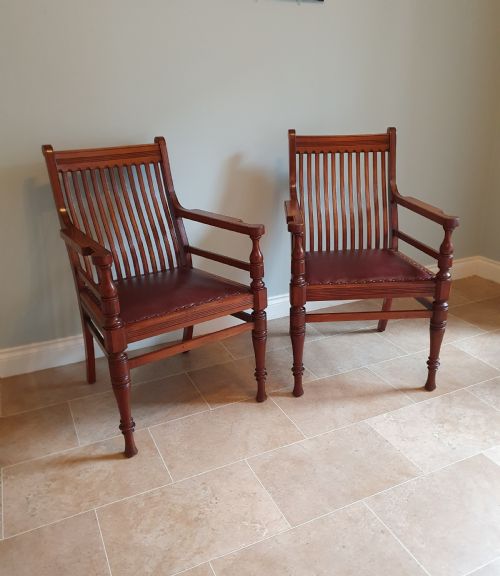


Victorian Studded Seat Chair
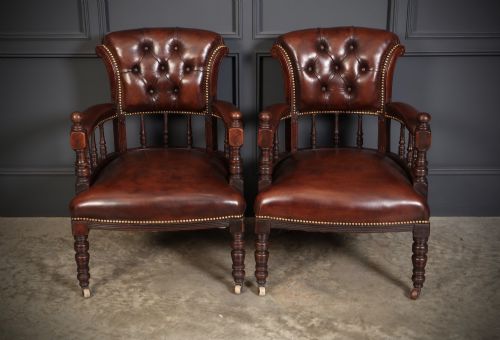
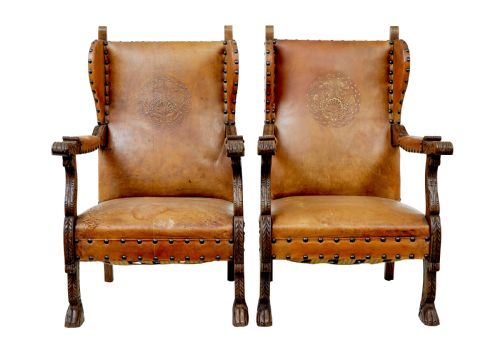
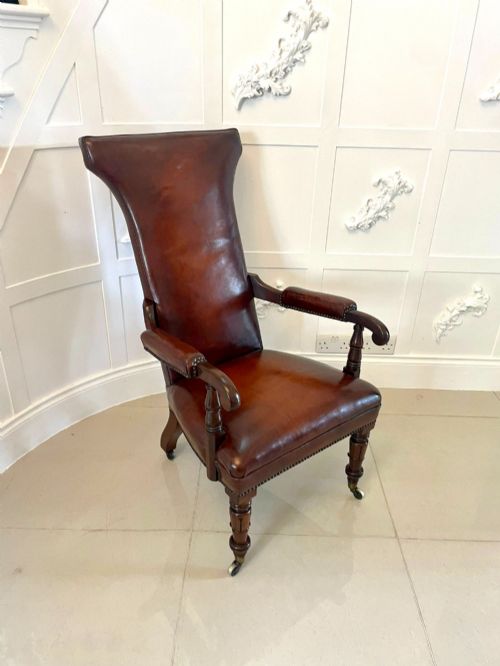
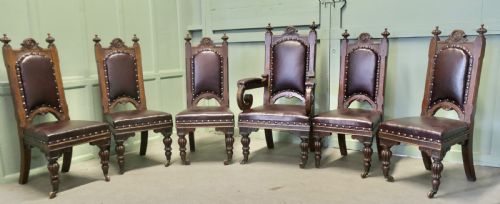
A victorian studded seat chair brings together sturdy timber and hard-wearing leather for daily utility and solid comfort.
Victorian Studded Seat Chair
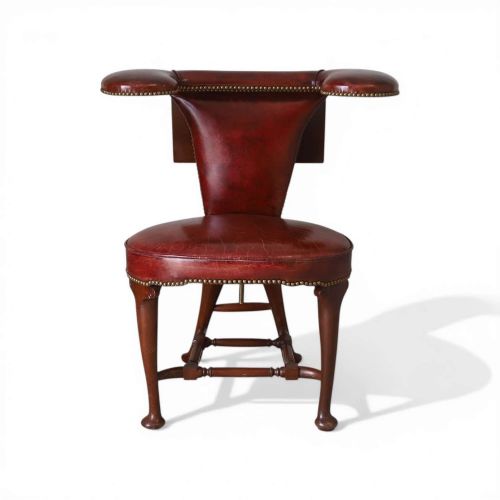
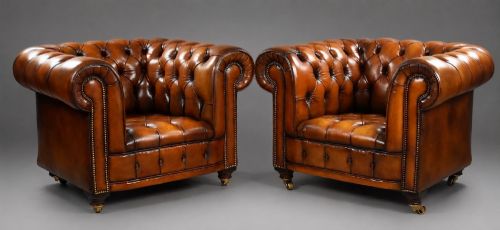
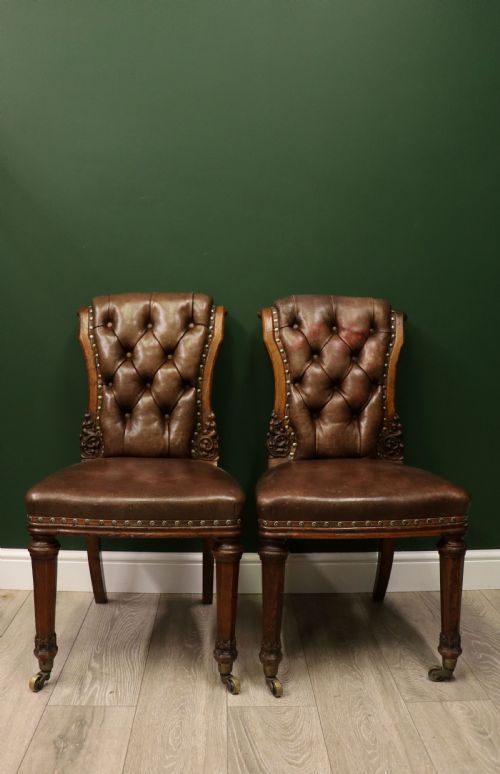
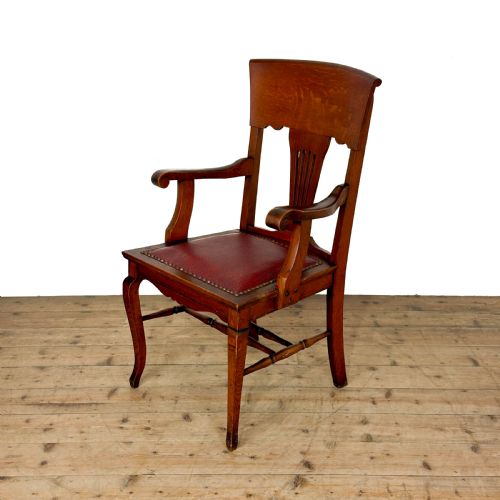
A victorian studded seat chair encompasses practical seating forms from the nineteenth century, including library armchairs, desk chairs, and dining chairs. These pieces span standard domestic types alongside specialised designs such as cockfighting chairs, club chairs, and high-back Gothic revival seating.
The materials recorded across these chairs combine solid woods like oak, mahogany, and walnut with upholstery in leather, velvet, and fabric. Brass studs frequently secure the leather edges to the wooden frames, providing a functional decorative border.
Examples on this page draw from Victorian, Edwardian, and adjacent periods, featuring revival styles like Jacobean, Gothic, and Renaissance alongside Regency and William IV forms.
Materials and Construction
Makers built these frames using native and imported hardwoods, chiefly oak, mahogany, walnut, and burr elm, joined to withstand heavy use. Timber components often feature hand-carved detailing, turned wooden legs, or structural elements such as claw and ball feet.
Upholstery relies primarily on leather, sometimes embossed, fastened tightly to the wooden framework with brass studs. Additional textile finishes utilise velvet, tweed linen, and standard fabric panels.
Victorian Studded Seat Chair Retail Price Guide 2026
Typical asking prices for victorian studded seat chair among the pieces listed under this phrase on Sellingantiques today, from the lower quarter to the upper quarter. They describe what is for sale here now, not the wider market.
Listings feature nineteen-century periods including Victorian, Edwardian, William IV, and Regency, utilising oak, mahogany, walnut, and leather.
Craftsmanship and Proportion
Quality rests in the selection and joinery of the timber frame, where denser hardwoods and deeper hand-carved ornamentation separate standard seating from exceptional library and desk chairs. The weight and grain of woods like burr elm, walnut, and mahogany indicate superior material choices.
The treatment of the leather upholstery and its brass studding dictates the finish of the piece, with neatly pegged joints and substantial frames marking the upper tier of construction.
The Victorian Studded Seat Chair Glossary
- Library chair
- A heavy, comfortable armchair designed for reading rooms, typically upholstered in leather with supportive arms. These chairs prioritize ergonomic support for extended sitting periods.
- Cockfighting chair
- A specialised low-backed seating form with a padded rest astride the back rail, historically intended for spectators. Their unusual geometry makes them distinctive collector pieces today.
- Gothic revival
- A nineteenth-century design style mimicking medieval architecture through pointed arches, heavy tracery, and carved oak timbers. This aesthetic appears frequently on hall and dining chairs from the era.
- Club armchair
- A deep, upholstered seating form covered in leather, built for low slung comfort and heavy domestic use. They often feature generous proportions and brass nailhead trimming.
Victorian Studded Seat Chair: Frequently Asked Questions
What is a victorian studded seat chair?
A victorian studded seat chair is a nineteenth-century timber chair featuring leather upholstery secured with visible brass studs. These range from heavy library armchairs to simpler desk and side chairs.
Built from woods like oak, mahogany, and walnut, they combine utilitarian function with period decorative carving.
Where were these chairs used?
These chairs served functional roles in studies, libraries, dining rooms, and halls throughout nineteenth-century homes and institutions. Specialised forms also supported specific tasks like reading or music practice.
Their durable leather seats and sturdy wood frames suited high-traffic domestic environments.
How do I care for leather upholstery?
Leather upholstery benefits from regular dusting and occasional treatment with appropriate leather conditioners to prevent drying and cracking. Keeping the timber frames polished maintains the wood grain.
Protecting the leather from direct sunlight prevents fading and preserves the original colour.
How are different periods identified?
Periods are identified through a combination of timber choice, joinery techniques, and stylistic revival motifs such as Gothic tracery or Regency shaping. Examining the structural construction under the seat reveals period-specific manufacturing methods.
Design influences shift from heavier William IV forms toward refined Victorian and Edwardian iterations.