



Victorian Striped Sofa
A victorian striped sofa brings deep comfort and classic English country house character into a sitting room.
Victorian Striped Sofa
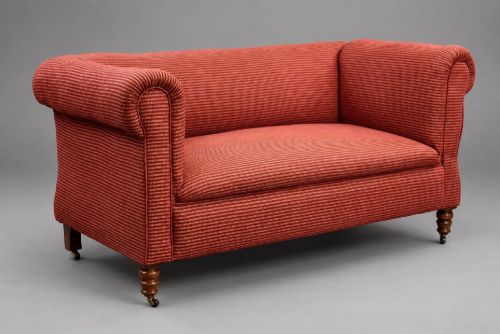
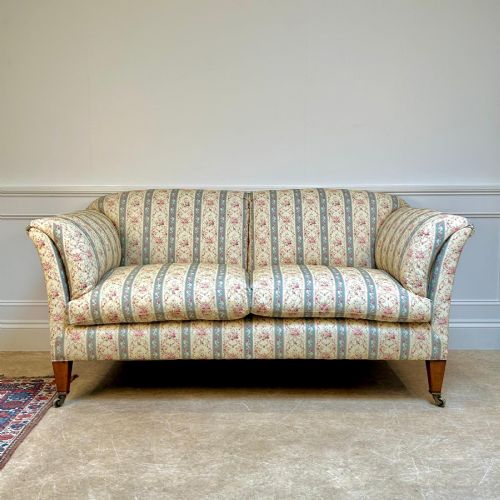
A victorian striped sofa brings together generous upholstery and sturdy timber frames characteristic of nineteenth century seating. Buyers exploring a victorian striped sofa often encounter varied forms including drop-end designs, scroll arm pieces, and large double wingback configurations.
The selection ranges across the nineteenth century into the Edwardian era, incorporating related seating such as chaise longues alongside standard sofas. Pieces reflect traditional English country house aesthetics through substantial proportions and classic fabric coverings.
Makers such as Howard and Sons appear within the selections, alongside broader nineteenth century cabinet work and seating. These examples demonstrate the variety of forms produced during the period, from compact furniture to large upholstered settees.
Materials and construction
Frames rely on hardwood timbers including mahogany, walnut, and zebrawood, providing robust structural foundations for heavy upholstery. Joinery techniques from the nineteenth century support enduring stability across large sofas and smaller chaise longues.
Upholstery incorporates traditional fabric coverings such as ticking and patterned textiles, often paired with brass detailing. Interior padding and concealed storage elements reflect the practical craftsmanship typical of nineteenth century workshop production.
Victorian Striped Sofa Retail Price Guide 2026
Typical asking prices for victorian striped sofa among the pieces listed under this phrase on Sellingantiques today, from the lower quarter to the upper quarter. They describe what is for sale here now, not the wider market.
Listings feature nineteenth century and Edwardian pieces, incorporating mahogany, walnut, zebrawood, and traditional fabric upholstery.
Judging quality
Quality rests in the structural integrity of the timber frame and the proportional balance of the arms and backrest. Master workshops achieve refined lines and enduring joints that distinguish superior upholstery frameworks from simpler production.
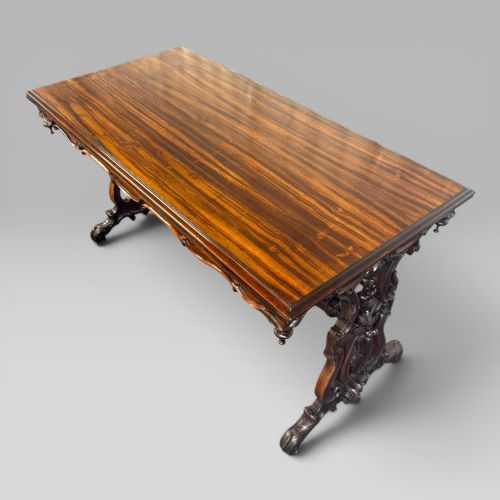
The sophistication of the timber work, whether figured mahogany or decorative zebrawood on related pieces, signals workshop distinction. Original upholstery treatments and surviving maker stamps provide further indicators of provenance and original craftsmanship.
Howard and Sons
The Victorian Striped Sofa Glossary
- Drop-end sofa
- A sofa featuring an adjustable or hinged end that lowers to create a daybed or day lounger. This mechanism adds versatility to nineteenth century seating.
- Chaise longue
- An elongated upholstered chair designed for reclining, combining elements of a sofa and a chair. These pieces often feature a single scrolled arm.
- Ticking
- A tightly woven, durable fabric traditionally used to cover mattress fillings and heavy upholstery. It provides a sturdy base for traditional seating.
- Scroll arm
- An armrest curved outward in a graceful scroll shape. This stylistic detail defines many traditional English country house seating forms.
- Ebonised
- Timber treated with a dark finish to resemble ebony. This technique was popular for nineteenth century decorative furniture and miniature pieces.
Victorian Striped Sofa: Frequently Asked Questions
How do I identify a Victorian sofa?
A Victorian sofa is identified through period timber frames, traditional upholstery methods, and characteristic nineteenth century silhouettes such as scroll arms and drop ends. These pieces reflect the prevailing design standards of the nineteenth century.
Examining the underlying construction materials, such as mahogany or walnut, helps confirm the era. Stylistic details connect these items directly to nineteenth century workshop production.
How do I style a striped Victorian sofa?
A striped Victorian sofa suits traditional English country house interiors, pairing well with timber tables and neutral walls. Its strong silhouette anchors a formal sitting room.
Complementing the piece with antique centre tables or complementary upholstery enhances the historic atmosphere. The classic fabric patterns blend easily into varied interior schemes.
What wood was used for Victorian seating?
Victorian seating frames commonly utilised hardwoods such as mahogany, walnut, and general hardwood timbers. These materials provided the necessary strength for heavily upholstered furniture.
More decorative items occasionally incorporated zebrawood or rosewood veneers on structural elements. Timber selection depended on the workshop and the intended grade of the furniture.