



Victorian Stitched Sampler
These Victorian stitched sampler pieces are hand-worked textile panels that bring personal history and domestic craft into a room.
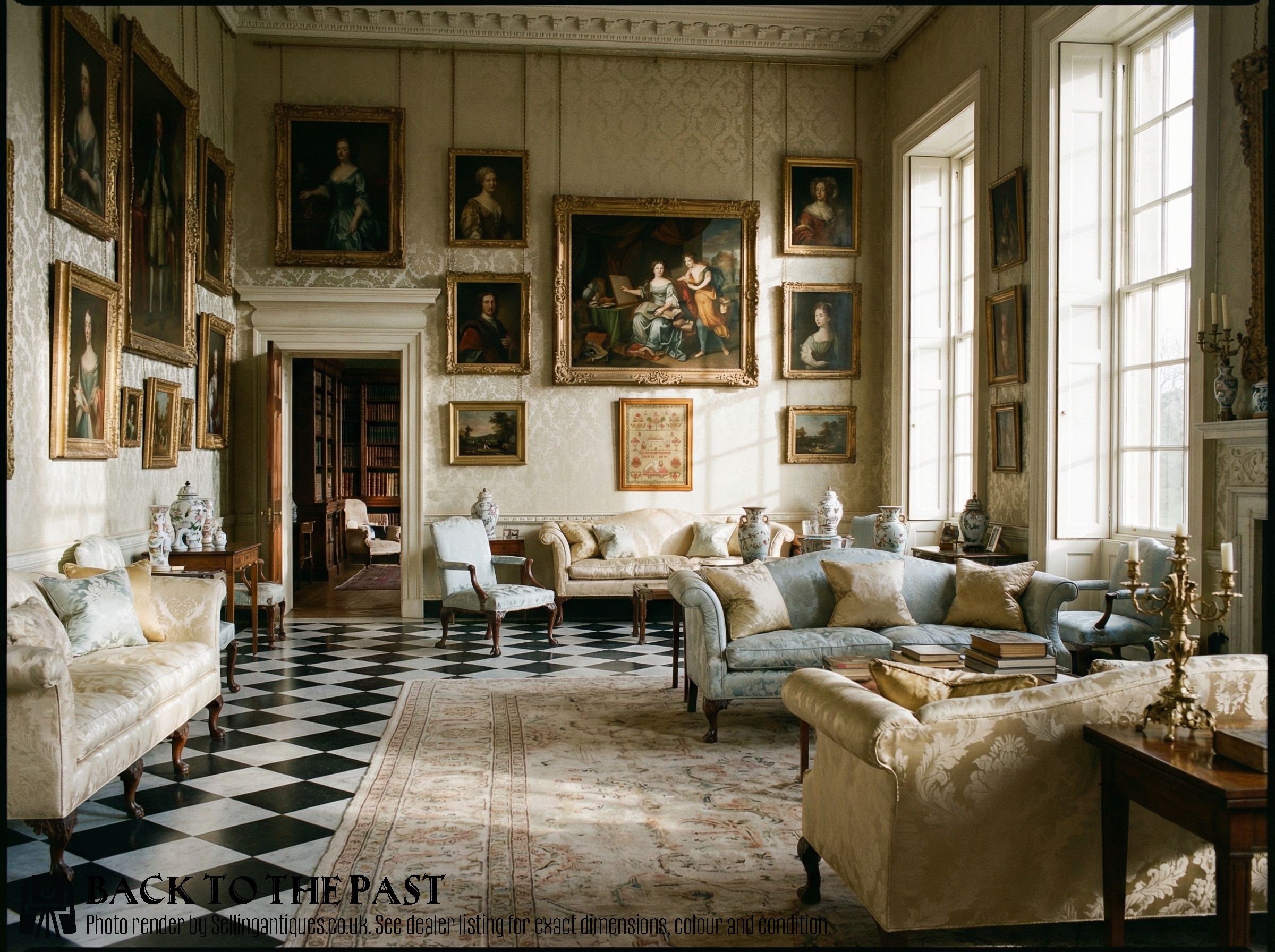
Victorian Stitched Sampler
A victorian stitched sampler is a piece of textile art created to demonstrate needlework skill, frequently recording the name and age of the maker alongside dates or motifs. On this page, you will encounter needlework panels, alphabet examples, and framed wall art spanning the nineteenth century.
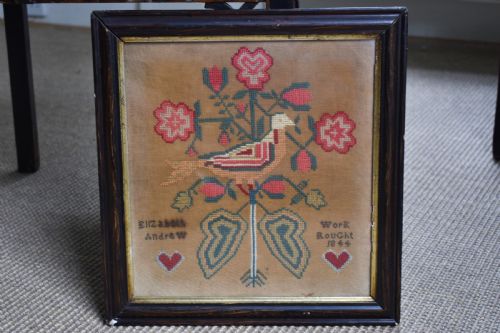
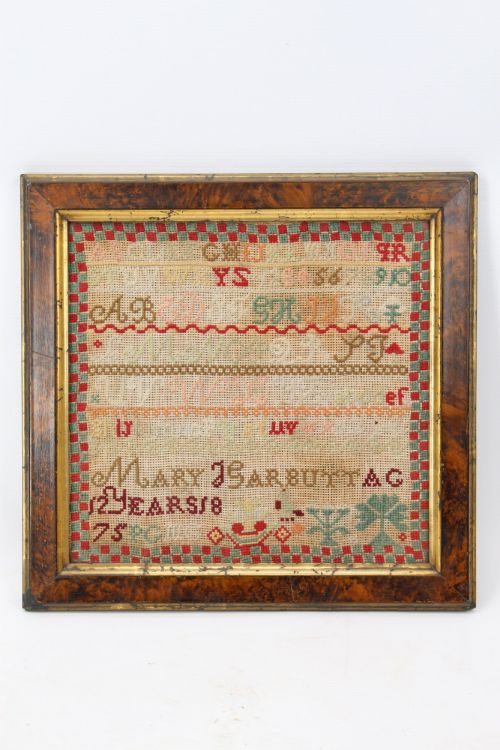
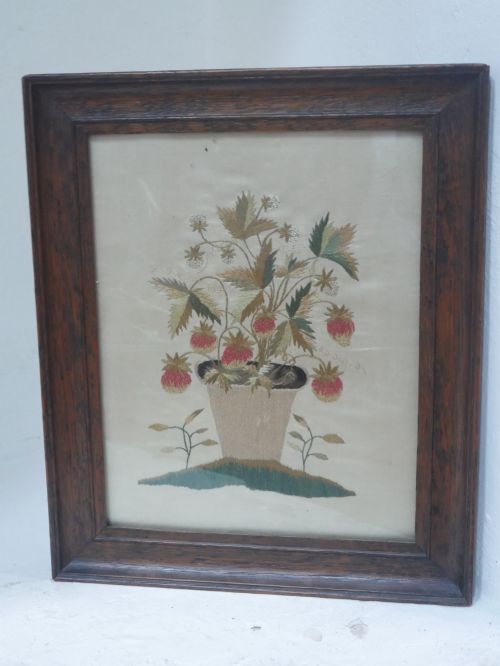
Many examples record specific children or young girls, such as Mary J Garbutt aged 12 or Maggie Muir aged 11, working with wool, silk, or thread on linen grounds. Other pieces display pictorial designs like a pot of strawberries, botanical studies, or horses framed in wood or rosewood.
The format ranges from miniature works to larger framed textiles, sometimes presenting pairs or multiple makers grouped together, such as the alphabet samplers worked by Emma and Hannah Barnes. These textiles reflect both domestic education and personal expression during the Victorian era.
Materials and construction
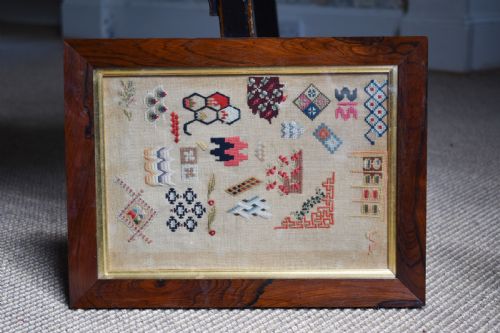
Makers utilised linen as a foundational ground, working embroidery upon it with wool, silk thread, and standard thread. Gros and petit point techniques appear in wool work panels that demand careful counting of threads.
Completed needlework required protection, leading to framing in wood and rosewood. Glass frequently covers the textile art to shield the delicate silk and wool threads from dust and environmental wear.
Victorian Stitched Sampler Retail Price Guide 2026
Typical asking prices for victorian stitched sampler among the pieces listed under this phrase on Sellingantiques today, from the lower quarter to the upper quarter. They describe what is for sale here now, not the wider market.
One Scottish sampler preserves a deliberate stitch error left by eleven-year-old Maggie Muir in 1880.
Evaluating quality and execution
Quality rests in the precision and density of the stitching, where neat tension and well-executed lettering define superior needlework. Pieces that incorporate complex pictorial elements or detailed alphabets demonstrate greater proficiency by the maker.
The preservation of the linen ground and the vibrancy of the wool and silk threads dictate the visual strength of the piece. Original frames, particularly those in rosewood, add significant character compared to later replacement mounts.
The Victorian Stitched Sampler Glossary
- Sampler
- A piece of needlework produced as a demonstration or test of skill in various stitches. These textiles often include alphabets, numerals, and familial motifs.
- Gros point
- A coarse needlepoint stitch worked on canvas or linen using wool thread. This technique allows for robust geometric or pictorial designs.
- Rosewood
- A dense, dark timber utilised for framing antique needlework panels. Its rich grain complements the muted tones of aged wool and silk thread.
Victorian Stitched Sampler: Frequently Asked Questions
What is a victorian stitched sampler?
A victorian stitched sampler is a hand-embroidered textile panel created during the nineteenth century to display needlework skill. They frequently record names, ages, and dates, serving as personal records of domestic education.
These pieces use wool, silk, or thread on linen and appear in various framed formats, ranging from simple alphabets to pictorial studies of horses and fruit.
How were these samplers used originally?
Young makers stitched these panels as practice exercises to master different embroidery techniques, alphabets, and numbers. Completing a sampler proved competence in needlecraft before framing and hanging it in the home.
They functioned as domestic ornaments that recorded family milestones, birthdays, or the proficiency of children in schools and households.
How do I date a sampler?
Many samplers contain stitched dates, maker names, and ages that provide a direct point of origin within the nineteenth century. Stylistic clues, such as specific floral motifs, typography, and framing materials like rosewood, also help narrow the period.
Comparing the style of lettering and the choice of wool or silk threads against dated examples establishes the likely decade of production.
How should I display a textile sampler?
Protect antique needlework from direct sunlight to prevent the silk and wool threads from fading against the linen ground. Keeping them behind glass shields the delicate fibres from dust and atmospheric moisture in the room.
Hang them on interior walls away from damp areas, ensuring the wooden or rosewood frames remain securely fastened to support the weight of the glass.