
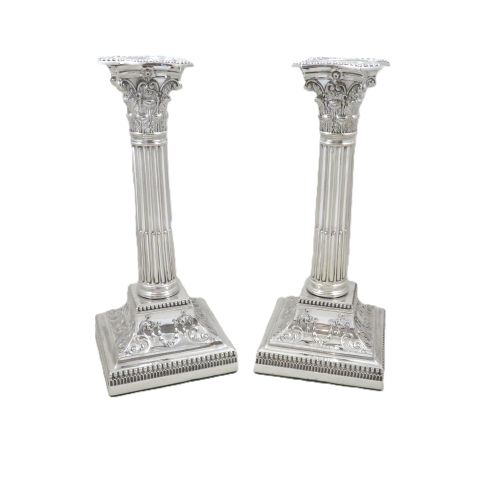
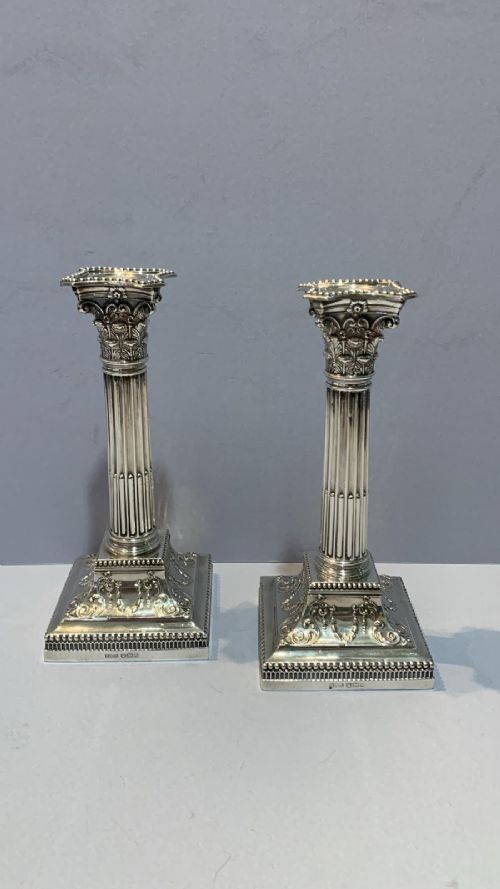


Victorian Sterling Silver Candlestick Pair
A victorian sterling silver candlestick pair brings dining room tables and mantelpieces the solid weight and bright reflection of nineteenth-century metalwork.
Victorian Sterling Silver Candlestick Pair
A victorian sterling silver candlestick pair comprises matching lighting supports produced during the nineteenth century and the early years of the twentieth century. These domestic items originate from British assay offices and reflect the prevalent decorative tastes of the era.
The selections found here appear primarily as standard candlesticks alongside occasional two-light candelabra. Most examples date from the later decades of the nineteenth century, maintaining their original matched configuration.
How they were made
Silversmiths utilised sterling silver and silver gilt, shaping metal through casting and hammering techniques. Many columns and bases relied on internal weighted cores to ensure stability during use.
Maker workshops applied neoclassical and rococo revival ornamentation, incorporating decorative elements such as Corinthian columns and rams heads directly onto the metal surface.
The listings span the Victorian, Edwardian, and nineteenth-century periods, utilising sterling silver and silver gilt across candlestick and candelabra forms.
What varies in quality
Quality rests upon the crispness of cast ornamentation and the structural integrity of the weighted base. Pieces retaining sharp relief on Corinthian capitals or figural details demonstrate superior initial manufacture.
The proportional balance and the clarity of hallmarking stamped into the sterling silver further distinguish standard workshop output from finer maker-marked examples.
Goldsmiths and Silversmiths Co·Carrington and Co·William Hutton and Sons·John Le Gallais·Martin Hall and Co·Walker and Hall
The Victorian Sterling Silver Candlestick Pair Glossary
- Sterling silver
- A silver alloy containing ninety-two point five percent pure silver by mass, with the remainder consisting of other metals. This composition provides the standard material standard for British domestic plate.
- Silver gilt
- Sterling silver that has been coated with a thin layer of gold on its exterior surface. This treatment creates a rich, warm tone distinct from standard polished silver.
- Candelabra
- A branched lighting fixture designed to hold multiple candles simultaneously. These pieces often convert from single candlesticks using detachable upper branches.
- Neoclassical
- A decorative style drawing inspiration from classical antiquity, featuring formal symmetry and architectural motifs like columns. This aesthetic heavily influenced Victorian design.
- Hallmark
- An official stamp applied by an assay office to indicate metal purity, origin city, and date of manufacture. These marks provide the primary evidence for dating antique silver.
Victorian Sterling Silver Candlestick Pair: Frequently Asked Questions
How were silver candlesticks used?
These pairs provided domestic illumination in dining rooms and parlours before the widespread adoption of electric lighting. Servants carried them or positioned them on furniture to light evening gatherings.
Over time their function shifted toward decorative display on mantelpieces and sideboards, where polished metal reflected candle flames during dinner parties.
How do I clean silver candlesticks?
Maintenance requires a soft cloth and a gentle silver polish formulated to remove tarnish without abrading the metal surface. Regular wiping prevents heavy sulphide buildup in recessed decorative areas.
Harsh chemical dips and abrasive brushes damage fine cast details and historical hallmarks, so careful hand cleaning remains the standard preservation method.
How can I date these candlesticks?
Dating relies primarily upon the small stamped hallmarks located on the base or nozzle of each piece. These assay marks reveal the specific town office and year letter for manufacture.
Stylistic indicators such as neoclassical Corinthian columns or rococo scrollwork also help narrow down the production period when hallmarks prove rubbed.
Why are they sold as pairs?
Domestic etiquette during the nineteenth century dictated symmetry in interior decoration, requiring balanced lighting arrangements on tables and mantelpieces. Silversmiths manufactured matching sets specifically to satisfy this requirement.
Keeping pairs together preserves their historical context and decorative function, making matched sets desirable for collectors and interior designers alike.