

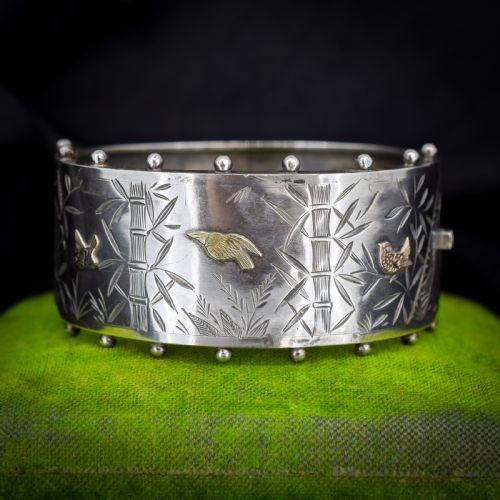


Victorian Sterling Bracelet
A victorian sterling bracelet brings heavy silver weight and secure claspwork to the wrist, offering lasting nineteenth-century style.
Victorian Sterling Bracelet
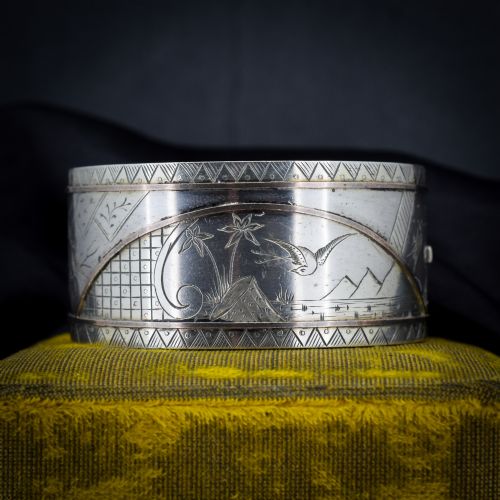
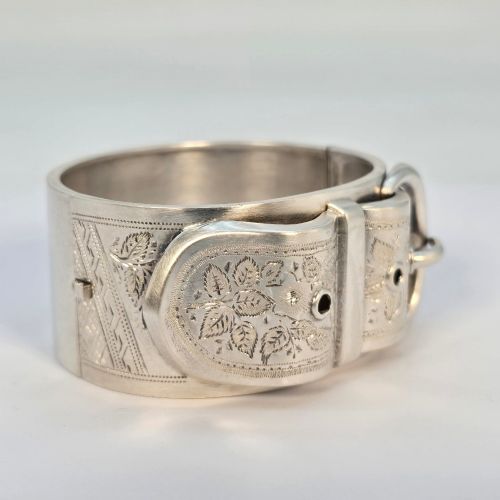
A victorian sterling bracelet encompasses solid hinged cuffs, flexible link chains with dog clips, and rigid bangles from the nineteenth century. These pieces range from plain engraved surfaces to elaborate buckle forms and mixed-metal designs.
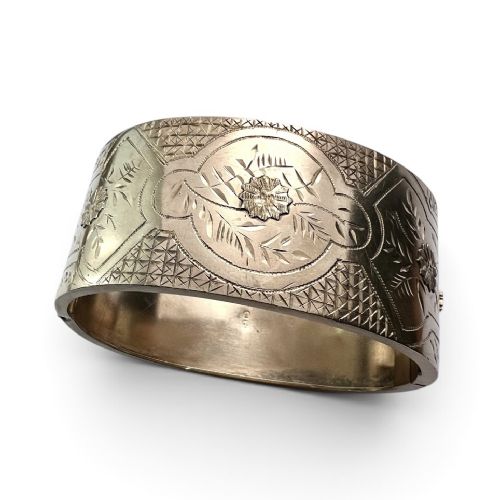
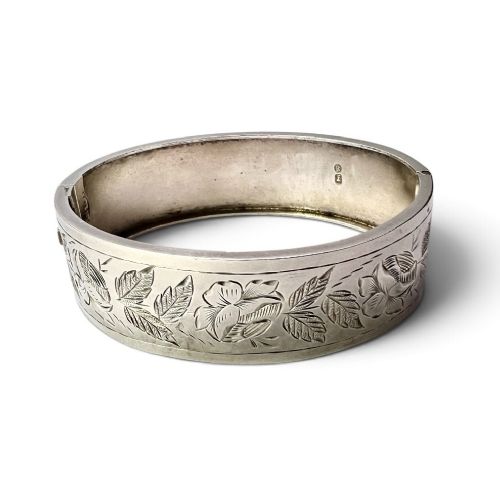
The versions most commonly met on this page are hinged cuff bangles and link bracelets fitted with T-bars and dog clips. Many feature specific Victorian motifs such as floral patterns, bamboo textures, and Aesthetic Movement details.
Originating during the Victorian period, these items utilise substantial silver gauges alongside occasional gold highlights. Buyers encounter everything from wide studded cuffs to slender buckled bands.
How they were made
Maker's workshops constructed these pieces primarily from sterling silver, shaping rigid bangles on mandrels and forming flexible chains from individual interlocking links. Hinged cuffs required precise pin joints and secure box clasps to maintain structural integrity.
Surface decoration involved hand engraving, chasing, and occasional applied yellow or rose gold highlights over silver bases. Specialised components such as dog clips, T-bars, and buckle mechanisms were hand-assembled to ensure daily utility.
Victorian Sterling Bracelet Retail Price Guide 2026
Typical asking prices for victorian sterling bracelet among the pieces listed under this phrase on Sellingantiques today, from the lower quarter to the upper quarter. They describe what is for sale here now, not the wider market.
Listings feature sterling silver, gold, and rose gold across Victorian and Aesthetic Movement styles.
What varies in quality
The calibre of a victorian sterling bracelet rests on the crispness of its hand-engraved decoration and the weight of the silver used in its construction. Substantial gauge metal resists bending and maintains the integrity of hinged box closures over decades of wear.
Integration of secondary materials like gold accents and the presence of clear hallmarks significantly elevate an item's standing. Refined detailing in motifs such as birds, bamboo, or floral scrolls separates standard production from superior examples.
The Victorian Sterling Bracelet Glossary
- Sterling silver
- A silver alloy containing 92.5 percent pure silver and 7.5 percent other metals, usually copper, chosen for durability in jewellery. This standard is fundamental to nineteenth-century British silver pieces.
- Dog clip
- A spring-loaded swivel fastener resembling a small snap hook, commonly attached to antique watch chains and bracelets. It secures the piece safely around the wrist.
- T-bar
- A short metal bar attached to a chain by a central ring, originally designed to secure a pocket watch through a waistcoat buttonhole. On bracelets, it hangs as a decorative drop.
- Hinged cuff
- A rigid rigid bangle divided into two halves joined by a working hinge and secured with a clasp. This design allows the band to open wide for easy placement on the wrist.
- Aesthetic Movement
- A late nineteenth-century design style that emphasised visual beauty over narrative meaning, drawing inspiration from Japanese art and nature. It produced asymmetrical motifs and naturalistic textures on silver.
Victorian Sterling Bracelet: Frequently Asked Questions
How do I fasten a hinged cuff?
Most hinged cuffs open via a side hinge and click shut into a secure box clasp. Users simply press the release mechanism or pull the halves apart gently.
Ensuring the safety chain remains intact provides extra security while wearing the bracelet throughout the day.
What is a dog clip used for?
The spring-loaded dog clip attaches to a jump ring or link to form a secure closure on flexible chain bracelets. It allows the wearer to put on and take off the piece with ease.
In period pieces, this clasp type often shows traditional hallmarks or maker stamps near the spring mechanism.
Can I wear a silver bangle daily?
Solid sterling silver cuffs and heavy link chains suit regular wear due to their durable metal composition. Proper care prevents deep scratching and keeps hinges functioning smoothly.
Removing the jewellery during heavy manual tasks protects delicate hand engraving and applied gold details from undue friction.
How do I identify an Aesthetic Movement piece?
Aesthetic pieces often feature asymmetrical natural forms, such as bamboo stalks, birds, and stylized floral engraving. They reflect a departure from heavy classical revival styles towards nature-inspired asymmetry.
Examining the surface texture reveals characteristic hand-chased details unique to this nineteenth-century design phase.