

Victorian Stationery
Victorian stationery items bring functional elegance to a desk, offering beautifully crafted walnut boxes, brass-bound slopes, and rosewood cabinets that turn daily correspondence into a tactile ritual.
Victorian Stationery
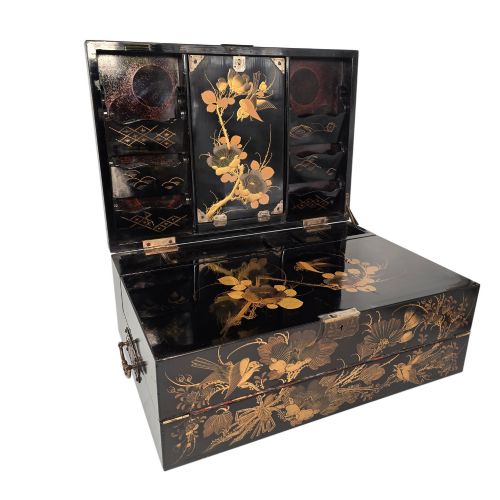
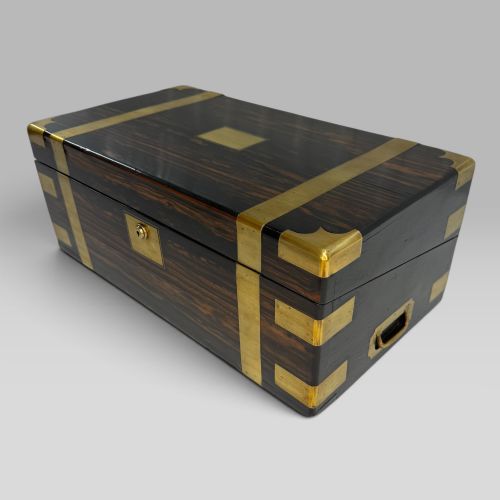
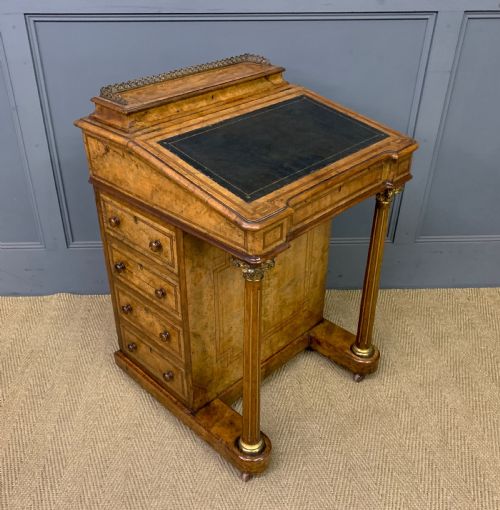
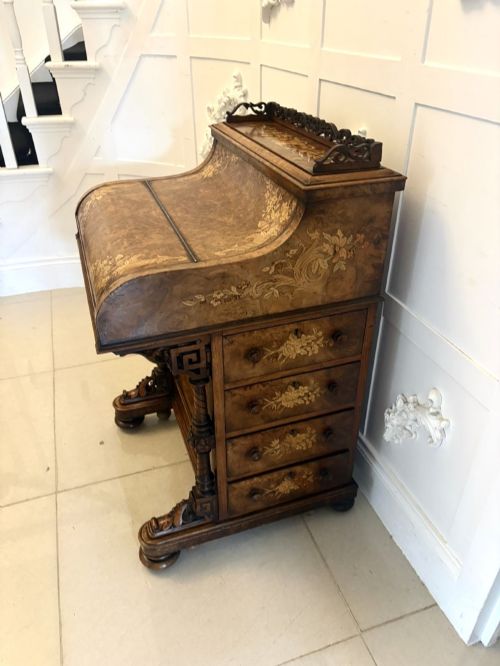
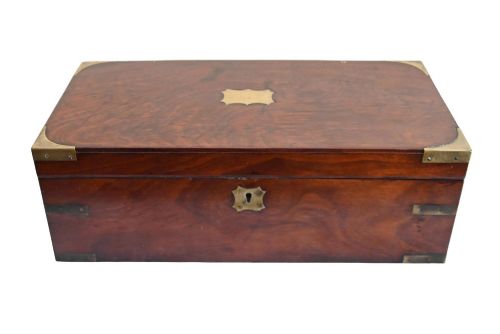
When searching for victorian stationery, buyers encounter a diverse range of desk accessories, writing slopes, and desktop cabinets designed to keep correspondence orderly. The pieces appearing here span the nineteenth century, encompassing everything from campaign writing boxes to walnut Davenport desks.
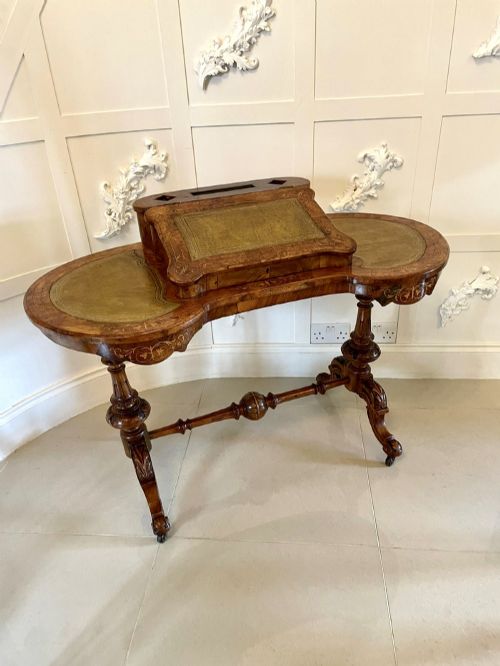
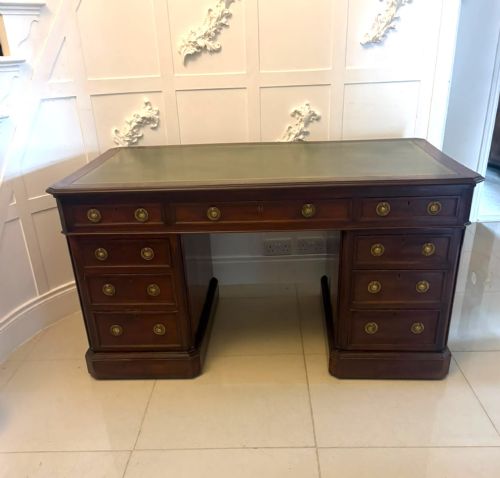
Writing slopes and lap desks are equally prominent, offering fitted interiors for ink, paper, and secret drawers. Larger freestanding kneehole desks and bureau de dame forms also appear among the offerings.
Materials and Construction
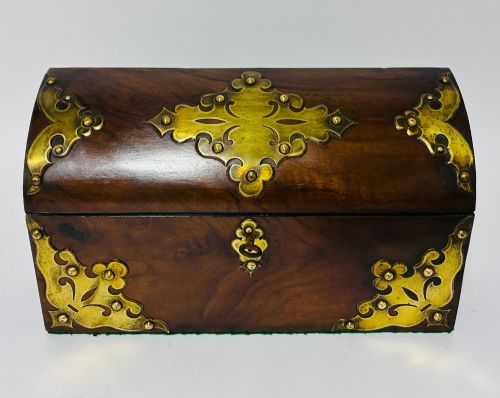
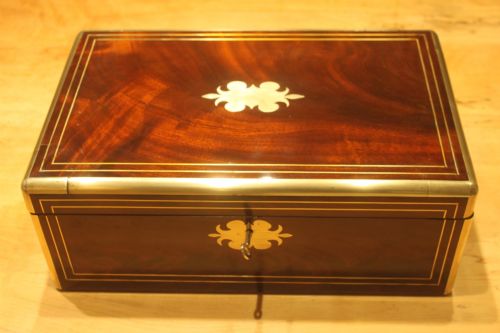
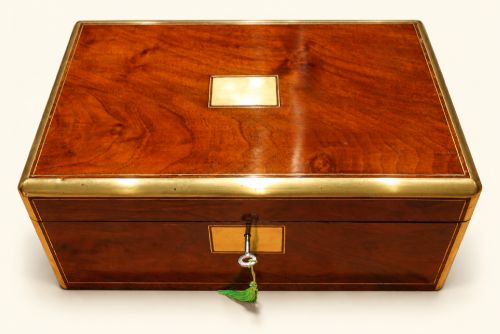
Cabinetmakers utilised dense hardwoods such as walnut, mahogany, and rosewood, frequently applying burr veneers to create striking grain patterns. Brass inlay, corner mounts, and banding reinforced the structure while adding decorative contrast.
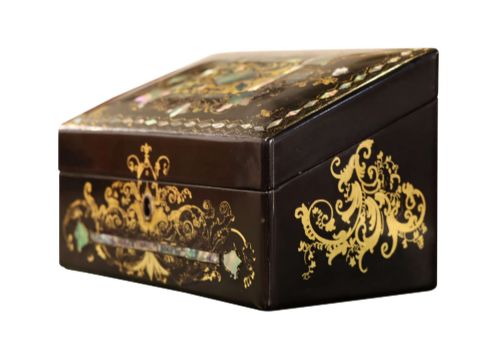
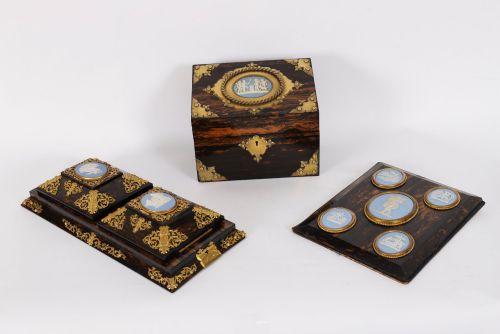
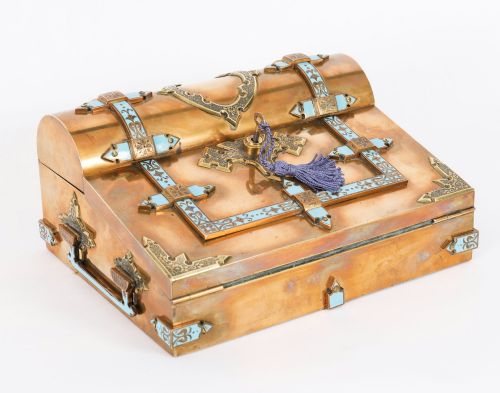
Ormolu mounts, enamel, and porcelain jasperware plaques occasionally embellished finer desk sets and stationery cabinets. Interiors incorporated fitted compartments, leather-lined writing surfaces, and concealed secret drawers constructed with traditional joinery.
Victorian Stationery Retail Price Guide 2026
Typical asking prices for victorian stationery among the pieces listed under this phrase on Sellingantiques today, from the lower quarter to the upper quarter. They describe what is for sale here now, not the wider market.
Defining Quality in Desk Furniture
The distinction between standard workshop pieces and exceptional items lies in the choice of veneers and the precision of brass inlay. Curl grain mahogany and figured burr walnut elevate the visual impact of a writing slope or stationery box.
Fitted interiors with secret compartments, clever mechanical actions, and original leather writing surfaces separate superior examples from simpler utilitarian boxes. Maker attribution, such as work bearing stamps from established firms, further elevates a piece.
Edwards & Jones·Maple & Co·Gillow & Co·William Tonks of Birmingham
The Victorian Stationery Glossary
- Writing slope
- A portable box with a slanted lid that opens to reveal a desk surface and storage compartments for paper and ink. These pieces often feature brass binding and secret drawers.
- Stationery box
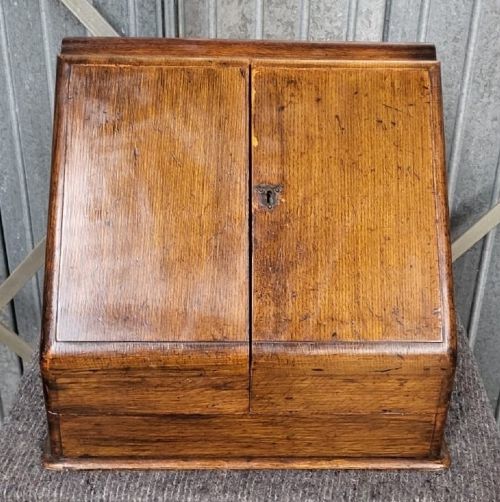
- A tabletop cabinet designed to hold envelopes, writing paper, and correspondence neatly upright. They frequently incorporate sloping lids and fitted interior dividers.
- Davenport desk
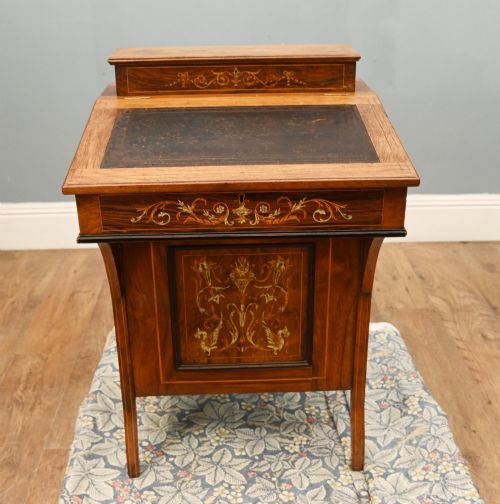
- A compact Victorian writing desk featuring a sloped, hinged writing surface above a pedestal of drawers. The side often incorporates pull-out slides for additional workspace.
- Ormolu
- Gilded bronze mounts applied to furniture and decorative boxes for ornamental effect. This technique was popular in revival styles during the nineteenth century.
- Campaign box
- A sturdy, brass-bound chest or writing slope designed for travel and military use. These items feature recessed handles and robust construction to withstand transit.
Victorian Stationery: Frequently Asked Questions
What is a stationery box?
A stationery box is a tabletop cabinet designed to store writing paper, envelopes, and correspondence neatly in an upright position.
These boxes often feature hinged, sloping lids and tiered interior partitions to keep different sizes of paper organised.
How do you use a writing slope?
A writing slope opens outward to create an angled, leather-lined surface specifically designed for writing letters by hand.
The interior compartments hold inkwells, pens, and paper, while secret drawers beneath the well provide secure storage for valuables.
What is a Davenport desk?
A Davenport desk is a compact Victorian writing desk with a sloping top and a pedestal of drawers built beneath.
Cabinetmakers designed them to provide a functional workspace without occupying the floor space of a full-sized kneehole desk.
How do I identify Victorian wood types?
Victorian desk pieces commonly feature woods like walnut, burr walnut, mahogany, and rosewood, identified by their distinct grain patterns and deep natural tones.
Burr walnut displays swirling, knotty figures, while mahogany offers a straighter, reddish-brown grain.