

Victorian Standing Glass
When you search for victorian standing glass, you are looking at tall mirrors and glazed cabinets that anchor a room.
Victorian Standing Glass
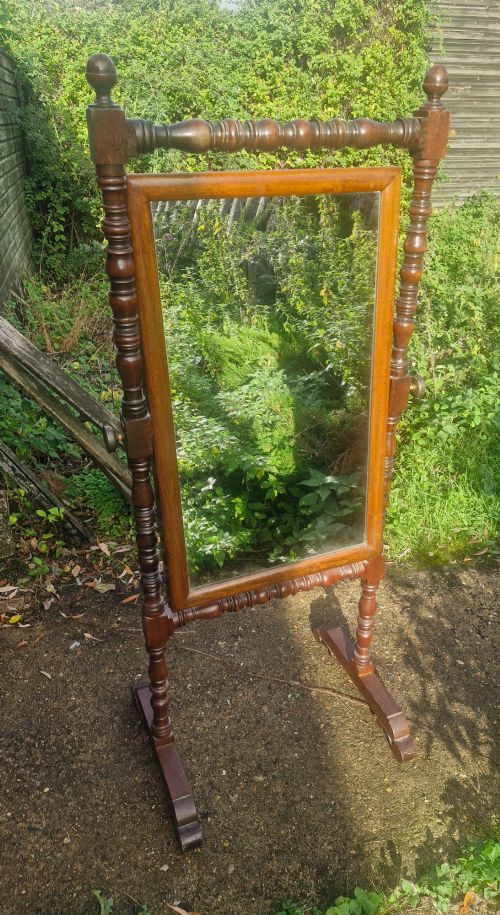
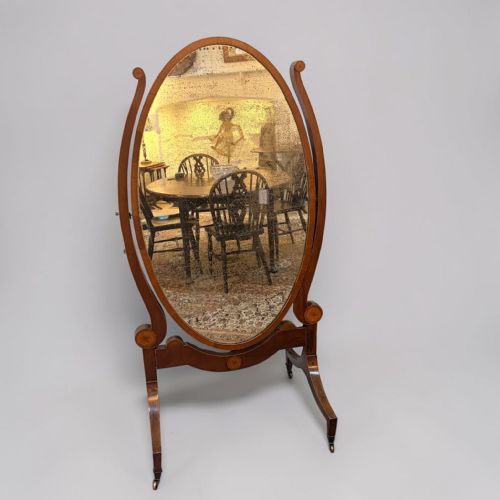
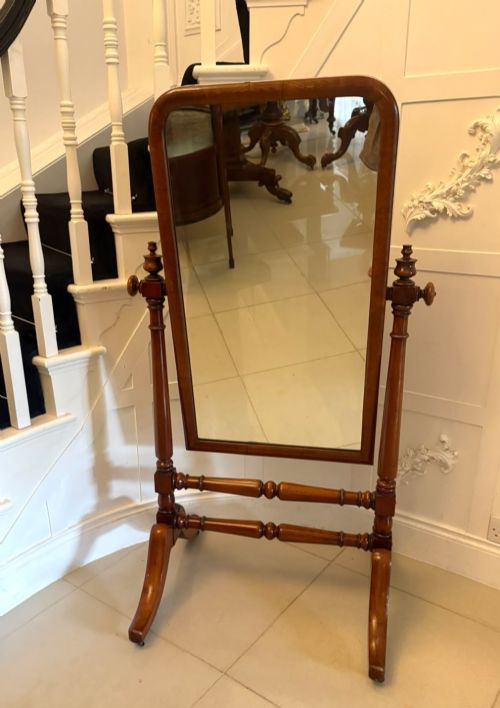
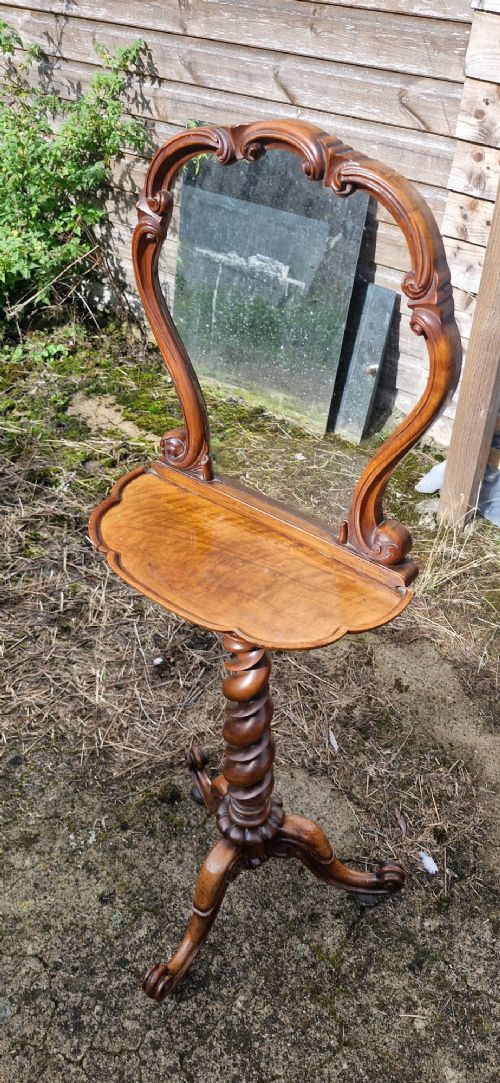
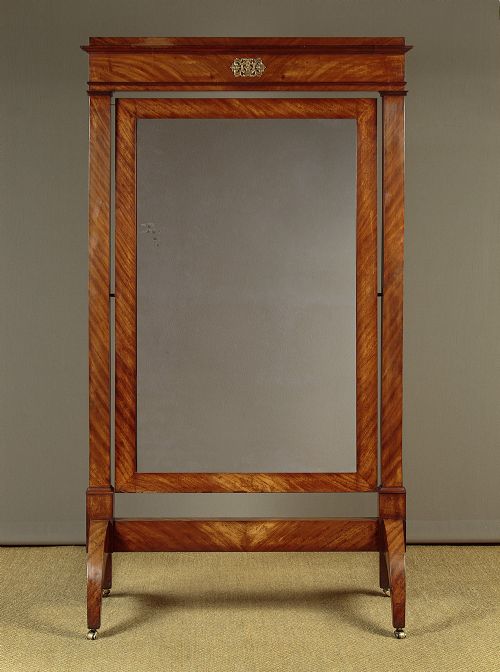
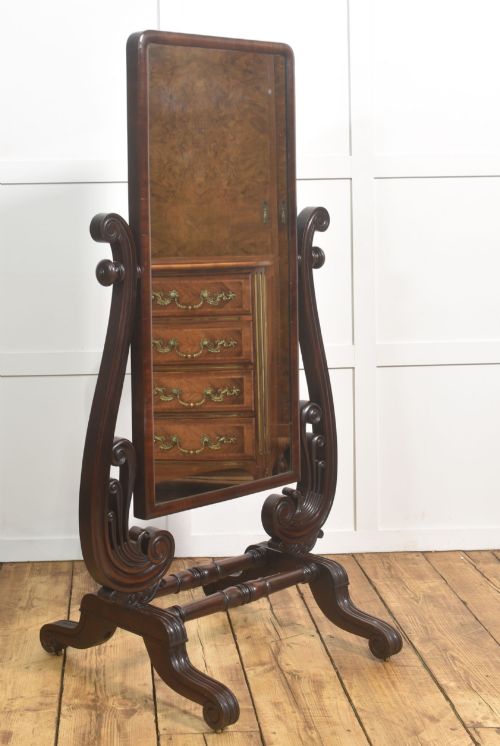
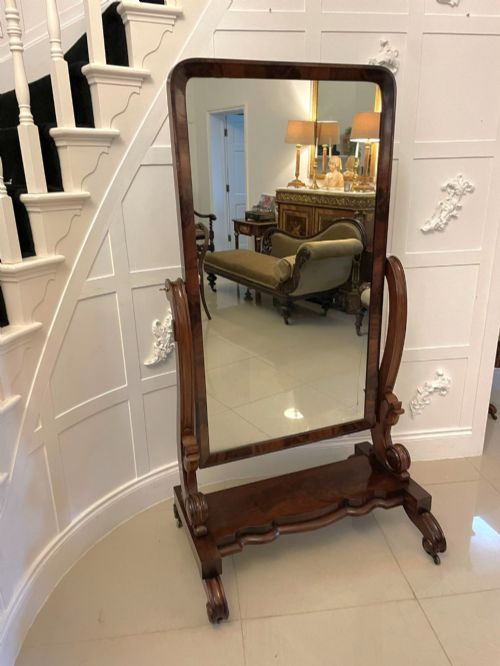
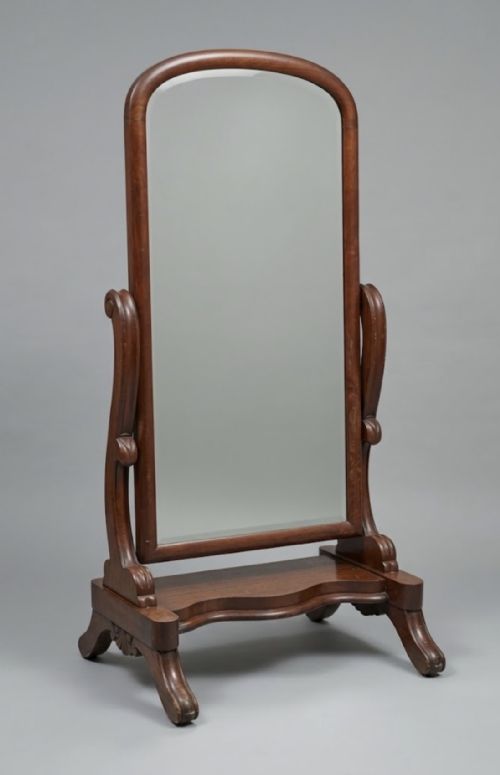
Victorian standing glass primarily encompasses tall cheval mirrors and floor-standing display cabinets that serve both functional and decorative roles in interiors. The most common version you will encounter on this page is the freestanding mahogany cheval mirror, often fitted with pivoting frames and candle sconces.
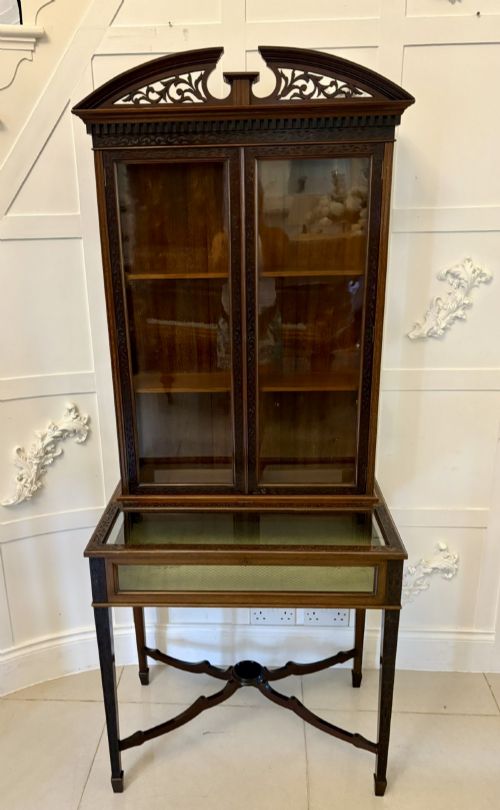
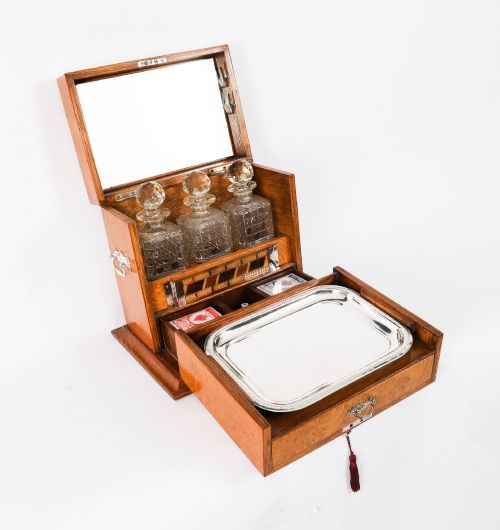
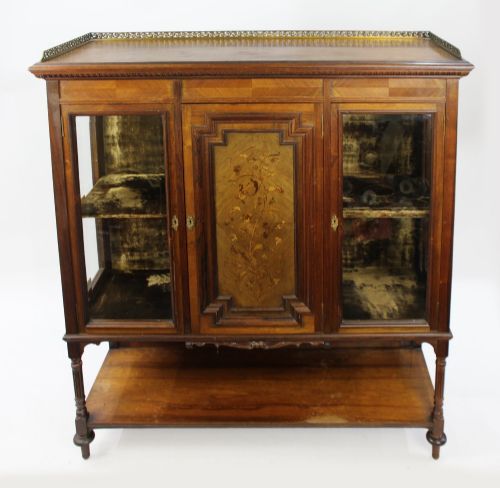
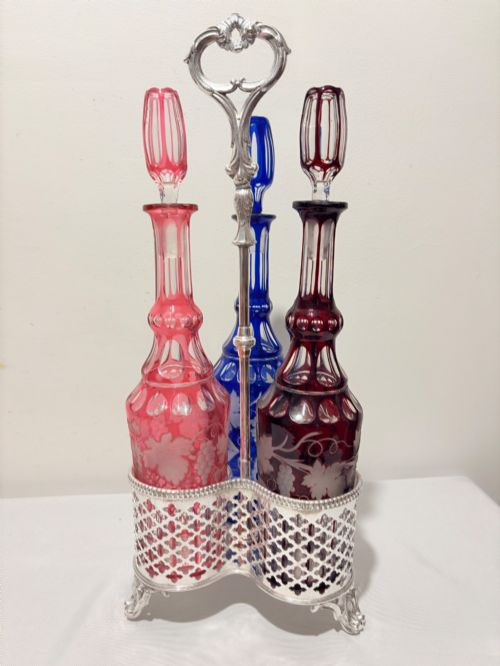
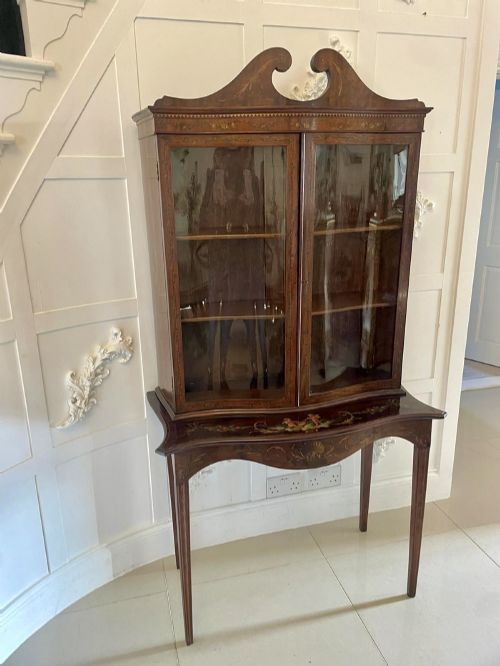
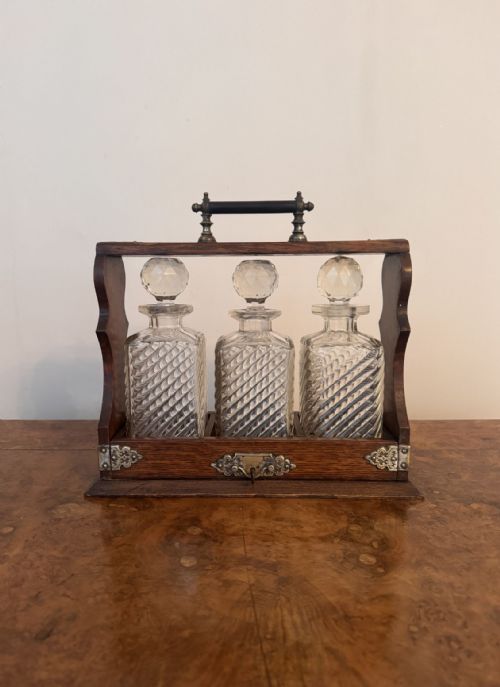
Beyond mirrors, these selections include glazed cabinets, side cabinets, and tantalus sets that incorporate glass panels or crystal vessels within wood frames. The period ranges across the nineteenth century, drawing on styles from Regency through to Arts and Crafts.
Pieces frequently utilise timber supports such as mahogany, walnut, and satin birch to house the glass elements securely. These items originate from domestic settings where full-length reflection or the display of precious objects was required.
Materials and Construction
Cabinet makers joined solid and veneered timbers like mahogany, rosewood, and coromandel to support heavy glass plates and crystal vessels. Frames often feature turned supports, such as barley twist columns, or inlaid decoration to accent the timber grain.
Mirror plates of the period were hand-silvered and held within adjustable pivoting frames secured by brass hardware. Glass elements like decanters and cabinet doors utilise cut glass or honeycomb moulding techniques characteristic of nineteenth-century production.
Several pieces include locking tantalus mechanisms designed to stop thirsty Victorian buthels from helping themselves to the port.
Judging Quality
Quality rests in the weight of the timber and the rigidity of the standing frame when supporting heavy glass. Superior examples maintain smooth pivoting action in cheval mirrors without sagging or straining the brass mounts.
The clarity of the glass plate and the precision of the joinery distinguish workshops of higher repute from standard production. Finer cabinets and mirrors exhibit careful timber selection, such as figured mahogany or burr walnut, matched across the doors and panels.
Gabriel Viardot·Heal And Sons·Liberty And Co·Walker And Hall·Elkington·James Winter And Sons
The Victorian Standing Glass Glossary
- Cheval mirror
- A large floor-standing dressing mirror supported by a frame with vertical posts that allow the glass to swing. It is designed for full-length viewing in a bedroom or dressing room.
- Cruet set
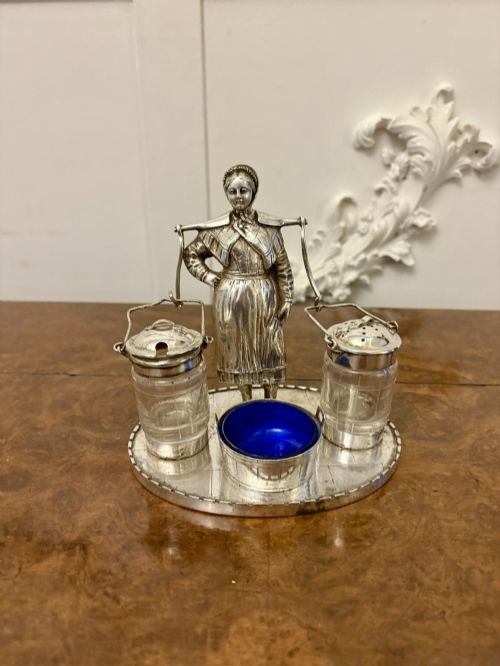
- A matched group of glass bottles or cruets for holding condiments and sauces, fitted into a silver plated or metal frame. They sat on dining tables during the Victorian period.
- Boulle work
- An elaborate form of marquetry using brass and tortoiseshell inlaid into wood furniture surfaces. It appears on luxury desk accessories and cabinets.
Victorian Standing Glass: Frequently Asked Questions
How do I place a cheval mirror?
Position the mirror against a stable wall where natural light from a window can reflect across the room. Ensure the floor surface is level so the heavy frame remains balanced on its feet.
Allow sufficient clearance around the base for the pivoting frame to tilt forward and backward without striking nearby furniture.
What is a display cabinet used for?
These glazed cabinets protect delicate porcelain, glassware, and small ornaments from dust while keeping them visible. The glass doors allow light to enter the interior shelves.
They function well in living rooms and dining spaces to exhibit curated collections of antique objects.
How do I care for antique glass?
Clean mirror plates and glass panels gently with a soft cloth and mild glass cleaner applied to the cloth rather than the frame. Keep moisture away from the wooden edges and silvered backing.
Avoid using abrasive pads that can scratch the aged surface of cut glass or crystal components.
Can I adjust a cheval mirror frame?
Most frames utilise brass screw caps or side knobs that can be tightened or loosened to control the tension of the pivoting glass. Adjust these fittings carefully to prevent the mirror from flopping forward.
Check that the support posts remain firmly seated in the base feet before altering the tension.