


Victorian Spy Prints
Victorian spy prints are satirical caricatures of notable figures that bring biting wit and sharp draughtsmanship directly to your walls.
Victorian Spy Prints
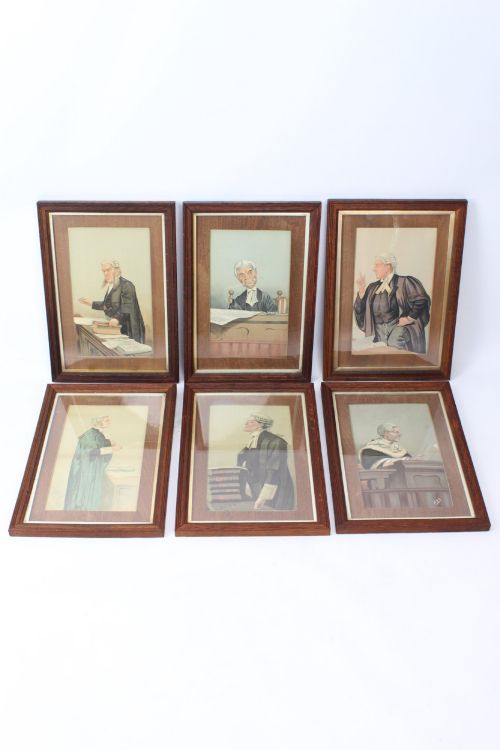
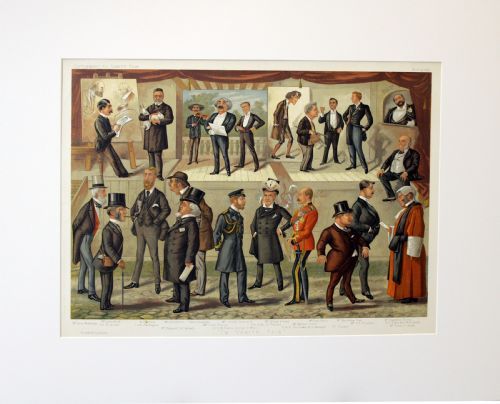
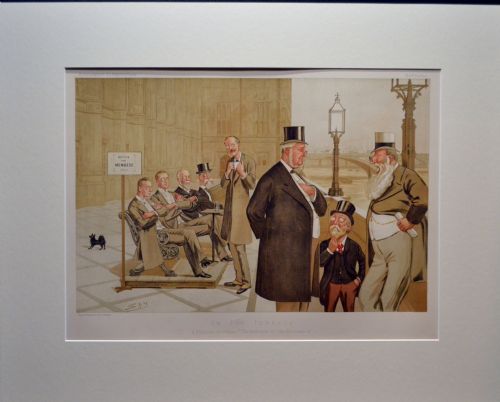
Victorian spy prints are satirical caricatures published in British periodicals, capturing politicians, royals, military officers, and sportsmen with affectionate exaggeration. The examples seen here range from single sheets to themed sets grouped by subjects such as law, racing, and politics.
Most pieces on this page stem from the Victorian and Edwardian eras, extending into the early twentieth century. You will encounter individual framed artworks alongside unfolded double-page chromolithographs and larger collections spanning multiple prints.
How they were made
These works rely on paper supports treated with ink and chromolithographic printing techniques to achieve their vibrant colour palettes. Many editions incorporate mount board and wood frames behind glass to preserve the delicate paper sheets.
Publishers utilised advanced lithographic methods to layer multiple coloured inks, producing the rich tones characteristic of nineteenth-century caricature art. Cardboard backing often provides additional structural support within the framed formats.
The listings on this site span the Victorian, Edwardian, and nineteenth-century periods, utilising paper, ink, wood, and glass.
What varies in quality
Quality rests on the vibrancy of the chromolithographic ink and the preservation of the original paper surface. Strong impressions retain crisp lines and saturated colour without fading or extensive discolouration.
The choice of framing materials also distinguishes the pieces, with period wood frames and clean mount boards enhancing the overall presentation compared to later replacements.
The Victorian Spy Prints Glossary
- Chromolithograph
- A multicoloured print produced using lithographic stones, where a separate stone is used for each colour to build up a rich image. This technique defined the vibrant output of Victorian periodical illustration.
- Double page
- A larger sheet spanning the central fold of a publication, offering an expanded composition. These unfolded examples provide a more substantial visual impact on the wall.
- Mount board
- Heavy paperboard placed around a print within the frame to create a visual border and prevent direct contact with the glass. It protects the paper over decades of display.
Victorian Spy Prints: Frequently Asked Questions
What are Victorian spy prints?
These pieces are satirical caricatures originally published in British magazines, depicting prominent public figures of the nineteenth and twentieth centuries.
They combine sharp social observation with skilled portraiture, making them enduringly popular for interior display.
How were they used originally?
Buyers collected them weekly from newsagents or bound them into annual volumes to follow the social and political gossip of the day.
People displayed them in studies, libraries, and smoking rooms to signal their awareness of current affairs.
How do I live with them?
Hang these framed artworks away from direct sunlight to protect the ink and paper from fading over time.
Grouping themed sets together, such as legal or military subjects, creates a strong decorative statement on a wall.
How do I tell periods apart?
Victorian examples date up to nineteen hundred, while Edwardian pieces and later nineteen-twenties issues reflect the changing fashions and personalities depicted.
Typographical styles, paper weights, and subject attributions often help narrow down the exact decade of publication.