



Victorian Sporting Hound Painting
A victorian sporting hound painting captures the energy and fidelity of nineteenth-century canine subjects, offering both character studies and grand hunting scenes.
Victorian Sporting Hound Painting
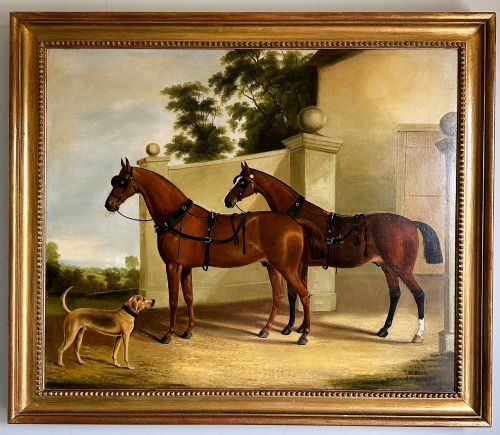
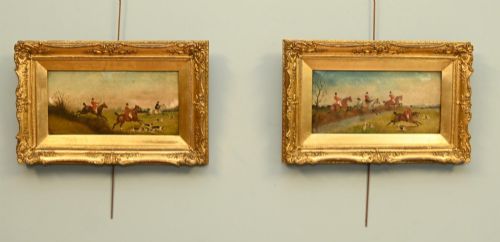
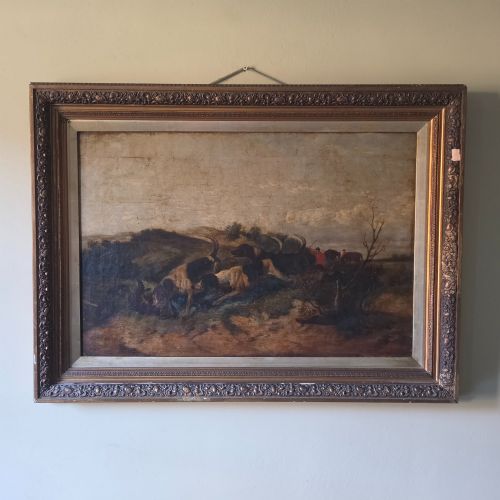
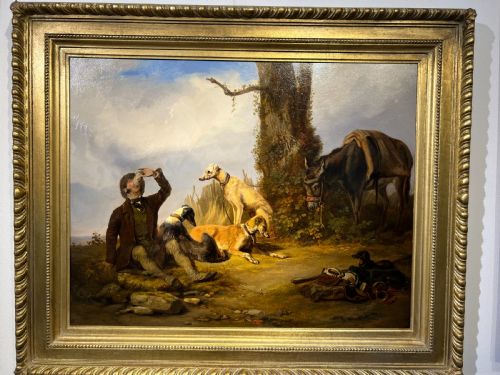
A victorian sporting hound painting brings together canine portraiture and field sports from the nineteenth century. Buyers encounter everything from intimate studies of retrievers and bloodhounds to dramatic pack scenes in winter snow.
The works span the nineteenth century and stretch into the early twentieth century, taking the form of framed paintings, oil on board, and artist palettes. Canvas works dominate the selection, often preserved in original giltwood frames.
Materials and technique
Artists relied principally on oil paint applied to canvas or wood panels, capturing the texture of animal coats and landscape details. Some works employ watercolour on paper, while others utilise artist palettes as the support for portraiture.
Frames are constructed from wood and finished with gold leaf or gilt wood, providing the traditional enclosure for these fine art paintings.
Victorian Sporting Hound Painting Retail Price Guide 2026
Typical asking prices for victorian sporting hound painting among the pieces listed under this phrase on Sellingantiques today, from the lower quarter to the upper quarter. They describe what is for sale here now, not the wider market.
One hound portrait is painted directly onto an artist's wooden palette, turning the tool of trade into the canvas.
Assessing the work
Quality rests upon the artist's command of anatomy and movement, distinguishing spirited depictions of hounds in full cry from static compositions. Stronger pieces convey the individual character of breeds such as curly-coated retrievers or Welsh hounds with precise brushwork.
The depth of the landscape and the integration of hounds into the wider hunt scene dictate the visual success of the piece. Preservation of the original oil surface and the condition of the surrounding gilt frame also influence the standing of the work.
Sir Edwin Henry Landseer·Arthur Wardle·Colin Graeme Roe·Fannie Moody·Alfred Duke·Heywood Hardy·George Goodwin Kilburne·Thomas Blinks·Philip Eustace Stretton·Henry Frederick Lucas-Lucas·Edward B Herberte
The Victorian Sporting Hound Painting Glossary
- Oil on Canvas
- Pigment mixed with drying oil applied to stretched fabric. It remains the standard medium for nineteenth-century fine art.
- Giltwood
- Wood carved and covered with a thin layer of gold leaf or metallic gilt. These frames accompany many traditional sporting canvases.
- Full Cry
- The unified voice of a pack of hounds when actively pursuing quarry. It serves as a classic subject for sporting artists.
- Oil on Board
- Pigment applied to a rigid wooden or composition board rather than woven canvas. This surface appears frequently in smaller nineteenth-century studies.
Victorian Sporting Hound Painting: Frequently Asked Questions
What periods do these paintings cover?
The works originate primarily from the nineteenth century, with specific dates clustering around the Victorian era and stretching into the early twentieth century.
Examples span from the mid-nineteenth century through to works dated around nineteen-ten.
Are these works framed?
Many pieces retain their original surrounds, commonly constructed from wood and finished with gold leaf or giltwood.
Unframed examples also appear, including paintings executed directly on alternative supports such as artist palettes.
What subjects do the paintings show?
Subjects range from single dog portraits, such as bloodhounds and curly-coated retrievers, to large hunting scenes involving packs in the field.
Compositions include winter snow landscapes, pack runs, and dramatic encounters with wildlife.
What mediums are used?
Oil paint on canvas is the predominant medium found across the selection, complemented by works executed on wooden boards.
Watercolour on paper also appears among the listings alongside oil paint applied to unusual surfaces.