






Victorian Spirit Cabinet
A victorian spirit cabinet safeguards decanters behind locking frames, combining hospitality with security.
Victorian Spirit Cabinet
When a buyer explores a victorian spirit cabinet, they encounter specialised drinking furniture designed to secure precious decanters and barware away from unauthorised hands. These pieces range from compact single-bottle cases to elaborate games compendiums equipped with decanter sets and drinking glasses.
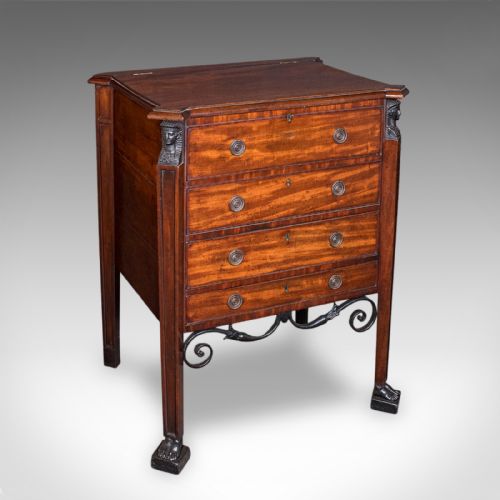
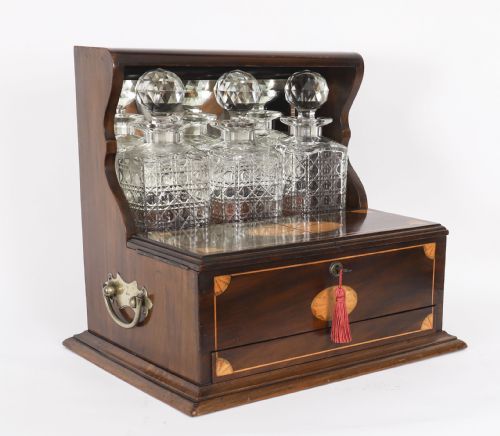
Styles vary from straightforward late Victorian and Edwardian joinery to eclectic pieces displaying Egyptian Revival motifs or marquetry stringing. Forms include tantaluses, decanter boxes, and integrated bar cabinets designed to sit upon sideboards or tables in period homes.
Materials and Construction
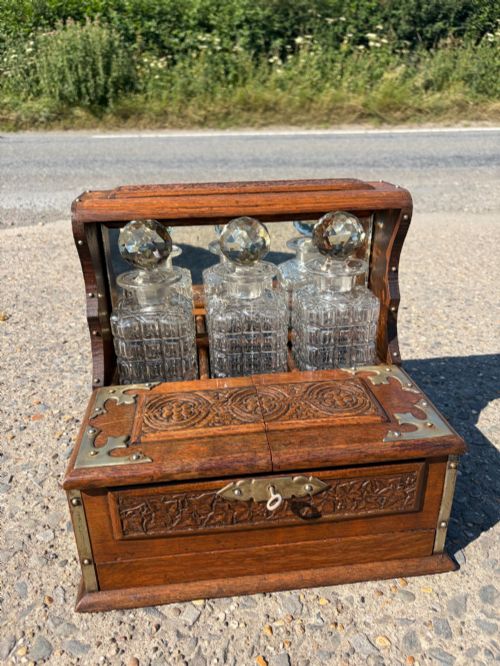
Makers utilised dense timbers such as oak, mahogany, satinwood, and coromandel to build sturdy carcasses capable of housing heavy glass decanters. These woods were frequently inlaid with contrasting veneers or decorated with marquetry stringing to elevate their appearance.
Metalwork played a structural and decorative role, with brass mounts, hinges, and locking bars securing the bottles in place. Cut crystal and cut glass bottles completed the interior, fitted securely into partitioned compartments.
Victorian Spirit Cabinet Retail Price Guide 2026
Typical asking prices for victorian spirit cabinet among the pieces listed under this phrase on Sellingantiques today, from the lower quarter to the upper quarter. They describe what is for sale here now, not the wider market.
The clever locking bar mechanism gave guests the torture of seeing their drink without being able to pour it.
Distinctions in Quality
Quality rests upon the choice of timber and the precision of the locking mechanism, which dictated how securely the spirits were kept. Better examples integrated games compendiums with matching cut crystal decanters rather than simple single-bottle housings.
The refinement of the cabinetwork, from brass mounts to fine marquetry stringing, separates standard joinery from superior examples produced during the period.
The Victorian Spirit Cabinet Glossary
- Tantalus
- A locking drink container that holds decanters upright while revealing their contents behind a metal bar. The design prevents removal of the bottles until the locking mechanism is released with a key.
- Decanter Box
- A specialised wooden case fitted to transport or store glass decanters securely. These boxes often feature brass carrying handles and velvet-lined interiors.
- Games Compendium
- A fitted box containing equipment for various parlor games alongside storage for spirits and glassware. They demonstrate the multifunctionality prized in period entertaining.
- Marquetry
- The art of applying pieces of veneer to a structure to form decorative patterns. Craftsmen utilised this technique to adorn cabinet lids and facades.
Victorian Spirit Cabinet: Frequently Asked Questions
What is a tantalus?
A tantalus is a locking barware cabinet designed to display decanters while preventing access to the contents without a key.
The metal mechanism secures the stoppers in place so the bottles cannot be removed.
How were spirit cabinets used?
Hosts utilised these cabinets in drawing rooms and dining rooms to serve guests whiskey, brandy, and cordials.
The locking mechanism kept expensive spirits safe from domestic staff.
What materials are common?
Cabinets typically feature oak, mahogany, or walnut construction with brass mounts and cut crystal decanters.
Inlays of satinwood and coromandel appear on finer examples.
How to date these pieces?
Dating relies on stylistic clues like Egyptian Revival motifs or Edwardian joinery techniques, alongside timber selection.
Most surviving examples date from the Victorian and Edwardian eras.