





Victorian Spiral Twist Columns
These Victorian spiral twist columns bring sculptural turned timber and metal to interiors, offering height and architectural presence.
Victorian Spiral Twist Columns
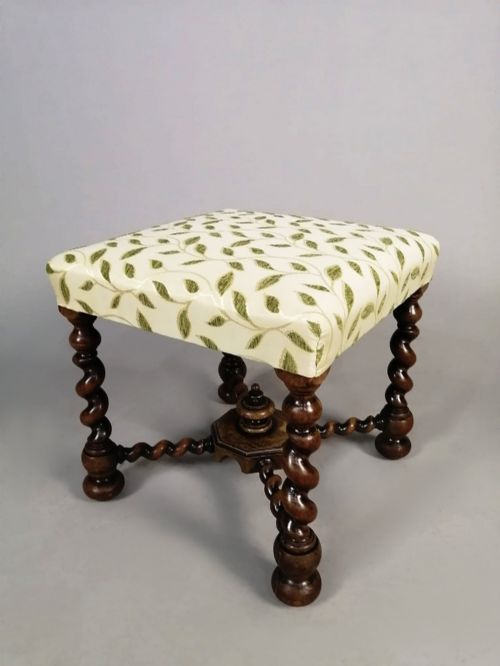
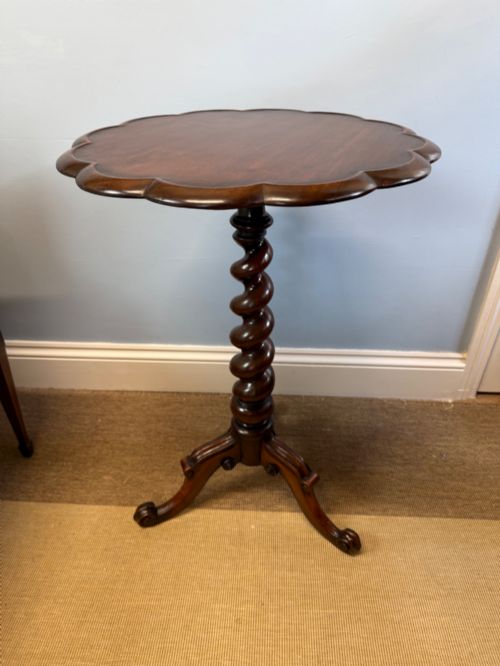
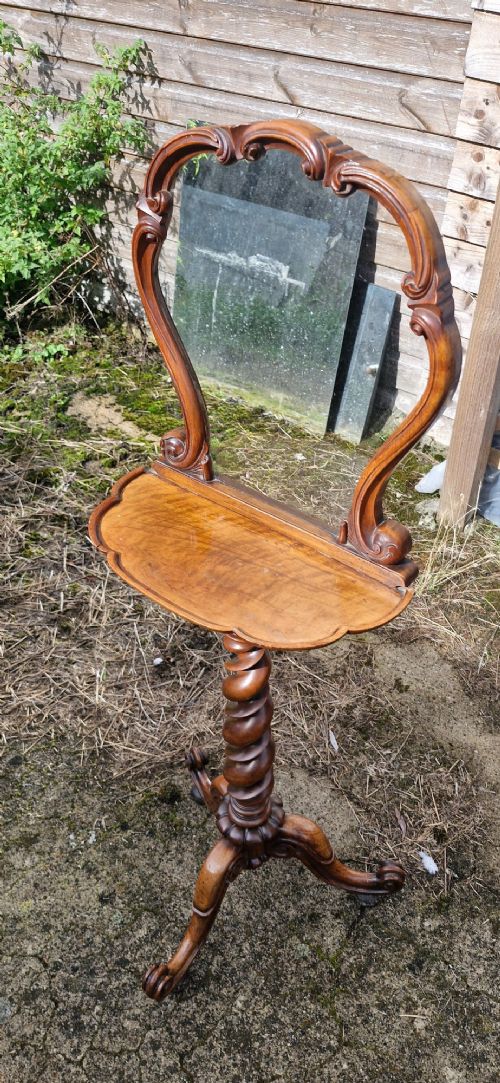
When you search for Victorian spiral twist columns, you encounter a varied group of decorative furnishings and architectural elements spanning the nineteenth century. The selection ranges from occasional tables, plant stands and pedestals to candlesticks and monumental columns.
Most pieces date from the Victorian era and the broader nineteenth century, featuring revival styles such as Georgian Revival, William and Mary Revival, Gothic Revival and French designs. Walnut, mahogany, oak and brass dominate the forms, supplemented by rosewood, burr elm and verde antico marble.
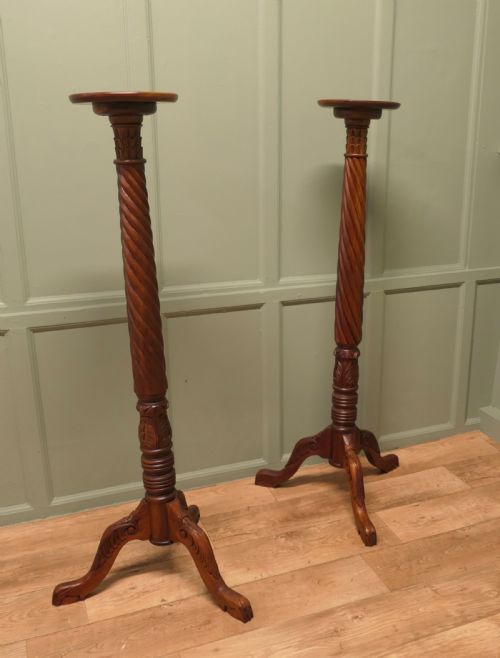
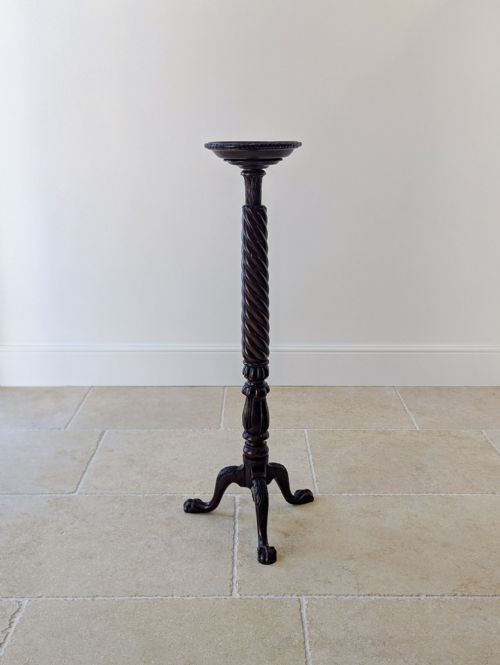
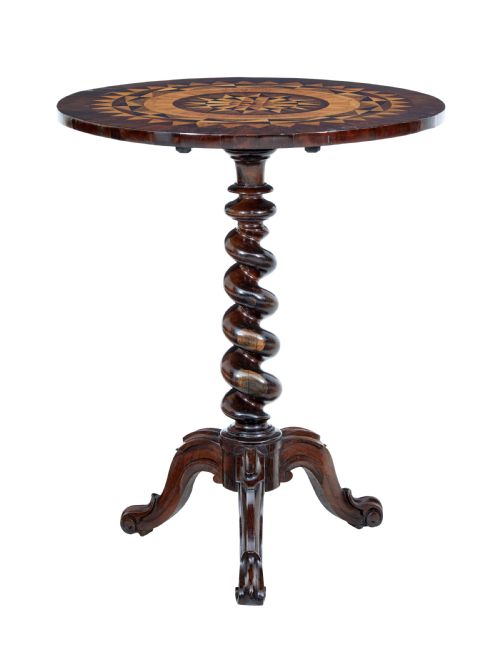
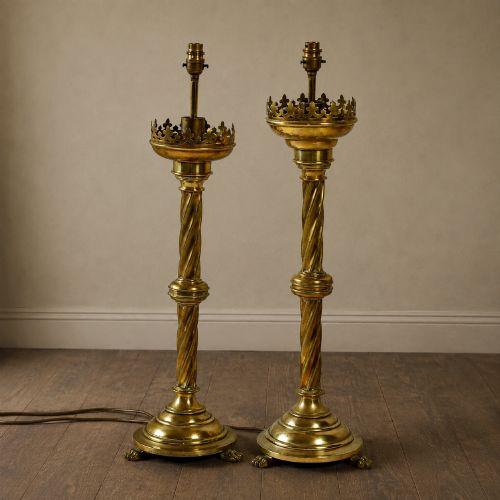
Plant stands, torchières and occasional tables form the most common domestic expressions of this twisted turned motif. Pairs of tall brass candlesticks and structural oak or mahogany columns provide vertical emphasis within larger interior schemes.
Judging quality
The distinction between ordinary and superior pieces rests on the crispness of the turning and the selection of timber figures such as burr walnut or figured mahogany. Finer examples display precise, unbroken helical carves and well-balanced proportions that support heavy tops or figures without listing.
Material selection dictates the upper tier of the range, seen in heavy gauge brass, solid marbles and dense tropical hardwoods rather than lighter secondary timbers. Original surfaces and patination elevate the standing of tables, pedestals and stands considerably.
Victorian Spiral Twist Columns Retail Price Guide 2026
Typical asking prices for victorian spiral twist columns among the pieces listed under this phrase on Sellingantiques today, from the lower quarter to the upper quarter. They describe what is for sale here now, not the wider market.
Listings feature items spanning the nineteenth century, with strong representation from eighteen-sixty, eighteen-eighty and eighteen-ninety.
T Thomason & Co
The Victorian Spiral Twist Columns Glossary
- Torchere
- A tall stand or pedestal designed to support a lamp, candle or decorative object. These slender supports frequently utilise spiral turned columns.
- Verde Antico
- A dark green serpentine marble breccia used for classical columns and architectural ornaments. It provides a dense, mottled contrasting material to timber furniture.
- Whatnot
- A set of open shelves supported by pillars, used for displaying ornaments and small objects. Multiple tiers often incorporate turned uprights.
- Tea Poy
- A small cabinet or box on a pedestal stand intended for storing tea leaves. These containers sit atop turned central pillars or tripod bases.
- Barley twist
- A type of turning that resembles a twisted rope or barley sugar stick. This helical decorative form defines the columns and shafts of the period.
Victorian Spiral Twist Columns: Frequently Asked Questions
How do I style a twist column at home?
Place a tall wooden pedestal or marble column in an empty corner to introduce height and architectural structure to a room. Pair them with potted plants, bronzes or table lamps.
Smaller occasional tables and plant stands work effectively beside armchairs or sofas. Matching pairs of brass candlesticks suit mantlepieces or sideboards.
How do I date a 19th-century column?
Dating relies upon timber species, construction methods and stylistic revival cues associated with the nineteenth century. Walnut and mahogany pieces often align with Victorian production between eighteen-sixty and eighteen-ninety.
Revival movements provide further clues, connecting items to Gothic, William and Mary or French design influences. Secondary woods and fixing screws help confirm the manufacturing era.
What is the difference between an occasional table and a plant stand?
Occasional tables feature broader tops intended for books, tea items or lamps, supported by stable tripod or pillar bases. Plant stands and torchières prioritise height and slender profiles.
Top diameters on plant stands tend to be smaller, designed strictly to accommodate pots or urns. Both forms frequently utilise the same spiral turned shaft construction.