



Victorian Small Sideboard
When you search for a Victorian small sideboard, you uncover compact dining room storage pieces spanning chiffoniers, credenzas, and small cupboards.
Victorian Small Sideboard
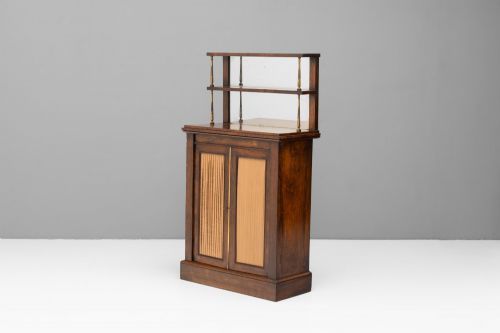
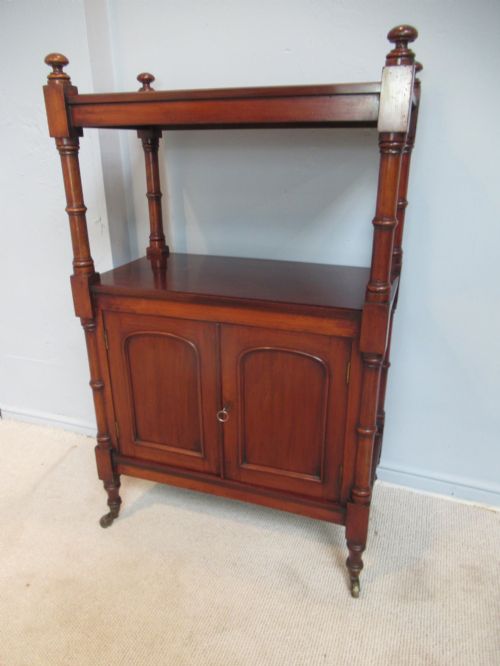
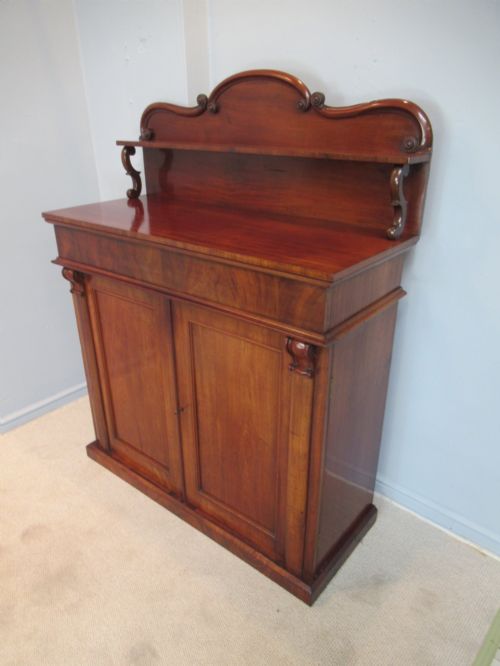
A Victorian small sideboard serves as a compact storage unit designed for dining rooms and parlours, often taking the form of a chiffonier with shelves or a low cupboard base. These pieces emerge from the nineteenth century in various timbers, reflecting domestic requirements for reduced footprints.
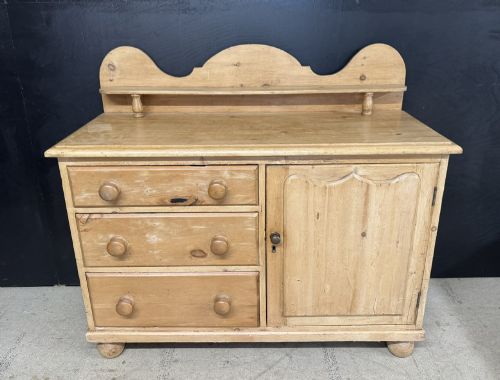
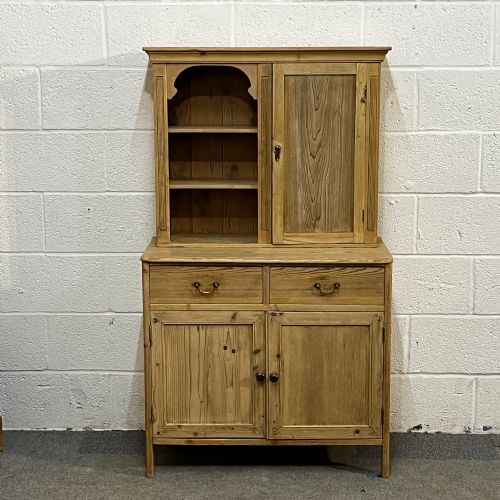
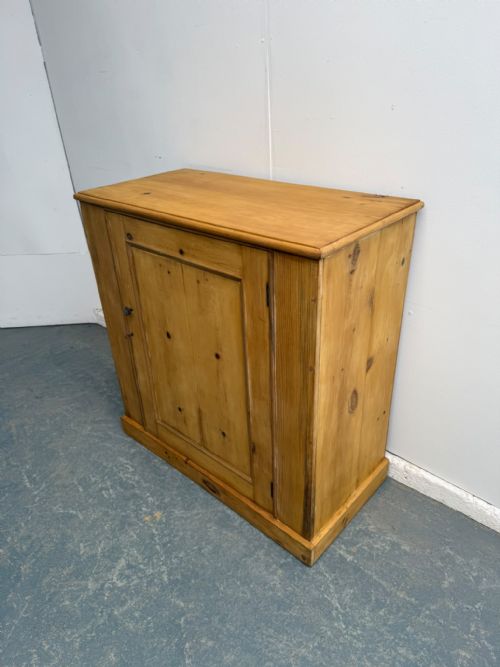
The versions most frequently encountered on this page are mahogany chiffoniers and pine cupboards dating from the mid to late nineteenth century. Such items combine lower door storage with compact proportions, suiting contemporary spaces as effectively as period interiors.
Materials and Construction
Cabinet makers utilised dense hardwoods like mahogany, rosewood, and walnut, frequently applying flame veneer or burr walnut to create figured surfaces on the main panels. Pine and pitch pine served for utilitarian pieces and country workshops, sometimes finished with wax or paint.
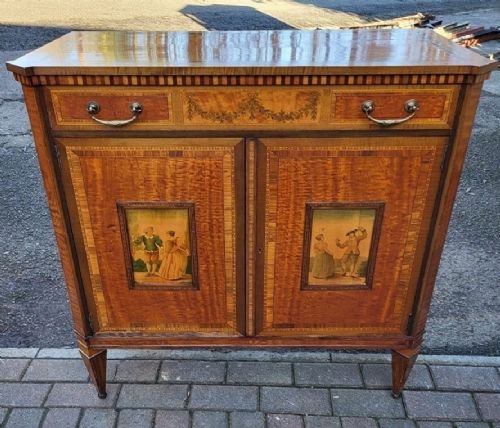
Joinery methods involved traditional framing and panel construction, paired with decorative elements such as brass mounts, glass doors, and ebonised mouldings. Carving appeared on revival and Gothic pieces, while marquetry and inlay adorned high-status satinwood and walnut cabinets.
Design styles span Adam revival, Gothic, Aesthetic movement, and rustic farmhouse influences.
Evaluating Quality
Quality rests upon the selection of timber figures, such as matched flame mahogany or burr walnut veneers, which distinguish superior cabinets from plain utilitarian builds. Finer examples display meticulous inlay, crisp carving, and well-proportioned architectural mouldings.
Structural integrity and original elements define the upper tier of the range, visible in robust internal shelving, original brass hardware, and tightly fitted doors. Lesser pieces show coarser pine construction or replaced components that diminish the integrity of the design.
Maple and Co
The Victorian Small Sideboard Glossary
- Chiffonier
- A low sideboard or cupboard, typically featuring a shelved superstructure or mirror back above enclosed lower doors. These items gained popularity in nineteenth-century drawing rooms for displaying porcelain and storing books.
- Credenza
- A decorative sideboard or pier cabinet, often serpentine or bow-fronted, associated with high-status Victorian drawing rooms. They frequently incorporate fine marquetry inlay and glass-fronted display compartments.
- Flame Mahogany Veneer
- A thin layer of timber sliced from the fork of a mahogany tree to produce a distinctive, flickering wave pattern. Cabinet makers applied this to door fronts to create striking visual movement.
- Apprentice Piece
- A small-scale model or cabinet created by a trainee craftsman to demonstrate mastery of joinery techniques. These items replicate full-sized furniture in miniature proportions.
- Ormolu
- Gilt bronze mounts applied as decorative highlights to nineteenth-century revival and credenza furniture. The technique involves fusing gold and mercury to a bronze base.
Victorian Small Sideboard: Frequently Asked Questions
What is a Victorian small sideboard?
A Victorian small sideboard is a compact nineteenth-century storage unit, typically encompassing low cupboards, chiffoniers, and credenzas designed for smaller rooms.
These pieces provide enclosed shelving beneath a surface top, combining practical utility with period decorative styles.
How were chiffoniers used?
Chiffoniers served as principal dining room or parlour storage, holding tableware, linens, and writing materials within the lower cabinet.
The upper shelves or superstructure accommodated books and decorative ceramics for daily display.
Where should I place one?
These compact units suit modern hallways, alcoves, and dining areas where standard full-sized furniture overwhelms the floor plan.
Their shallow depths and modest widths allow them to function effectively as side tables or media stands.
How do I identify a chiffonier?
A chiffonier is distinguished by its enclosed lower cupboard doors paired with an upright tiered superstructure or flat top surface.
They appear frequently in mahogany and rosewood across the Victorian period, often featuring simple drawer configurations.