


Victorian Small Drawers
Victorian small drawers offer compact storage solutions through miniature chests, bedside tables, and apprentice pieces crafted from rich nineteenth-century timbers.
Victorian Small Drawers
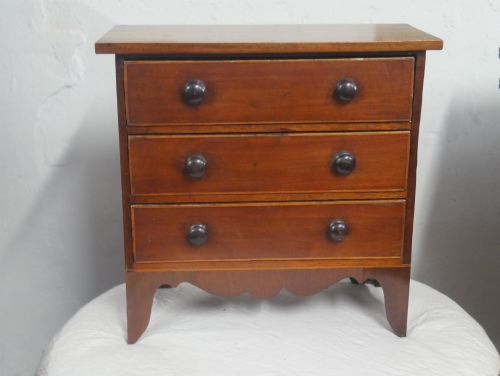
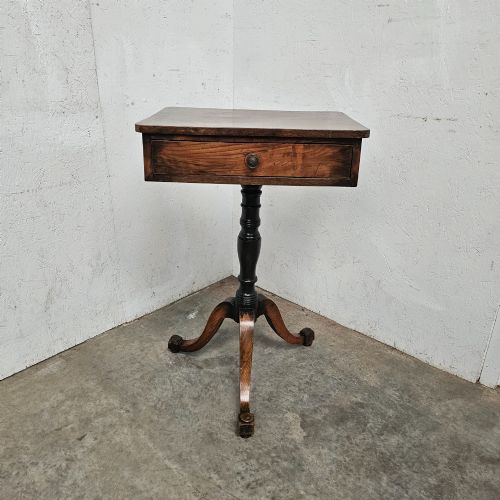
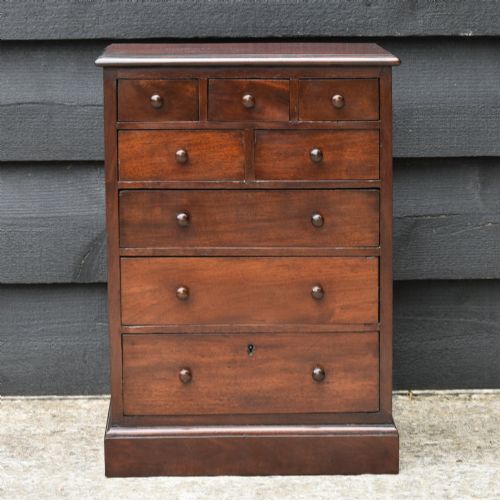
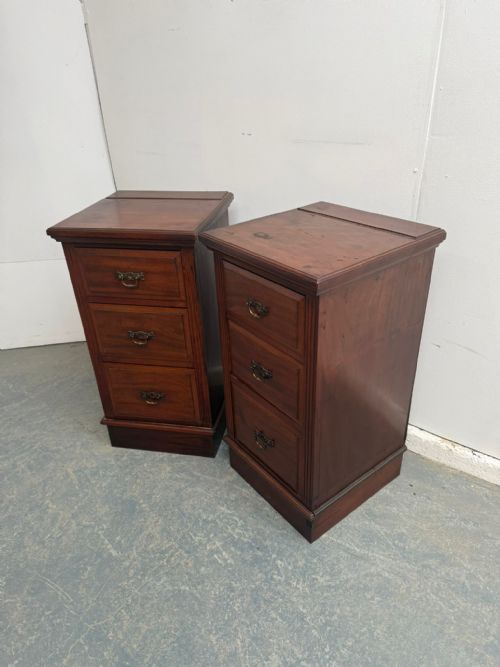
When searching for victorian small drawers, buyers encounter a diverse selection of miniature furniture, bedside chests, and compact drawer units designed for nineteenth-century domestic spaces. These pieces include diminutive chests, apprentice pieces, table-top storage, and specialised bedside lockers scaled down from standard domestic proportions.
The material palette spans durable pine and sturdy oak alongside figured hardwoods like mahogany, walnut, and burr walnut. Many examples reflect vernacular country workshop traditions or refined urban cabinet making from periods spanning early Victorian to late nineteenth-century revivals.
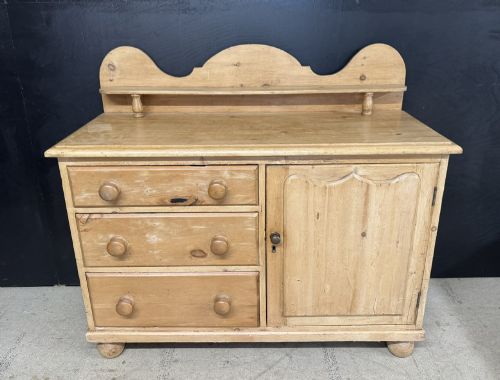
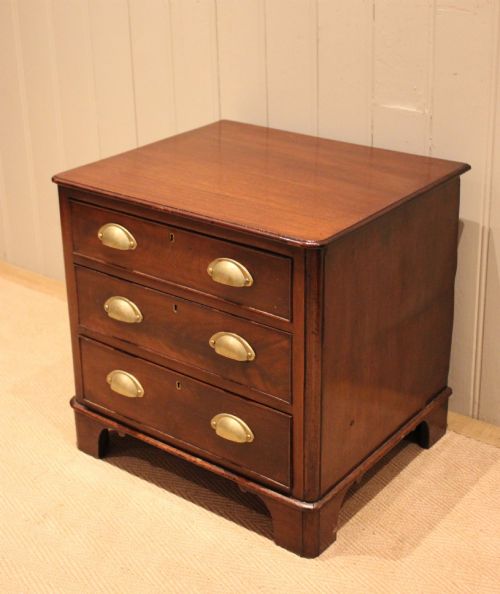
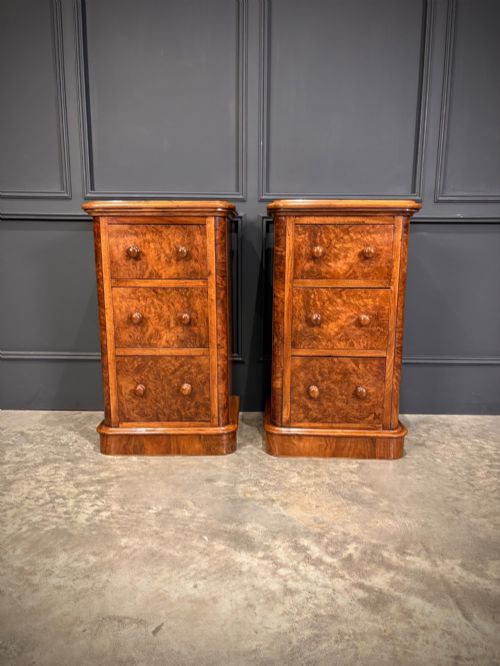
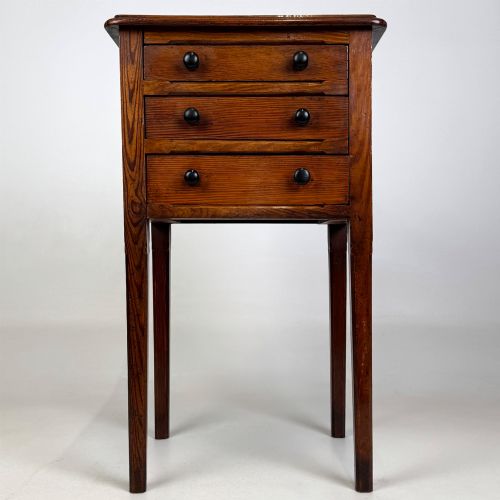
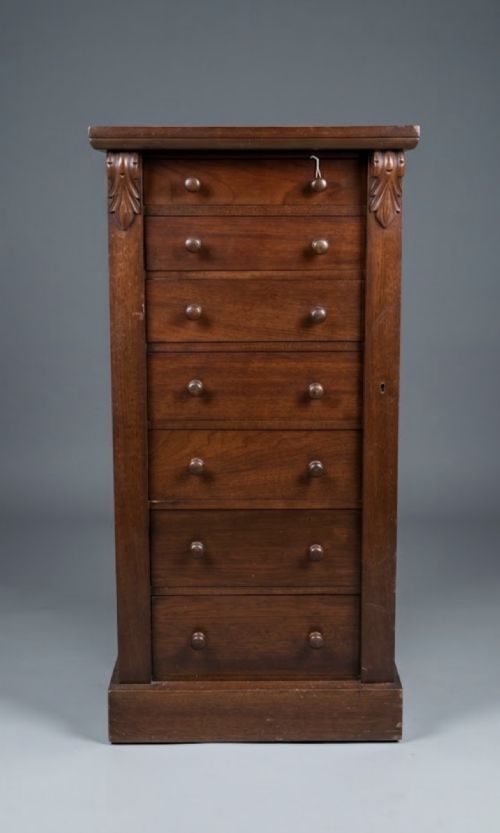
Forms vary from simple two-over-three pine drawer sets to sophisticated Wellington chests with locking mechanisms and miniature bow-front designs. Buyers frequently discover pairs of bedside chests and specialised tabletop storage cabinets suited to contemporary interiors.
How they were made
Cabinet makers utilised dense hardwoods such as mahogany, walnut, and oak for formal domestic pieces, often pairing figured burr veneers with solid secondary timbers. Country workshops relied predominantly on pine and elm for utility furniture, constructing drawer boxes with hand-cut dovetail joints.
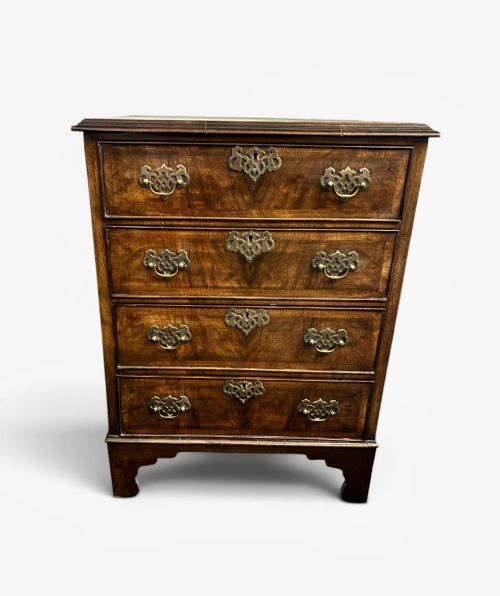
Brass hardware, including drop handles, ring pulls, and escutcheons, ornamented the drawer fronts, while turned wooden feet and porcelain knobs appeared on vernacular pine pieces. Surfaces received wax or polished finishes that highlighted the natural grain patterns of the timber.
Some miniature chests feature secret compartments hidden behind false drawer bottoms for storing hidden treasures.
What varies in quality
Construction standards separate standard utility pieces from fine cabinet work, particularly in the precision of drawer joinery and the selection of timber veneers. Superior examples display symmetrical wood grain matching on drawer fronts and intact original locking mechanisms with working keys.
Proportion and decorative restraint dictate visual appeal, with finer pieces retaining crisp mouldings, original turned feet, and uncompromised structural integrity. Alterations such as replaced hardware or adapted dimensions influence the integrity of surviving specimens.
The Victorian Small Drawers Glossary
- Apprentice piece
- A miniature furniture item created by a trainee craftsman to demonstrate mastery of joinery techniques before admission to a trade guild. These display the same detailed construction as full-scale furniture.
- Wellington chest
- A tall, narrow chest of drawers featuring a hinged locking stile on one vertical edge that secures all drawers simultaneously. This locking mechanism typically fastens with a small key.
- Bow front
- A convex curved cabinet or chest front that swells outward in the centre. This decorative shaping requires advanced woodworking skill to fit drawers accurately.
- Burr walnut
- Timber harvested from walnut tree growths or burls, yielding highly figured grain patterns with swirling knot formations. Cabinet makers prized this material for decorative veneering.
- Dovetail joint
- An interlocking wood joint formed by interlocking wedge-shaped fingers pinned together with glue. Hand-cut variations indicate traditional period construction.
Victorian Small Drawers: Frequently Asked Questions
What are apprentice pieces?
Apprentice pieces are small-scale furniture items constructed by trainees to demonstrate woodworking proficiency to master craftsmen. They replicate full-size chests and tables in miniature proportions.
These pieces feature genuine joinery and materials despite their reduced dimensions, making them distinct decorative objects from mass-produced toys.
How were bedside chests used?
Bedside chests served as compact nightstands to hold chamber candlesticks, personal items, and nighttime necessities within reach of the bed. Their small footprint suited modest Victorian bedroom layouts.
Over time, these drawer units evolved into matched pairs or single cabinets flanking nineteenth-century bed frames.
How do I identify pine versus mahogany?
Pine is a softer, lighter softwood showing linear grain patterns and knot formations, typically finished with wax or paint in country contexts. Mahogany is a dense, heavy hardwood with reddish-brown tones and subtle grain variation.
Hardwood pieces generally indicate formal urban manufacturing, whereas pine examples reflect utilitarian domestic or regional production.
What is a Wellington chest?
A Wellington chest is a vertical locking chest featuring multiple shallow drawers secured by a hinged side flap. This design provided secure storage for documents and valuables in nineteenth-century studies.
The locking stile swings open only when the top drawer is unlocked, securing the entire stack.