

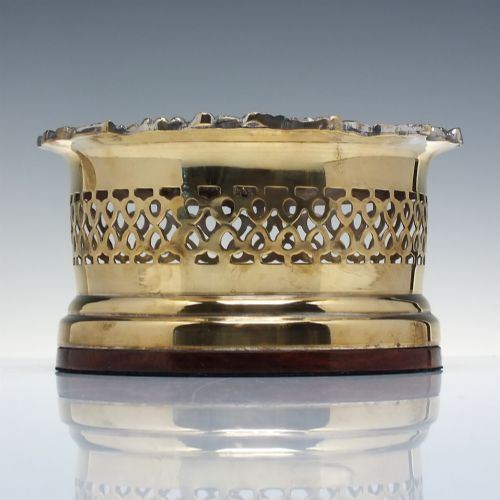


Victorian Silver Wine Coaster
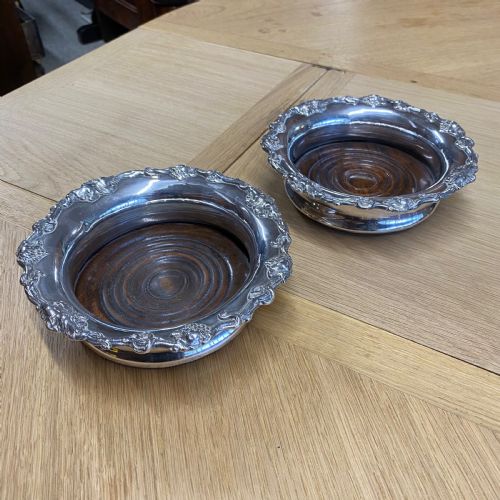
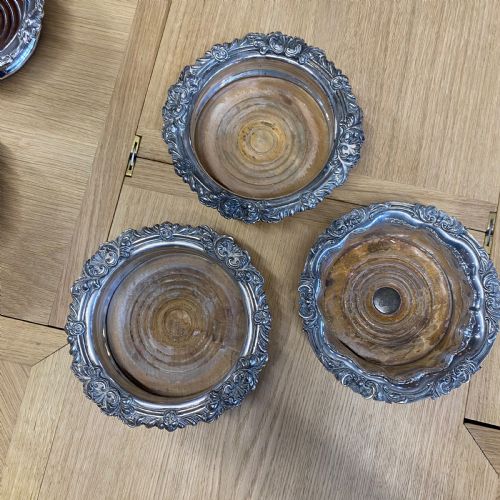
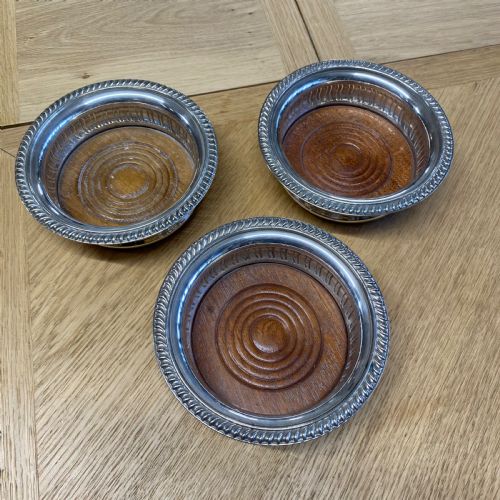
These victorian silver wine coaster examples protect the dining table and keep bottles steady, bringing period craftsmanship directly to the table.
Victorian Silver Wine Coaster
A victorian silver wine coaster serves to protect polished dining surfaces from condensation and ring marks while holding bottles or decanters securely during meals. These table accessories appear frequently as matched pairs, single larger magnum holders, or wheeled carriages designed to glide along the surface.
The selections recorded here span the nineteenth century, drawing heavily on Victorian production alongside examples from the Georgian era and the early twentieth century. Most pieces take the form of circular silver-plated or sterling silver galleries, occasionally incorporating wood bases or porcelain bodies.
Materials and construction methods
Silversmiths employed sterling silver and various plating techniques, including Old Sheffield Plate and electroplated nickel silver over a copper base, to achieve a durable metallic sheen. Many pieces feature pierced openwork galleries, embossed grape and vine motifs, and applied decorative borders.
Wooden inserts, particularly mahogany, frequently form the base of these holders, often centered with a small silver button. Metal mounts, porcelain bodies, and wheeled carriages complete the construction of more complex serving pieces.
Victorian Silver Wine Coaster Retail Price Guide 2026
Typical asking prices for victorian silver wine coaster among the pieces listed under this phrase on Sellingantiques today, from the lower quarter to the upper quarter. They describe what is for sale here now, not the wider market.
The documented objects range from single table coasters and magnum holders to double bottle carriages fitted with small working wheels.
Quality factors in dining coasters
The weight of the metal and the crispness of chased or pierced decoration distinguish superior examples from standard production. Makers who invested greater labour in detailed vine motifs and substantial gallery walls created pieces that retain their structural integrity and visual depth.
The integrity of the internal wooden base and the retention of the original plating layer heavily influence the overall character of a piece. Examples bearing clear hallmarks or maker stamps from notable firms carry distinct documentary interest.
Rupert Favell & Co·Hawksworth Eyre & Co·Elkington·Thomas Bradbury & Sons·Maple
The Victorian Silver Wine Coaster Glossary
- Silver plate
- A thin layer of silver fused or electroplated onto a base metal such as copper or nickel silver. This technique allowed makers to produce substantial decorative items at a lower cost than solid sterling silver.
- Old Sheffield plate
- An early method of fusing a sheet of silver to a copper ingot before rolling them into sheets together. This process creates a distinctive edge where the underlying copper is subtly visible.
- Pierced work
- Metal perforated with decorative patterns using a fine saw or punch. This technique lightens the visual weight of the gallery and often reveals the bottle within.
- Decanter carriage
- A wheeled metal frame holding one or more bottles or decanters. These wheeled units allowed diners to roll drinks smoothly across the table.
- Magnum
- An oversized bottle format requiring larger coaster dimensions. These wider holders accommodate champagne or large wine bottles securely.
Victorian Silver Wine Coaster: Frequently Asked Questions
How were wine coasters used?
These items sat on the dining table to hold wine bottles and decanters between pours, preventing rings on polished wood.
Diners also used wheeled carriages to slide bottles easily from person to person along the table surface.
What metals are these made from?
Many examples use silver plate or Old Sheffield plate over a copper or nickel silver base.
Solid sterling silver versions also appear alongside combinations featuring wood, porcelain, and metal mounts.
Are pairs common for these pieces?
Pairs and sets of four appear frequently in historical and current records, designed for symmetrical table placement.
Single large magnum holders and wheeled double carriages also occur for larger serving needs.
How do I identify the period?
Makers marks, hallmarks, and specific decorative motifs like pierced grapevines point toward Victorian and Georgian production.
Materials such as Old Sheffield plate or electroplated nickel silver offer further clues to the manufacturing date.