




Victorian Silver Needlework
Victorian silver needlework encompasses personal sewing accessories and boxes fashioned from sterling silver, velvet, silk, and bone.
Victorian Silver Needlework
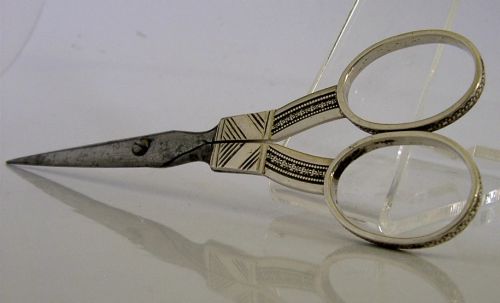
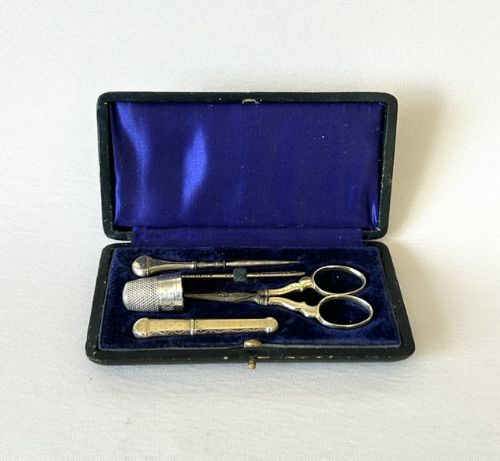
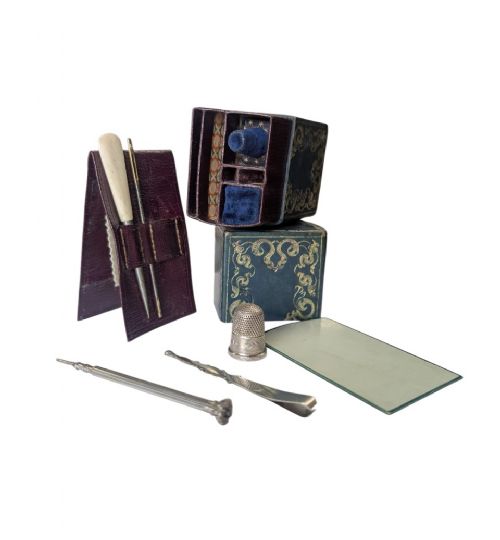
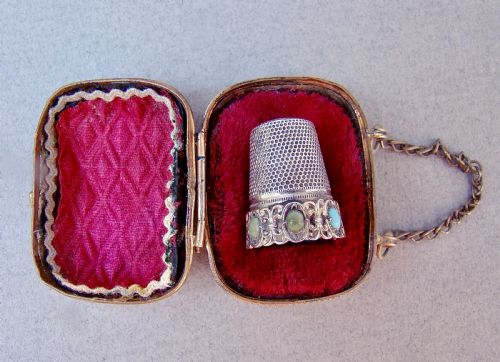
When you search for Victorian silver needlework, you encounter functional sewing accessories and decorative boxes from the nineteenth century. These objects include pin cushions, thimble cases, chatelaine accessories, and sewing sets manufactured in England and on the continent.
The pieces on this page range from novelty items shaped like goldfish, canoes, and sledges to practical sewing compendiums, etuis, and work boxes. You are most likely to meet solid silver thimbles, silver-mounted boxes, and chatelaine pieces dated between eighteen fifty and eighteen ninety-nine.
Materials and construction
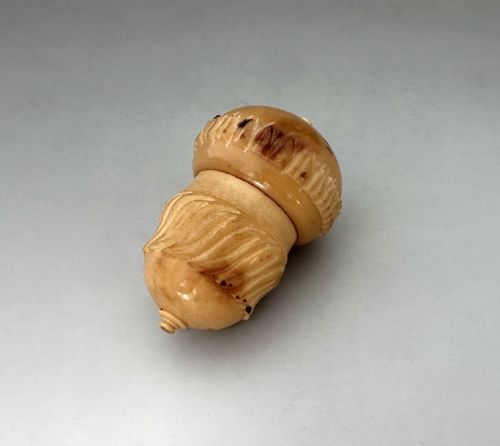
Maker techniques rely upon solid silver, sterling silver, and silver gilt combined with organic materials such as velvet, silk, leather, bone, corozo nut, tortoiseshell, and walnut. Metal components are cast, chased, or engraved, while wooden work boxes feature mother-of-pearl and silver wire inlay.
Pin cushions and novelty containers integrate textiles like velvet and silk with shaped silver frames to hold pins and needles securely. Sewing boxes and cases incorporate fitted interiors lined with specialised materials designed to organise small tools.
Listings feature Victorian and nineteenth-century pieces incorporating sterling silver, steel, velvet, silk, tortoiseshell, and corozo nut.
Distinguishing quality
Quality rests upon the crispness of detail in moulded or chased silver work, particularly evident in novelty pieces like animal pin cushions and inscribed thimble buckets. Superior items display well-defined hallmarks, secure hinges, and intact original linings.
The choice of secondary materials further separates standard accessories from finer examples, with exotic woods, tortoiseshell, and detailed stonework indicating higher grade craftsmanship. Complete sets and fitted cases retain greater integrity than isolated individual components.
Charles Horner·Laurence Emanuel
The Victorian Silver Needlework Glossary
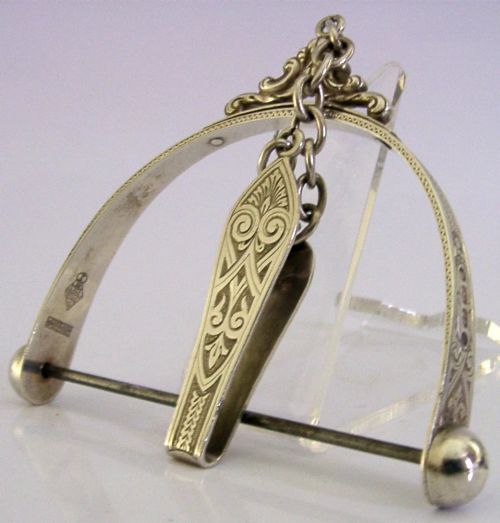
- Chatelaine
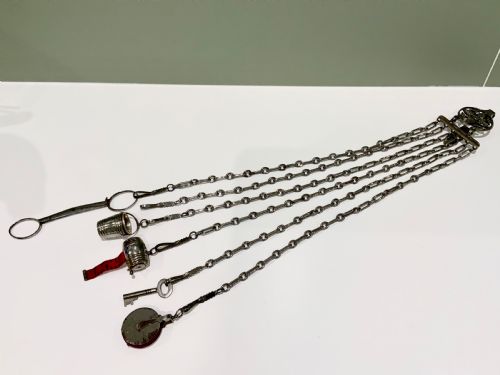
- A decorative belt hook suspended with chains carrying small functional items. Victorians wore these to keep sewing tools and keys close at hand.
- Etui
- A small ornamental box or case for holding needles, scissors, and other tiny implements. These portable containers often feature precious metals and fitted compartments.
- Compendium
- A comprehensive collection of sewing tools housed within a single case. This term describes fitted sets designed for travel or tabletop use.
- Corozo nut
- The hard seed of the tagua palm, frequently carved into small containers. It served as a dense, workable organic alternative to ivory.
- Hallmark
- An official stamp applied to precious metals indicating purity and origin. British examples verify the assay office, standard, and date letter.
Victorian Silver Needlework: Frequently Asked Questions
What is Victorian silver needlework?
Victorian silver needlework encompasses nineteenth-century sewing tools, chatelaine accessories, and decorative boxes incorporating silver.
These objects range from utilitarian thimbles and scissors to novelty pin cushions shaped like animals and transport.
How were pin cushions used?
Pin cushions held pins and needles securely during sewing and mending tasks in the home or workshop.
Novelty versions also served as decorative desk ornaments and status items for Victorian ladies.
How do I identify a chatelaine accessory?
Chatelaine accessories feature small loops or suspension points designed to attach to hanging chains worn at the waist.
They include etuis, thimble cases, and string holders made to be carried easily.
What materials accompany the silver?
Silver works appear alongside organic substances like tortoiseshell, mother-of-pearl, walnut, bone, and corozo nut.
Textiles such as velvet and silk line boxes and pad pin cushions within rigid metal frames.