





Victorian Silver Entree
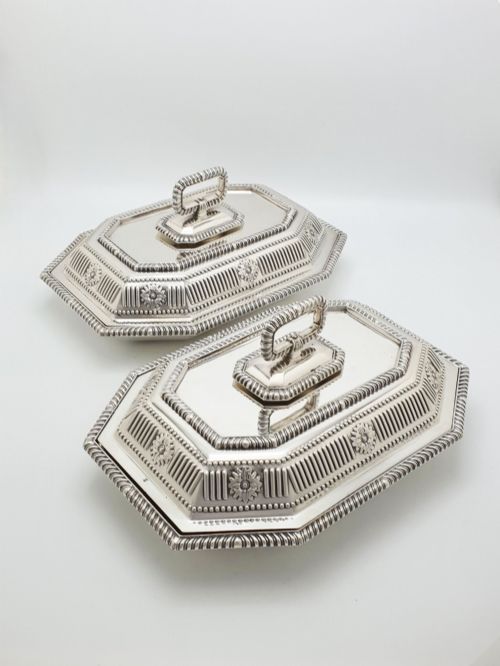
These Victorian silver entree pieces are heavy serving vessels made to grace grand dining tables.
Victorian Silver Entree
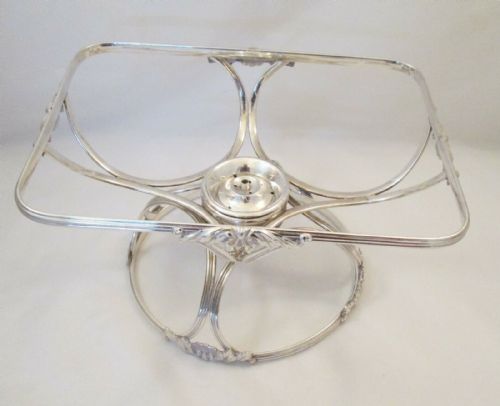
When you search for victorian silver entree, you examine covered serving vessels and tureens designed for formal dining tables during the nineteenth century. These forms include double rollover dishes, warming dishes with burners, and lidded dishes intended to keep food hot before service.
You are most likely to meet silver plated examples on this page, alongside sterling silver pairs made in London. The period spans from the mid nineteenth century through to the Edwardian era, showing Regency influences in certain handles and borders.
The objects often appear in matched pairs or as single rotating dishes complete with internal liners. Makers such as Elkington, Walker and Hall, and Mappin and Webb produced these items to meet the demands of Victorian and Edwardian households.
How they were made
These items rely upon base metal, nickel silver, and copper as foundations, which were then coated in a layer of silver plate using electroplated nickel silver techniques. Makers also hammered and cast sterling silver to create heavy lidded vessels with detachable handles.
Sheffield plating and electroplating methods allowed workshops to apply durable silver surfaces over robust metal cores. Artisans worked copper and base metals into shaped dishes, adding cast handles, decorative borders, and burner stands.
Victorian Silver Entree Retail Price Guide 2026
Typical asking prices for victorian silver entree among the pieces listed under this phrase on Sellingantiques today, from the lower quarter to the upper quarter. They describe what is for sale here now, not the wider market.
Listings feature items spanning the Victorian, Edwardian, and early twentieth century periods, utilising silver plate, sterling silver, copper, and base metal.
What varies in quality
Quality rests upon the thickness of the silver plating and the crispness of cast decorative borders on handles and lids. Superior pieces retain their original inner liners and mechanisms, such as smooth rotating hinges on double rollover dishes.
Worthy examples demonstrate maker marks from established silversmiths or plate manufacturers like Edward and John Barnard, indicating careful workshop production. The balance of the lid and the weight of the base metal distinguish standard utility items from finer dining silver.
Hamilton and Inches·Mappin and Webb·Edward and John Barnard·Walker and Hall·Elkington·William Hutton and Sons·Dan Holy
The Victorian Silver Entree Glossary
- Entree dish
- A covered serving vessel used for presenting side dishes or main courses at the dining table. These dishes often feature removable lids that double as secondary serving platters.
- Electroplated Nickel Silver
- A manufacturing process where a layer of silver is deposited onto a nickel silver alloy base using electrical current. This technique became widespread during the Victorian period for producing durable tableware.
- Sheffield plate
- An early method of fusing a thin sheet of sterling silver to a thicker copper ingot by heat and pressure. Items made this way often show subtle traces of copper where the silver layer has worn thin over decades of polishing.
- Tureen
- A deep, bowl shaped vessel with a lid, designed for serving soups, stews, or entree items. Pairs of tureens frequently sat at opposite ends of large dining tables.
- Rollover dish
- A specialised serving dish featuring a lid that rotates completely underneath the body on a pivot mechanism. This design allows diners to access food from both sides without removing the cover.
Victorian Silver Entree: Frequently Asked Questions
What is an entree dish used for?
These lidded vessels served meat dishes, vegetables, and warm courses at formal Victorian dinners. They kept food warm at the table and allowed servants to present courses efficiently.
Many examples feature divided compartments or removable liners to separate different foods within a single cover.
How do I clean silver plated dishes?
Clean these pieces with a soft cloth and specialised silver polish formulated for plated items. Avoid harsh abrasives that wear away the thin silver layer over the base metal.
Wash them in warm soapy water and dry them thoroughly immediately after use to prevent tarnishing.
Are these dishes made of solid silver?
Most items listed are silver plated over nickel silver, copper, or base metal rather than solid sterling silver. Makers used plating techniques to offer durable tableware at a lower cost than solid silver.
A small number of pieces are marked as sterling silver and bear hallmarks indicating town and year of production.
How do I date a Victorian entree dish?
Check the piece for manufacturer marks, registry numbers, or silver hallmarks that indicate the active years of the maker. Stylistic clues like Regency scrollwork or heavy Victorian ornamentation also help narrow down the decade.
Matching the design with known workshop production dates provides a reliable guide to when the item was made.