
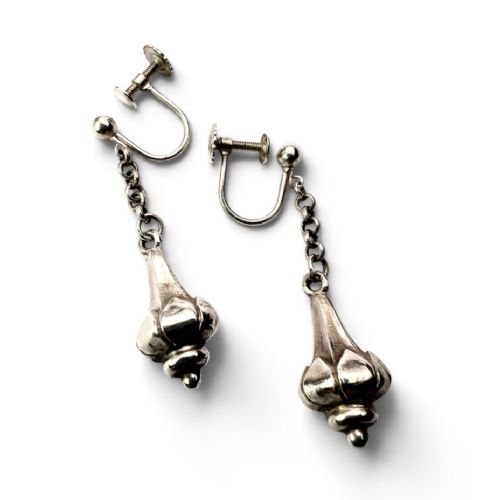
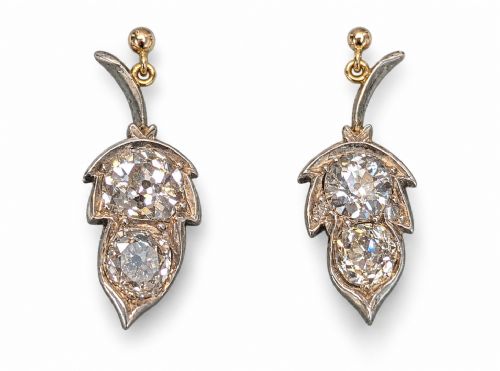

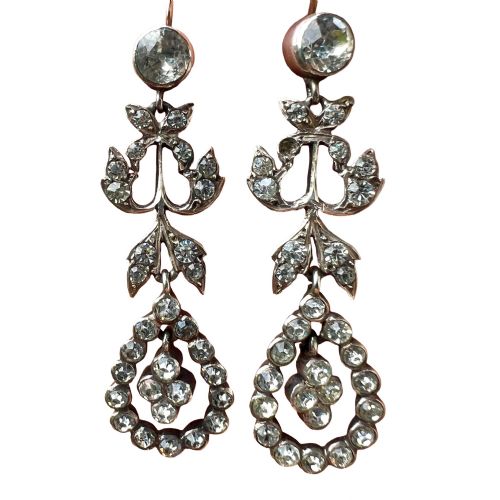
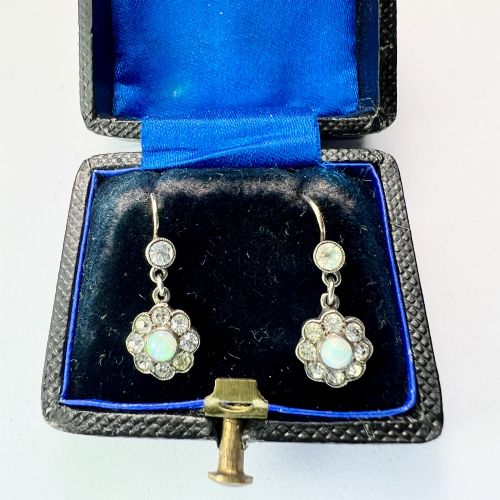
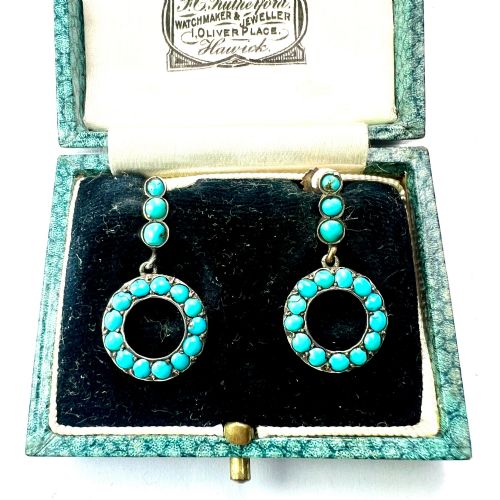


Victorian Silver Drop Earrings
These victorian silver drop earrings combine nineteenth-century metalwork with suspended stones and motifs, offering collectors an authentic period look.
Victorian Silver Drop Earrings
Victorian silver drop earrings encompass nineteenth-century designs that hang below the earlobe, ranging from simple geometric shapes to ornate botanical motifs. The versions most commonly encountered on this page feature silver settings combined with gold accents, paste, or genuine gemstones.
The selection includes pieces spanning the Victorian, Edwardian, and Georgian periods, alongside later revivals, displaying diverse influences such as the Aesthetic Movement and Scottish Revival. Forms vary from chandelier and tassel configurations to shield, teardrop, and dangling hoop designs.
Makers utilised both sterling silver and silver gilt, frequently pairing the metal with diamonds, natural pearls, turquoise, paste glass, and various coloured stones. These jewels serve as surviving examples of historical lapidary and metalworking traditions.
Materials and Techniques
Silversmiths constructed these drop earrings using silver, sterling silver, and silver gilt, often backed or highlighted with yellow gold in varying carat weights such as nine-carat and eighteen-carat. Metals were worked into wirework, cast frames, and foliate mounts to secure the stones.
Gemstones including old cut diamonds, natural pearls, turquoise, aquamarine, citrine, and malachite were hand-set into the precious metal frames. Artisans also employed foiled paste, rock crystal, and enamel to achieve colourful reflections without relying solely on precious minerals.
Design motifs include swallows, fern leaves, acorns, thistles, bows, sunbursts, and Scottish Revival agates.
Distinctions in Quality
Quality in these earrings is visible in the precision of the metalwork, such as hand-engraved fern leaves, birds, or geometric borders that retain sharp definition. Superior examples display balanced proportions between the hanging drop and the upper fixture, with secure stone settings that avoid excessive glue or clumsy soldering.
The choice and cut of the materials also determine the distinction between pieces, with old European and old cut diamonds or certified natural pearls representing higher tier craftsmanship than moulded paste glass. Original components, undamaged screwbacks or hook wires, and intact gilding further elevate the standing of a pair.
Knoll And Pregizer
The Victorian Silver Drop Earrings Glossary
- Silver Gilt
- Silver that has been coated with a thin layer of gold on its surface. This technique provided the warm appearance of solid gold while maintaining a silver base structure.
- Paste
- Hand-cut and polished lead glass used to imitate gemstones. Historic paste exhibits high refractive qualities and was frequently foiled at the back to enhance its brilliance.
- Old Cut Diamond
- A general term for diamond cuts preceding the modern brilliant cut, typically featuring a smaller table, higher crown, and open culet. These stones were cut by hand to catch candlelight.
- Aesthetic Movement
- A late nineteenth-century design style that emphasised visual beauty over narrative meaning, often incorporating asymmetrical natural motifs like birds, leaves, and bamboo.
- Screwback
- A mechanical earring fastening that uses a threaded screw to tighten a flat pad against the back of the earlobe. This mechanism allowed non-pierced ears to wear substantial drop designs.
Victorian Silver Drop Earrings: Frequently Asked Questions
How do I care for antique silver earrings?
Store these pieces individually in dry, soft-lined boxes to prevent scratching the delicate silver and softer stones like pearls or turquoise. Avoid submerging them in liquid jewellery cleaners, as harsh chemicals can damage foiled paste, enamel, and organic materials.
Clean the metal gently with a soft microfibre cloth to maintain the natural patina accumulated over the decades. Keep them away from perfumes, cosmetics, and moisture to protect the integrity of the original mountings.
Were all these earrings made for pierced ears?
Many nineteenth-century examples were originally manufactured for pierced earlobes, utilising simple wire hooks or lever-back closures. However, some pieces feature later modifications or period screwback mechanisms designed for non-pierced wearers.
Examinations of the top fixtures often reveal whether a hook has been replaced with a screw fitting or if the original configuration remains intact. Both hook and screwback formats are regularly found across surviving pairs.
How can I tell the Victorian period from later revivals?
Authentic Victorian pieces generally display construction methods specific to the nineteenth century, including hand-cut stones, closed-back settings on older stones, and hand-carved details. Hallmarks, where present, can provide specific assay office letters and date ciphers.
Later Victorian Revival or Edwardian pieces may utilise slightly different claw settings or lighter gauge metals while mimicking earlier motifs. Comparing the wear patterns on the metal helps confirm the age of the earrings.
What is a demi parure?
A demi parure is a matched set of jewellery consisting of two or three pieces, most commonly earrings paired with a matching brooch or pendant. These sets allowed nineteenth-century wearers to coordinate their accessories harmoniously for formal occasions.
Finding earrings that retain their original companion brooch demonstrates that the set has survived together without being separated over time. Such matched suites are valued for their completeness.
Why are some stones foiled at the back?
Foiling involves placing a thin sheet of reflective metal foil inside a closed-back setting beneath a gemstone or paste. This technique was used to bounce light back through the stone, intensifying its colour and sparkle.
Because moisture can damage the foil behind paste or diamonds, these earrings require careful handling to prevent liquid from seeping behind the settings. Intact foiling is a sign of good preservation.