


Victorian Silver Dressing Bottle
A victorian silver dressing bottle sits upon the dressing table as a useful vessel for scent or cosmetic water, combining functional glass with precious metalwork.
Victorian Silver Dressing Bottle
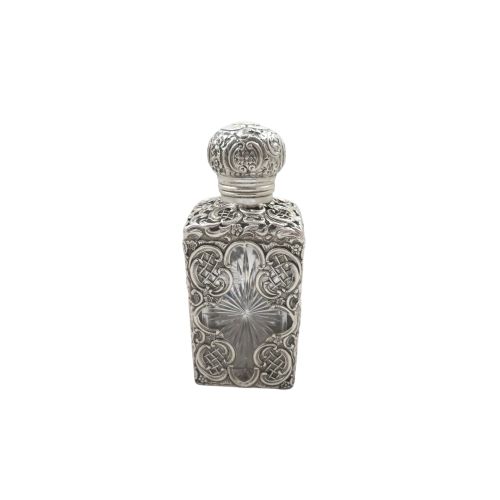
A victorian silver dressing bottle encompasses portable scent flasks, vanity jars and perfume bottles equipped with metal collars or screw caps. These objects originate largely within the nineteenth century, spanning decades from the middle Victorian era onwards.
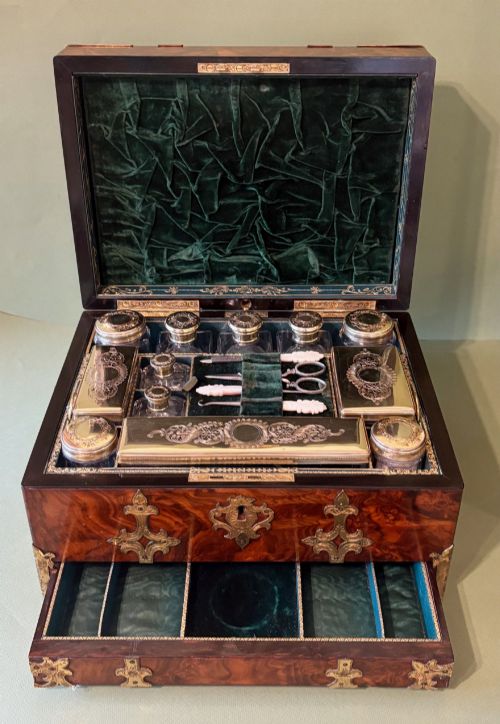
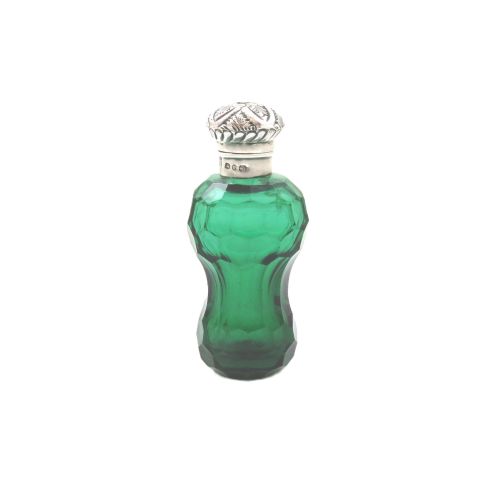
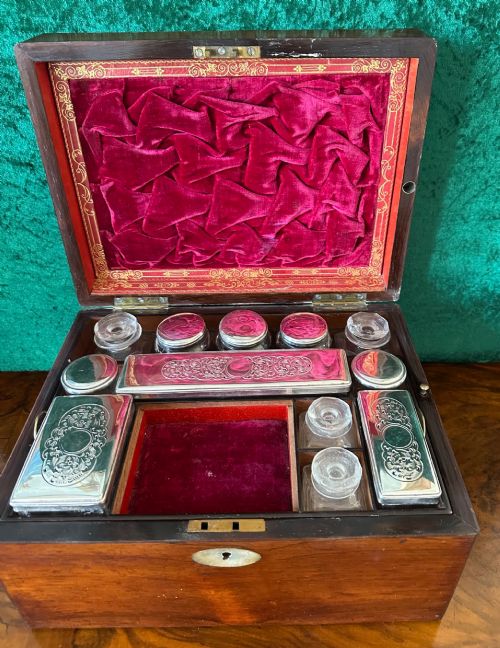
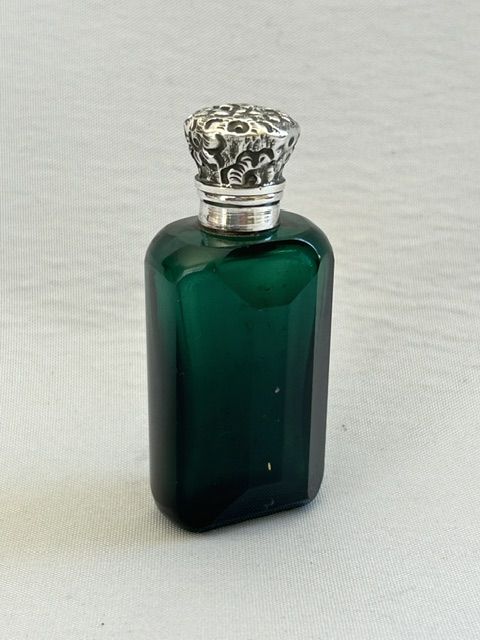
The form appears frequently as a standalone vessel or housed within fitted travelling vanity cases alongside other dressing table accessories. Green glass, teal glass, cranberry glass and clear cut crystal predominate among the surviving examples.
Collectors encounter pieces marked with hallmarks from Birmingham and London, alongside uncredited English and nineteenth century French items. Certain iterations emerge as part of matched sets or paired arrangements designed for the dressing table.
Materials and construction methods
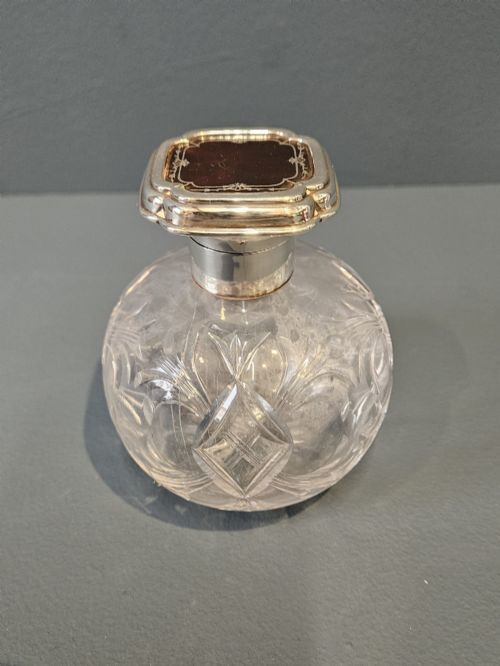
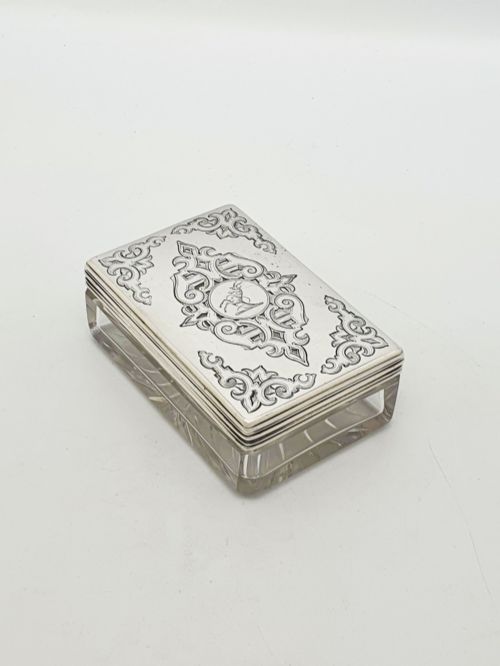
Craftsmen joined heavy blown or moulded glass bodies with sterling silver collars, mounts and screw lids. Sliced-cut, hobnail and faceted cutting techniques catch the light across the crystal and coloured glass surfaces.
Metal components received hand-chased ornamentation, silver-gilt finishes or delicate silver overlay applied directly to mercury glass and coloured vessels. Interior stoppers of glass or cork preserved volatile perfumes during travel.
Materials span sterling silver, cut crystal, coromandel wood, brass, velvet and various coloured glasses.
Distinguishing quality across the range
The thickness and clarity of the glass establish the baseline, with deep facet-cutting and heavy crystal bodies outperforming simple moulded alternatives. Coloured glass variants, notably rich cranberry and Bristol green hues, demonstrate high glasshouse skill.
Silver mounts reveal craftsmanship through substantial gauge metal rather than thin foil wrappings, often accompanied by crisp maker marks and clear city assay office stamps. Fitted coromandel wood cases lined with velvet elevate the status of companion bottles.
S Morden and Co·Asprey
The Victorian Silver Dressing Bottle Glossary
- Sterling silver
- A silver alloy containing 92.5 percent pure silver by mass, standard for quality British tableware and vanity accessories.
- Cut crystal
- High-clarity glass shaped by deep mechanical or wheel cutting to produce sharp refractive edges and geometric patterns.
- Silver-gilt
- Sterling silver that has been coated with a thin layer of gold on its surface, creating a warm two-tone appearance.
- Coromandel wood
- A dense, dark tropical timber with contrasting light stripes, utilised for luxury nineteenth century dressing and vanity cases.
- Mercury glass
- Double-walled blown glass featuring a silvered liquid lining sealed between the glass layers to create a mirror-like sheen.
Victorian Silver Dressing Bottle: Frequently Asked Questions
What is a dressing bottle?
A dressing bottle is a small glass container intended for holding perfume, cologne or cosmetic liquids upon a vanity table or inside a travelling case.
These vessels feature secure metal tops to prevent evaporation and spills during daily use or transit.
How do you date them?
Dating relies heavily upon silver hallmarks stamped onto the metal collars or lids, which indicate specific assay years and towns.
Stylistic cues in the glass cutting, casing materials and associated box construction also help assign pieces to particular decades.
Were they used for travel?
Many examples were manufactured specifically for transit, fitted securely into compartmentalised coromandel wood or leather vanity cases.
Screw-down silver tops and internal glass stoppers ensured the contents remained contained inside luggage.
What colours are common?
Clear cut crystal and transparent glass appear most frequently among surviving examples on the dressing table.
Coloured variants in shades of green, teal and cranberry also occur, alongside silver-overlay and mercury glass treatments.