


Victorian Silver Cuff
A Victorian silver cuff combines solid metalwork with the elaborate decoration characteristic of nineteenth-century design, offering substantial wrist presence.

Victorian Silver Cuff
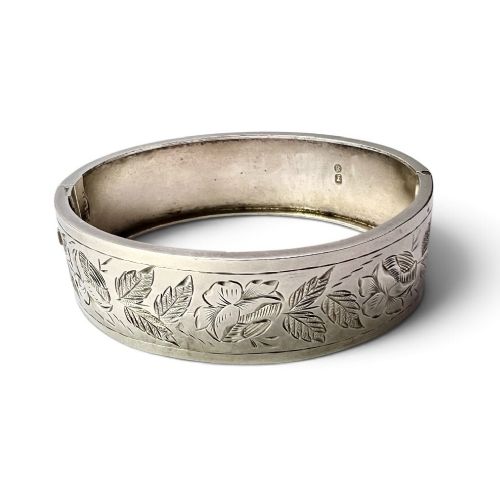
A Victorian silver cuff typically takes the form of a hinged bangle designed to encircle the wrist with considerable width and presence.
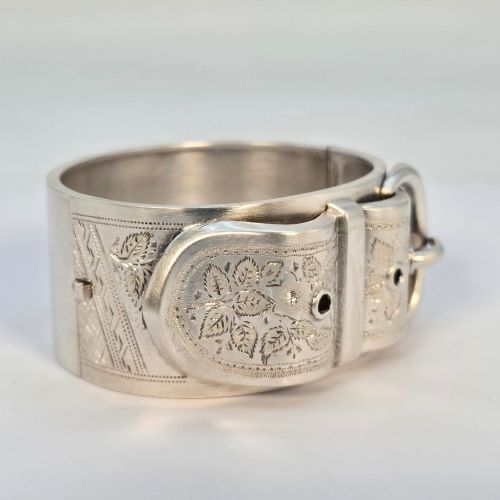
The evidence shows these pieces appearing in plain sterling silver or enriched with gold overlays, floral engravings, and buckle motifs.
Beyond bangles, the category also encompasses items like regimental or dumbbell cufflinks sharing the same period aesthetic.
Materials and Construction
Silversmiths utilised sterling silver and solid silver as the primary foundation, frequently incorporating rose gold and yellow gold highlights to create multi-coloured metal effects.
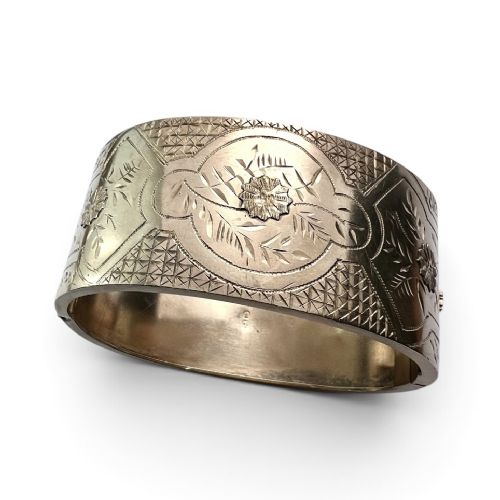
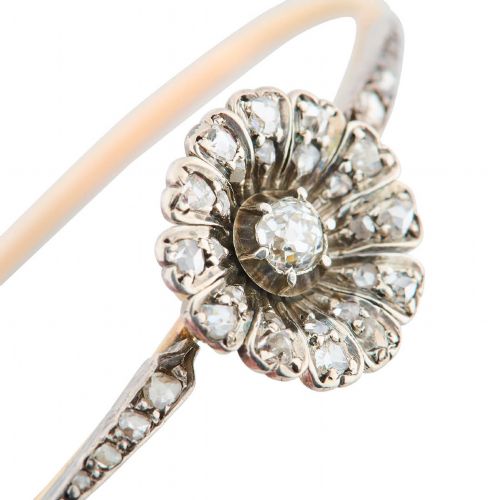
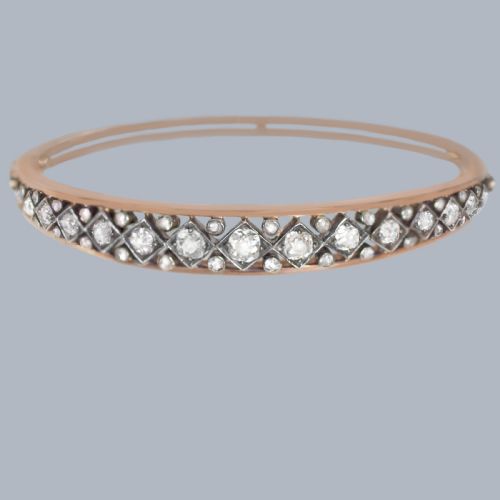
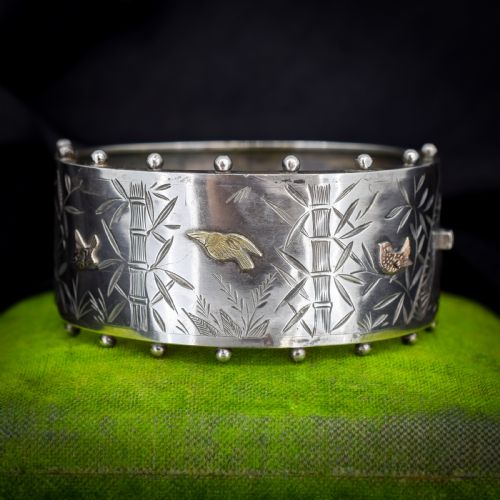
Surface decoration relies on hand engraving, floral motifs, and applied bird or bamboo designs, alongside the integration of blue enamel, diamonds, and pearls.
Birds and bamboo share the metal surface with stern Victorian buckles, proving the period had a playful side.
Standards of Execution
Quality separates pieces through the depth and crispness of the hand engraving, particularly on wide floral and aesthetic movement designs.
The integration of mixed metals, such as contrasting gold and silver applications or secure hinges, distinguishes finer examples from standard production.
The Victorian Silver Cuff Glossary
- Sterling silver
- A silver alloy containing 92.5 percent pure silver by mass, providing durability for heavy nineteenth-century bangles. This standard was widely utilised across British assay offices.
- Aesthetic Movement
- A late nineteenth-century design style focusing on visual beauty rather than narrative meaning. Pieces in this manner often display stylised floral or avian motifs.
- Hinged cuff
- A rigid bracelet constructed with a mechanical pivot and clasp to allow a snug fit around the wrist. This construction is common among wide Victorian bangles.
- Old mine cut
- A diamond cut characterised by a cushion shape, a high crown, and a small table, typical of nineteenth-century jewellery production. These stones appear in gold and silver settings.
Victorian Silver Cuff: Frequently Asked Questions
How do I wear a Victorian silver cuff?
These wide hinged bangles sit firmly on the wrist as a standalone statement piece.
Because of their substantial width and detailed engravings, they require no additional bracelets to create an impact.
What metals are used in these cuffs?
The primary metal is sterling silver, often accented with contrasting applications of rose gold and yellow gold.
Some examples also incorporate higher karat gold components alongside diamonds, enamel, and pearls.
Are all Victorian cuffs hinged?
Many of the wide bangles utilise a hinged mechanism with a secure clasp for ease of wear.
The evidence also records buckle designs and rigid shapes that encircle the wrist.
What motifs appear on these pieces?
Common decorative elements include hand-engraved florals, birds, bamboo patterns, and Etruscan revival details.
Buckle motifs and aesthetic movement patterns also recur frequently across the available items.