





Victorian Silver Chain Necklace
A victorian silver chain necklace brings together heavy links, antique dog clips and practical t-bars into a wearable piece of history.
Victorian Silver Chain Necklace
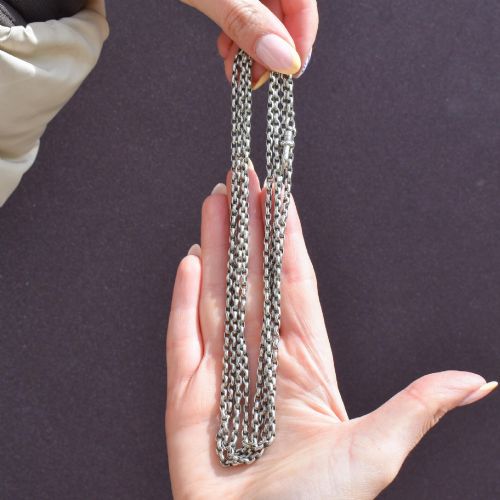
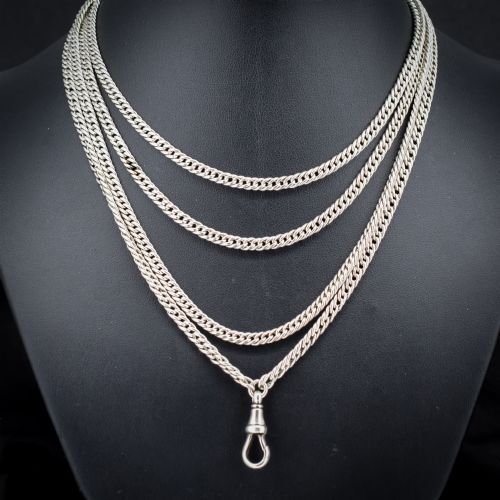
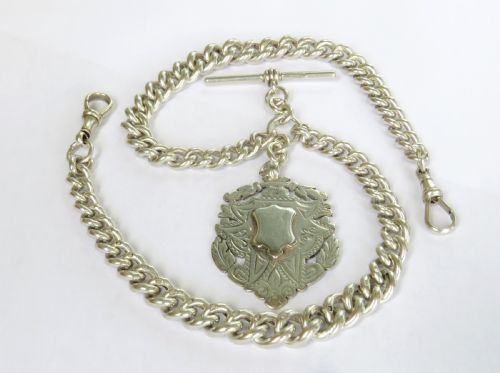
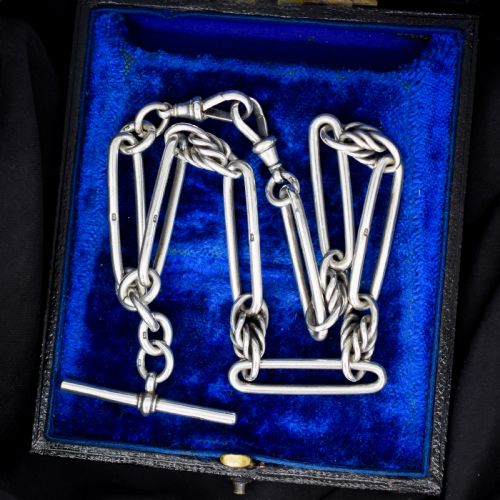
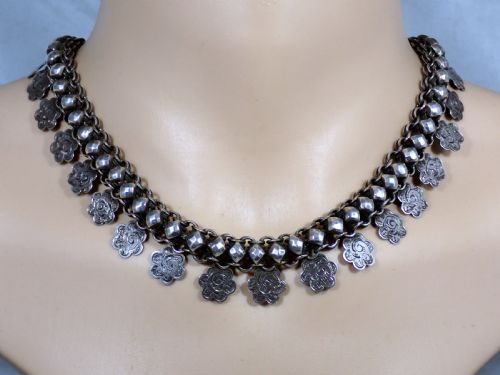
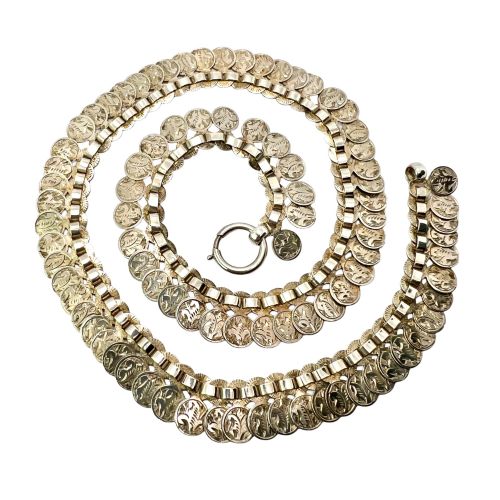
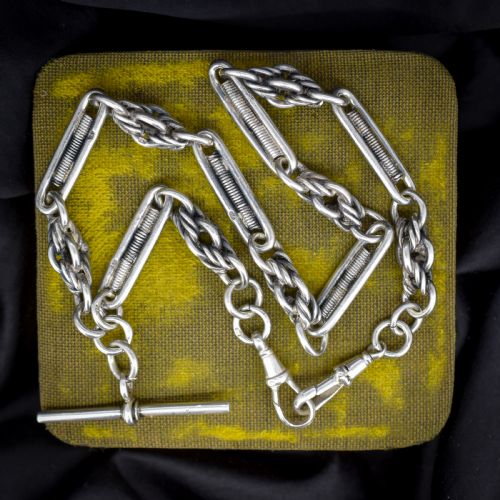
When searching for a victorian silver chain necklace, buyers encounter varied forms spanning standard curb links, heavy book chains, and repurposed pocket watch albert chains. Many of these pieces originate from the nineteenth century, carrying the hallmarks of the era through engraved details, dog clips, and t-bars.
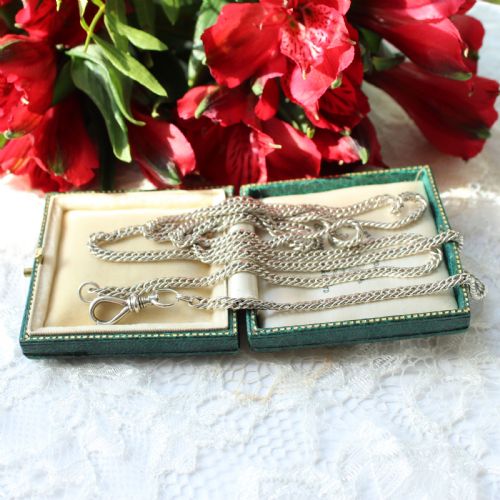
The selection on this page demonstrates how utilitarian pocket watch chains are frequently worn as necklaces today. These pieces range from short chokers to very long guard chains, often accompanied by swivels, keys, or lockets.
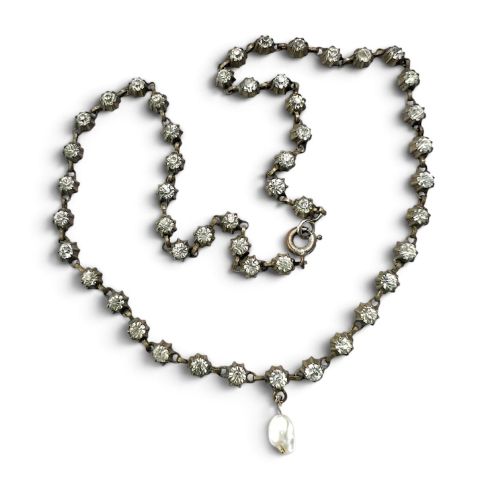
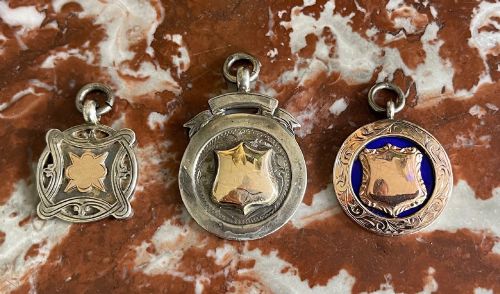
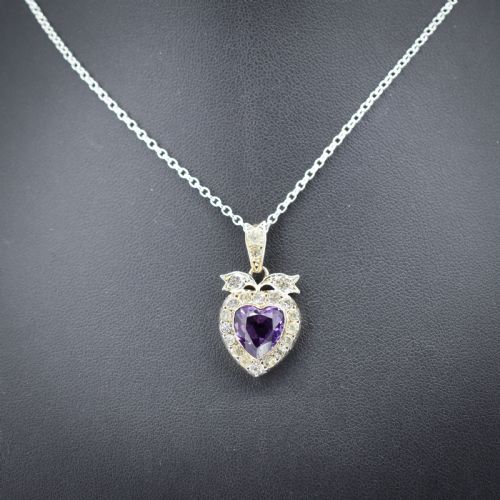
Alongside plain or engraved links, some designs incorporate pendants set with paste glass, turquoise, pearls, diamonds, or enamel. The ottoman revival style also appears among the French silver pendants and chains.
Materials and construction
The construction relies heavily on sterling silver and standard silver alloys, occasionally incorporating gold alongside precious or semi-precious stones such as turquoise, amethyst, diamonds, and pearls. Metalworking techniques span hand engraving, piercing, and niello work to decorate links, lockets, and box links.
Link construction varies from uniform curb links and graduated designs to hollow or solid book chain panels. Secure fastenings are achieved through robust dog clips, bolt rings, and t-bars designed originally for pocket watches.
Listings incorporate sterling silver alongside gold, paste glass, turquoise, diamond, pearl, and enamel.
Assessing quality in antique silver chains
Quality in these pieces rests upon the solidity of the silver work and the crispness of any hand engraving. Heavier links and substantial book chain panels demonstrate superior craftsmanship compared to lighter, more delicate alternatives.
The presence of original, matching components such as dog clips, t-bars, and bloodstone swivel fobs elevates the integrity of the piece. Well-preserved hallmarks and secure box link clasps further distinguish finer examples.
The Victorian Silver Chain Necklace Glossary
- Albert chain
- A pocket watch chain designed to be secured to a waistcoat, now frequently worn as a necklace. These often include dog clips and t-bars.
- Dog clip
- A spring-loaded snap hook used on watch chains to secure a fob or pocket watch. They provide a practical clasp for modern necklace wearers.
- T-bar
- A crossbar attached to the centre of a watch chain used to anchor the chain through a buttonhole. On a necklace, it hangs as a decorative toggle.
- Book chain
- A necklace composed of wide, folded metal links resembling the pages or bindings of a book. They are frequently engraved with floral or geometric motifs.
- Paste
- Hand-cut glass used to imitate gemstones in antique jewellery. It is set into silver to achieve sparkle without relying on genuine stones.
Victorian Silver Chain Necklace: Frequently Asked Questions
How do I wear a watch chain as a necklace?
Pocket watch chains are easily adapted for the neck by fastening the dog clip to a link, an end ring, or the t-bar itself. The t-bar is often left to dangle as a decorative front toggle.
Heavier albert chains sit well on their own as short chokers, while longer guard chains can be doubled over for a layered appearance.
Are these chains made of solid silver?
The materials recorded across these pieces include sterling silver, continental silver, and French silver. Some items combine silver with gold elements or gemstone settings.
Hallmarks where present help verify the metal standard and origin of the piece.
What are dog clips and t-bars used for?
Dog clips and t-bars were functional components of nineteenth-century pocket watch chains. The dog clip secured the watch or fob, while the t-bar anchored the chain to a garment.
Today, these elements serve as functional clasps and decorative focal points for the wearer.