



Victorian Silver Agate Brooch
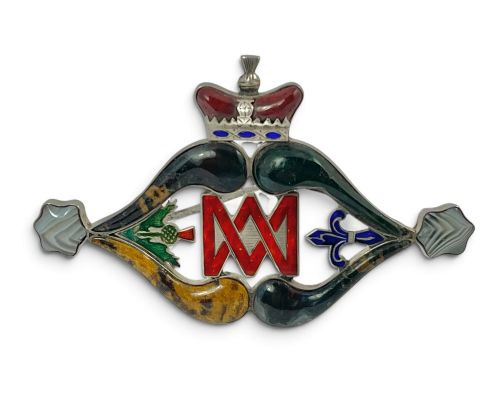
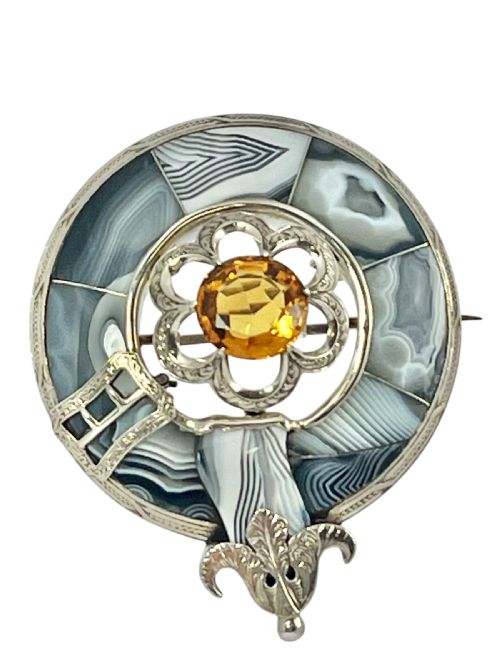
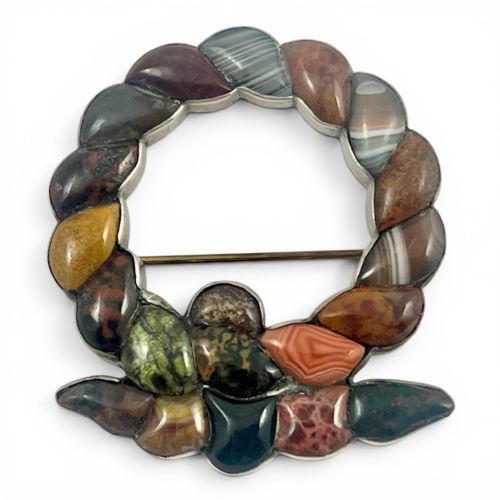
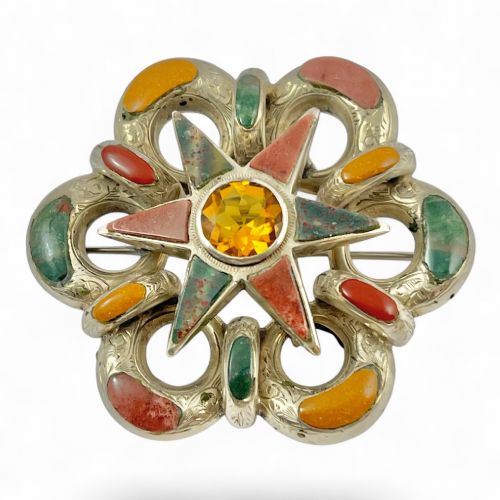
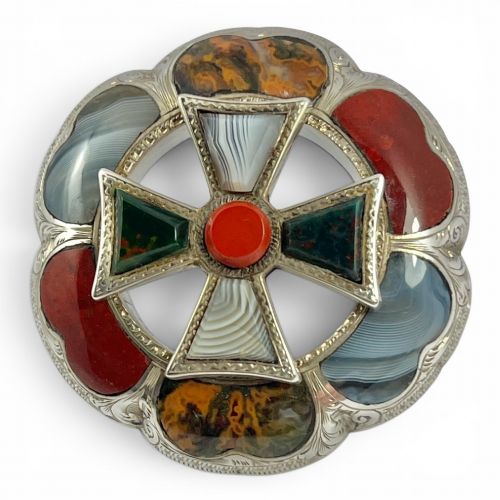
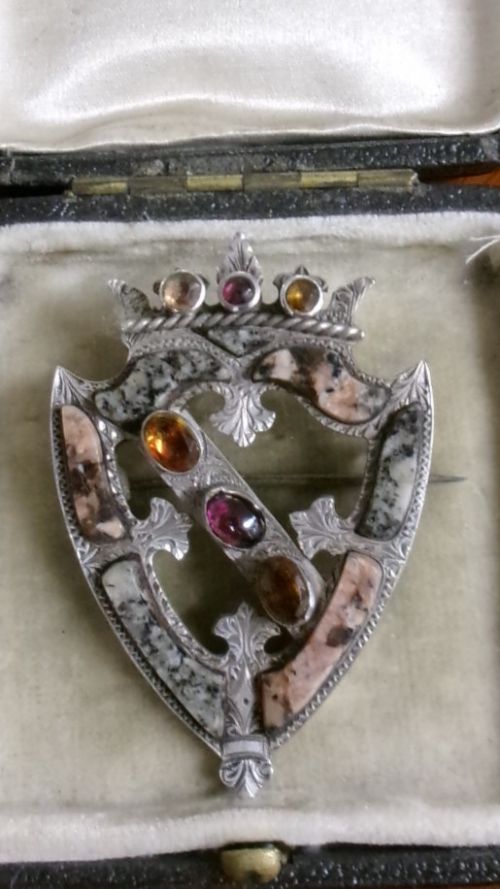
These pieces combine silver and patterned stones to form a distinct Victorian silver agate brooch.
Victorian Silver Agate Brooch
A buyer seeking a victorian silver agate brooch encounters pieces shaped into swords, dirks, shields, crosses, knots and traditional pebble outlines. These designs draw heavily on Scottish Revival motifs popular during the nineteenth century.
Most examples originate from the Victorian period, spanning decades from the eighteen forties through to nineteen hundred. The form bridges decorative personal ornament and traditional Highland dress accessories such as kilt pins and plaid brooches.
Materials and Construction
Makers set variously coloured hardstones including jasper, bloodstone, granite, citrine and multiple varieties of agate into mounts fashioned from silver and sterling silver. These stones were cut, shaped and polished to reveal natural banding and patterns before being secured within metal settings.
Metalwork techniques range from simple circular frames to elaborate basket-hilted broadswords, bows, butterflies and garter belts. Metal components are frequently soldered and engraved to complement the geometric and organic contours of the hardstones.
Victorian Silver Agate Brooch Retail Price Guide 2026
Typical asking prices for victorian silver agate brooch among the pieces listed under this phrase on Sellingantiques today, from the lower quarter to the upper quarter. They describe what is for sale here now, not the wider market.
Listings feature silver, agate, jasper, citrine, bloodstone, and granite across Victorian periods dating from eighteen forty to nineteen hundred.
Distinguishing Quality
Quality rests in the stone cutting and the complexity of the silver mount. Superior items display finely polished hardstones with striking natural bands, set within intricate sculptural forms like dirks, broadswords and detailed floral arrangements.
Simpler constructions rely on basic geometric bezels holding single specimen pebbles. The distinction lies in whether the metalwork serves as a supportive frame or forms an elaborate narrative shape that integrates multiple coloured stones.
The Victorian Silver Agate Brooch Glossary
- Agate
- A variety of chalcedony quartz exhibiting natural bands of colour. It forms the primary hardstone material utilised in these nineteenth-century ornaments.
- Montrose Agate
- A specific regional designation for patterned stones found within particular Scottish collections. These stones display distinct grey and white banding.
- Dirk Brooch
- An ornament styled after a traditional Scottish dagger. These pieces often incorporate cairngorm or citrine stones alongside mounted hardstones.
- Plaid Brooch
- A large circular fastening worn to secure traditional Scottish plaid garments. They frequently feature concentric rings of diverse hardstones.
- Specimen Brooch
- An item designed to showcase individual varieties of unworked or polished mineral stones. Each stone is individually bezel-set into the silver body.
Victorian Silver Agate Brooch: Frequently Asked Questions
How are these brooches worn today?
These pieces function effectively when pinned to heavy woollen coats, scarves, and structured jackets. Their substantial weight suits sturdier fabrics rather than delicate silks.
Traditional Highland attire also accommodates them as kilt pins or plaid fastenings. Contemporary wearers often utilise them as statement lapel ornaments.
What periods do these pieces date from?
The available items span the Victorian era, with dates stretching from eighteen forty through to nineteen hundred. Most examples cluster around the middle and late decades of the nineteenth century.
Styles evolved during this timeframe, moving from early provincial designs to elaborate Scottish Revival forms. Hallmarks and stylistic markers help establish these approximate decades.
Which stones appear alongside agate?
Makers frequently combined agate with jasper, bloodstone, granite, and yellow quartz varieties known as citrine. Some variations incorporate amethyst or blue lace stone specimens.
These supplementary materials add contrasting colour to the natural grey and brown bands of the primary hardstones. Individual pieces may feature single or multiple stone types within one setting.
How do you clean silver and stone mounts?
Silver components benefit from gentle application with a soft polishing cloth designed for precious metals. Care must be taken to avoid abrasive liquids touching the polished hardstones.
Submerging multi-stone jewellery in water can weaken old adhesives holding the pebbles in place. Dry dusting with a soft brush remains the safest maintenance approach.