





Victorian Sifter Spoon
A victorian sifter spoon is a pierced table implement designed for scattering powdered sugar, which collectors prize for its elaborate handle patterns and finely perforated bowls.
Victorian Sifter Spoon
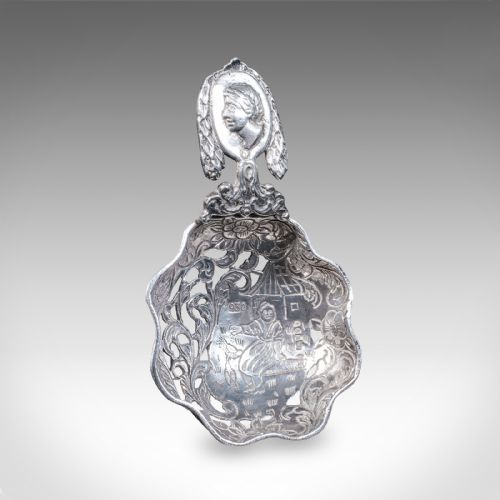
A victorian sifter spoon is a specialised flatware piece meant for dusting fine sugar over fruit, desserts or beverages. The bowl is typically perforated with holes, slots or pierced floral and geometric designs to let sugar pass through while holding back larger lumps.
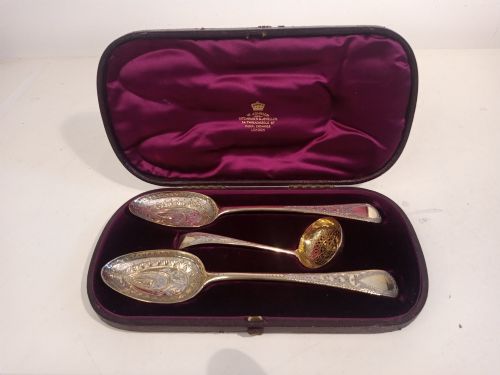
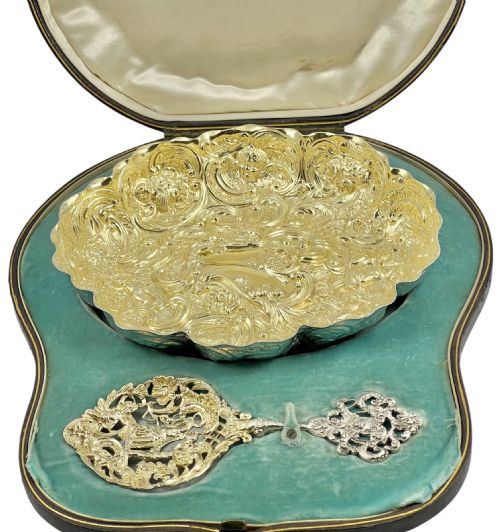
Many examples emerge as part of matched sets alongside sugar bowls, cased presentation boxes or fruit serving ware. These sets often combine sterling silver or silver plate with fitted interiors of velvet, silk and leather.
The form spans various regional assay offices and specific nineteenth century years, running from early nineteenth century iterations through to the close of the Victorian era.
Evaluating Craftsmanship
Quality rests heavily on the crispness of the cast decoration and the precision of the pierced bowl pattern. Sharply defined motifs on handles and well-executed piercing indicate superior maker skill.
Substantial weight and balanced proportions distinguish finer examples from lighter pieces. The presence of clear hallmarks and original fitted velvet or silk cases also influences desirability.
Victorian Sifter Spoon Retail Price Guide 2026
Typical asking prices for victorian sifter spoon among the pieces listed under this phrase on Sellingantiques today, from the lower quarter to the upper quarter. They describe what is for sale here now, not the wider market.
Listings feature sterling silver, silver plate and silver gilt materials, alongside fitted cases lined in velvet, silk and leather.
Chawner & Co·Taylor & Perry·A B Savory & Sons·Martin Hall & Co·Francis Higgins·John Figg·George Adams
The Victorian Sifter Spoon Glossary
- Silver gilt
- Silver that has been coated with a thin layer of gold on its surface. This technique provided a rich two-tone appearance.
- Assay office
- An official body that tested precious metals and stamped items with hallmarks. London, Birmingham, Sheffield, Chester, Edinburgh, Glasgow and Exeter offices appear in these records.
- Pierced
- A technique where metal is cut through to create decorative openwork patterns. This method allowed sugar to pass evenly through the spoon bowl.
- Terminal
- The decorative top end of a spoon handle. Nineteenth century examples often featured cast figures, shells or scrollwork.
Victorian Sifter Spoon: Frequently Asked Questions
What was a sifter spoon used for?
These implements served the Victorian dining table by scattering powdered sugar over soft fruits, desserts and tea. The pierced bowl allowed guests to dust sugar evenly without transferring clumps.
They frequently appeared alongside matching sugar bowls or within fitted presentation cases for formal entertaining.
How do I identify a Victorian sifter spoon?
Look for the characteristic pierced or slotted bowl combined with nineteenth-century handle patterns such as Onslow or Fiddle and Thread. Maker marks and date letters stamped into the silver help confirm the exact period.
Many examples also bear British assay office marks indicating where the metal was tested.
How should I store a silver sifter spoon?
Silver pieces benefit from being kept in dry conditions away from direct sunlight to minimise tarnishing. Storing them in fitted cases or anti-tarnish cloth protects the delicate pierced bowls and handles.
Gentle cleaning with appropriate silver care products maintains the finish without wearing down cast details.